




The 5th Grand Lecture of China Concrete: Innovative Development of 3D Printing Concrete Engineering Application Technology
On June 4, 2023, the 5th Grand Lecture of China Concrete, jointly founded by the China Concrete and Cement-based Products Association(CCPA) and the China Ceramic Society(CCS), was successfully held at the Nanjing International Expo and Conference Center.
On June 4, 2023, the 5th Grand Lecture of China Concrete, jointly founded by the China Concrete and Cement-based Products Association(CCPA) and the China Ceramic Society(CCS), was successfully held at the Nanjing International Expo and Conference Center.
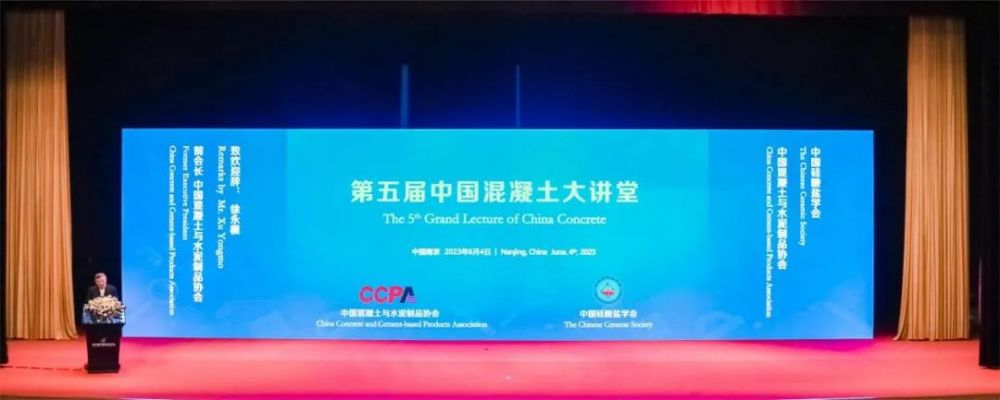
Recommended and Nominated by the expert committee, there were three internationally renowned experts and scholars selected to conduct academic and technical exchanges on the innovative development of 3D printing concrete engineering application technology at the 5th Grand Lecture of China Concrete. The three experts and scholars are Professor Xu Weiguo from Tsinghua University, Professor Wang Hailong from Zhejiang University, and Mr. Li Lin from Saint-Gobain(Shanghai).
Main report
01
The topic of this lecture by Professor Xu Weiguo of Tsinghua University is the application of robot 3D printing concrete construction technology. The main content includes the concepts of digital building design and intelligent building construction, the research and development of robot 3D printing concrete construction technology and a series of practical works, as well as the development prospects of robot 3D printing construction technology, which is an important method of intelligent construction.
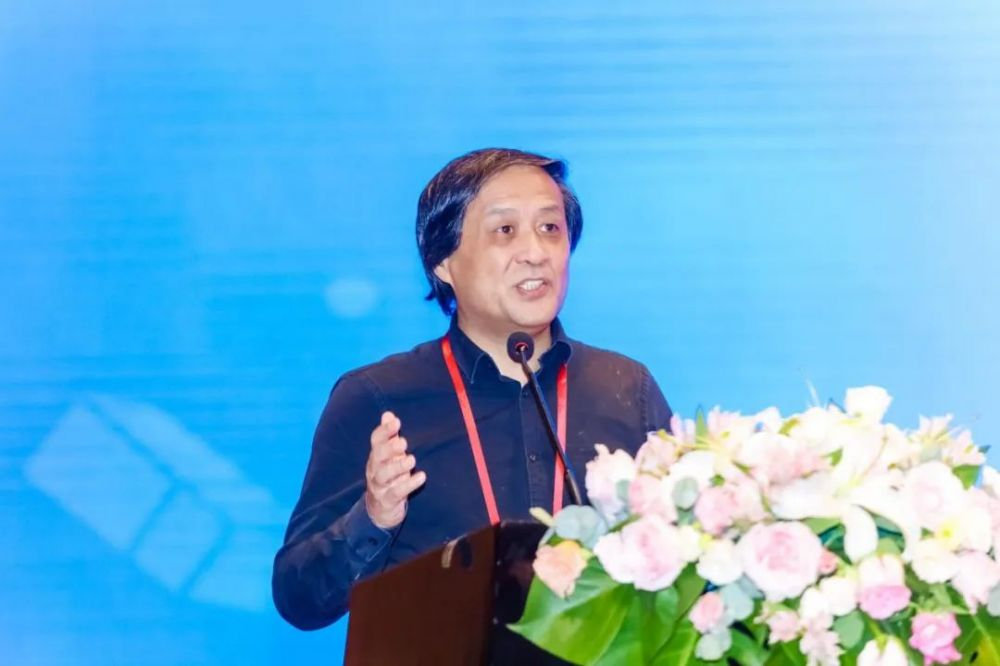
Professor Xu Weiguo
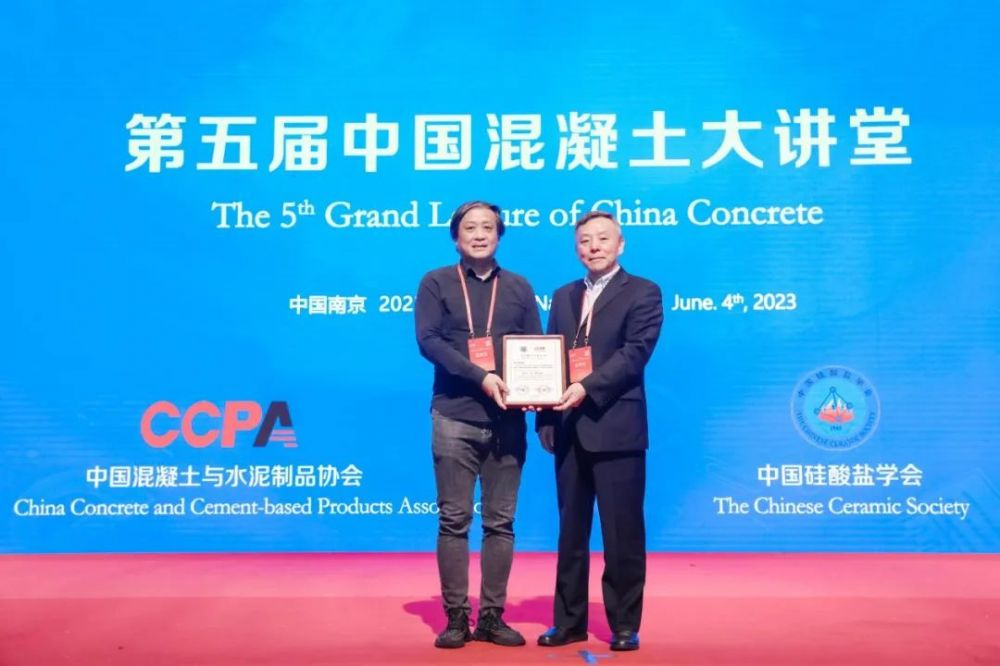
CCPA Honorary President Xu Yongmo issues Professor Xu Weiguo with the Honorary Certificate of Speaker
Key project: Shanghai Bookstore
The book cabin has a total area of approximately 30 square meters and can accommodate 15 people for various activities. The material used for printing in this bookstore is fiber concrete, independently developed by the team, without steel bars or templates during construction. There were two printers for the construction of bookstore, one is for in-situ printing of the building foundation and main structure, and the other is for on-site prefabricated printing of arc walls and domes. Each printer requires two people to operate, and a total of 4-5 construction personnel are required to participate in the construction process.
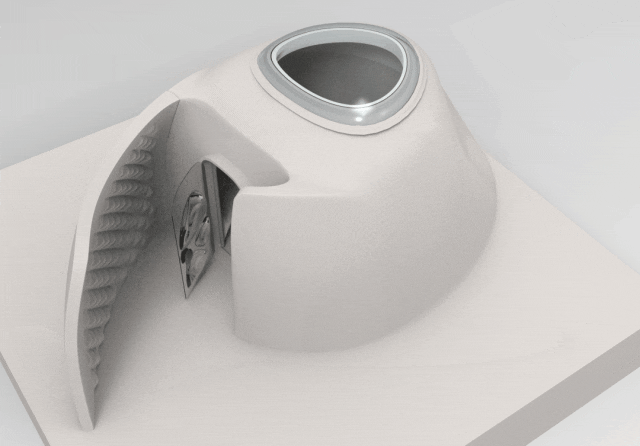
Shanghai Bookstore Virtual Dynamic Model
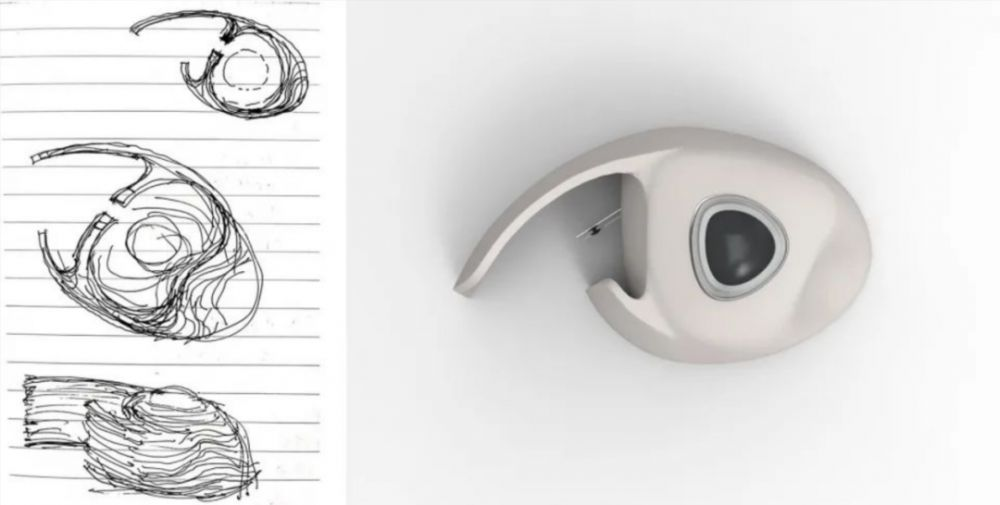
Concept Sketch and Design Model of Shanghai Bookstore
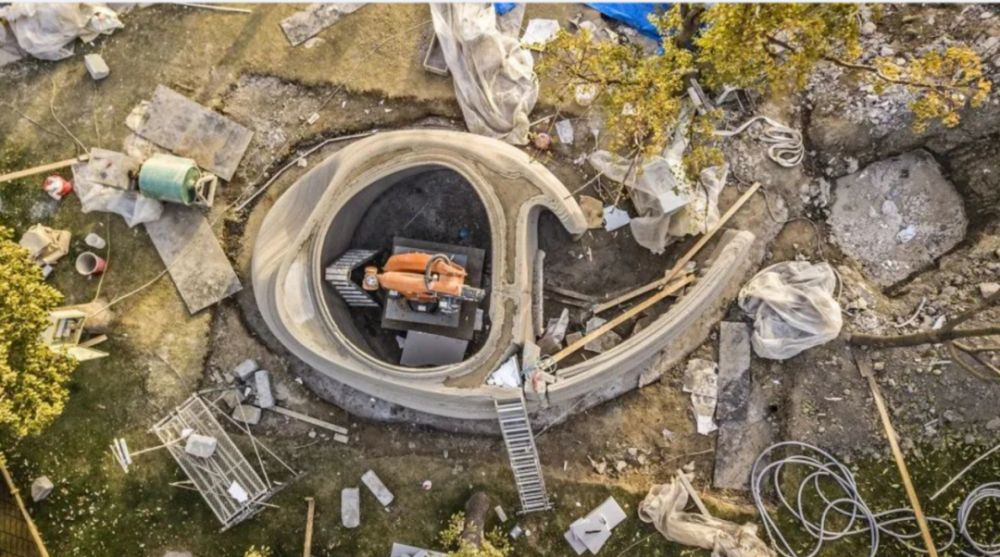
The construction process of in-situ printing in Shanghai Bookstore
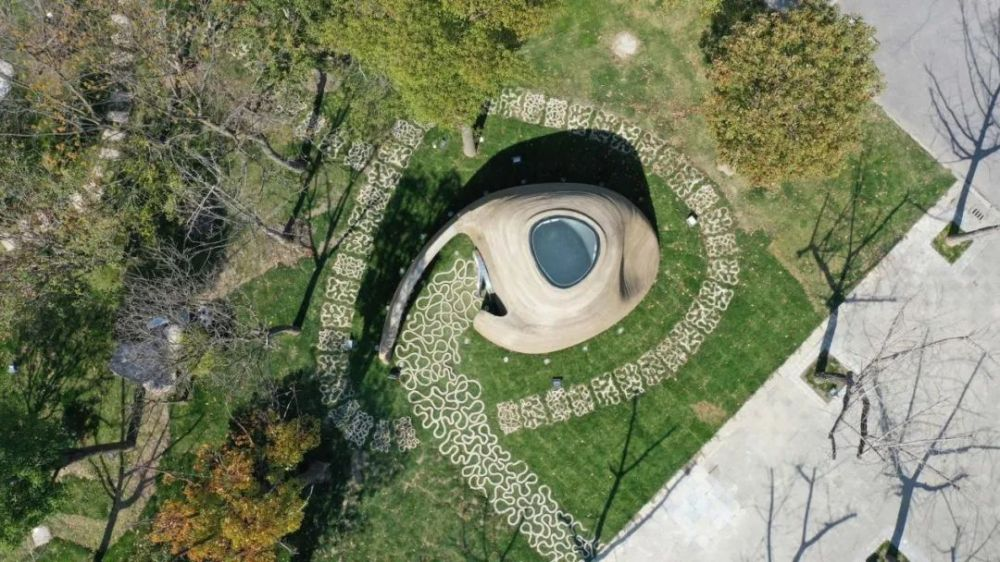
Aerial view of Shanghai Bookstore
In addition, Professor Xu Weiguo also shared engineering cases such as the China Construction Science and Technology Museum at the Xuzhou Garden Expo, camping site service houses in the United States, Guizhou residential house, Wujiazhuang Juanzi farmhouse, low-cost houses in Kenya, robot 3D printing garden, Shenzhen Convention and Exhibition Center 3D printing park, and Shanghai Smart Bay pedestrian bridge.
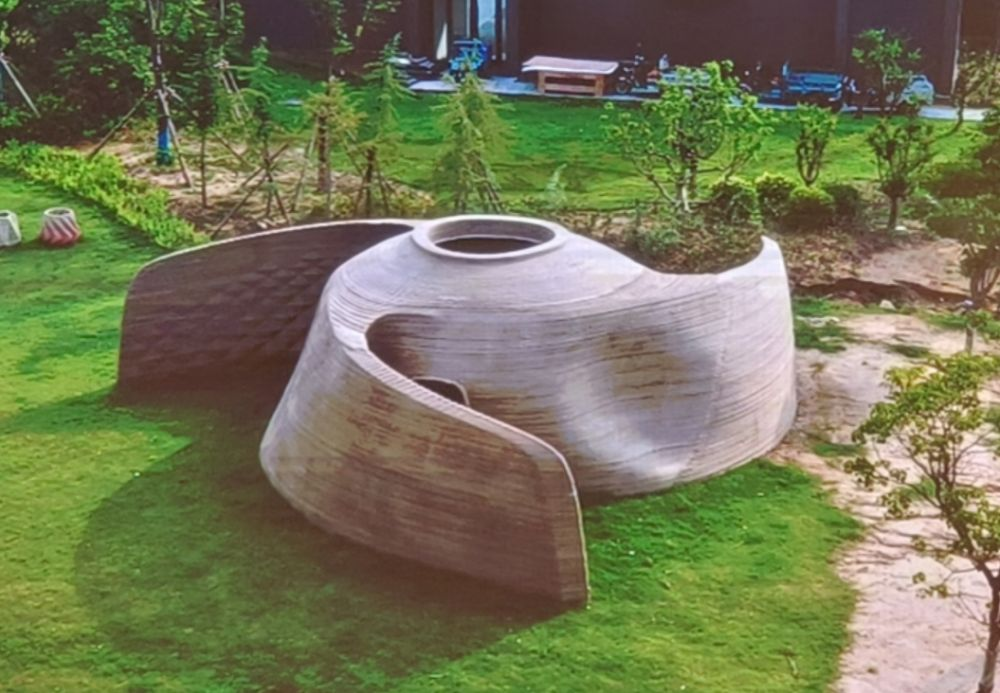
China Construction Science and Technology Museum at the Xuzhou Garden Expo
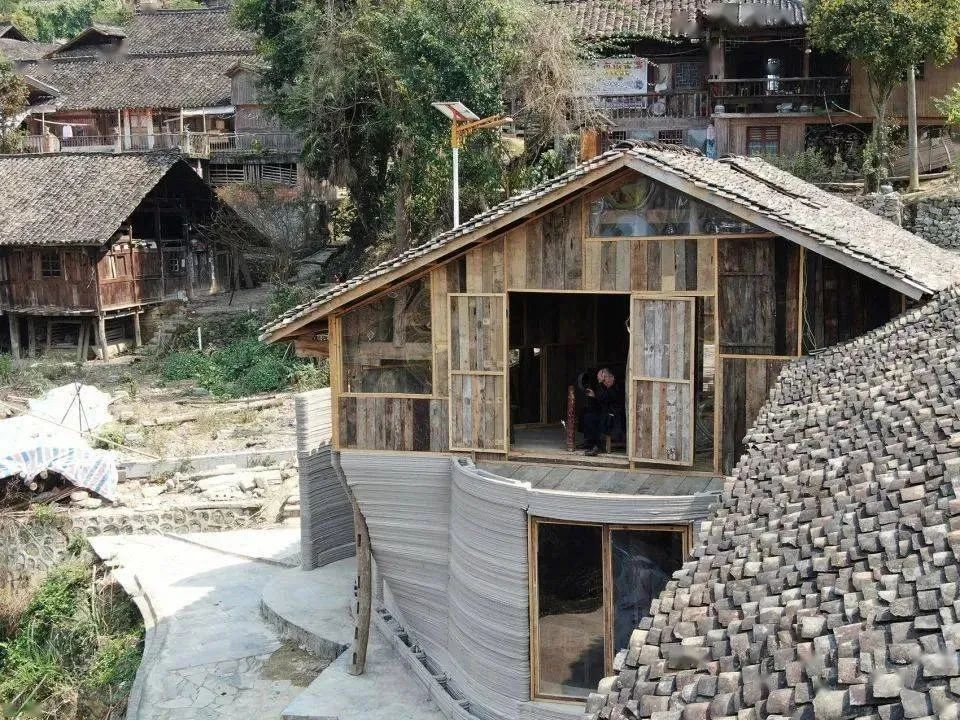
Guizhou residential house
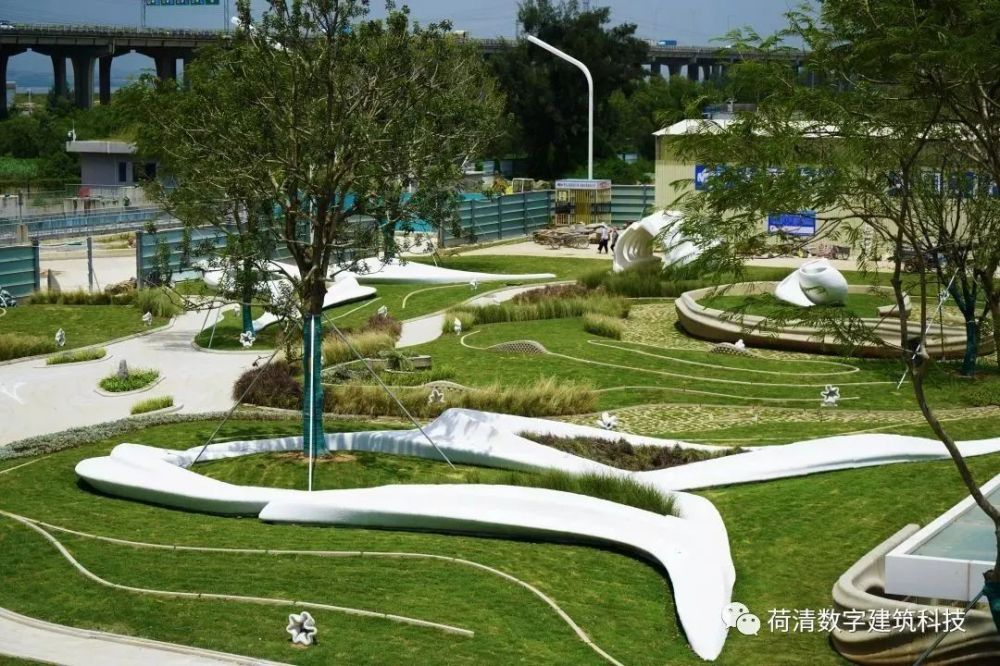
Shenzhen Convention and Exhibition Center 3D printing park
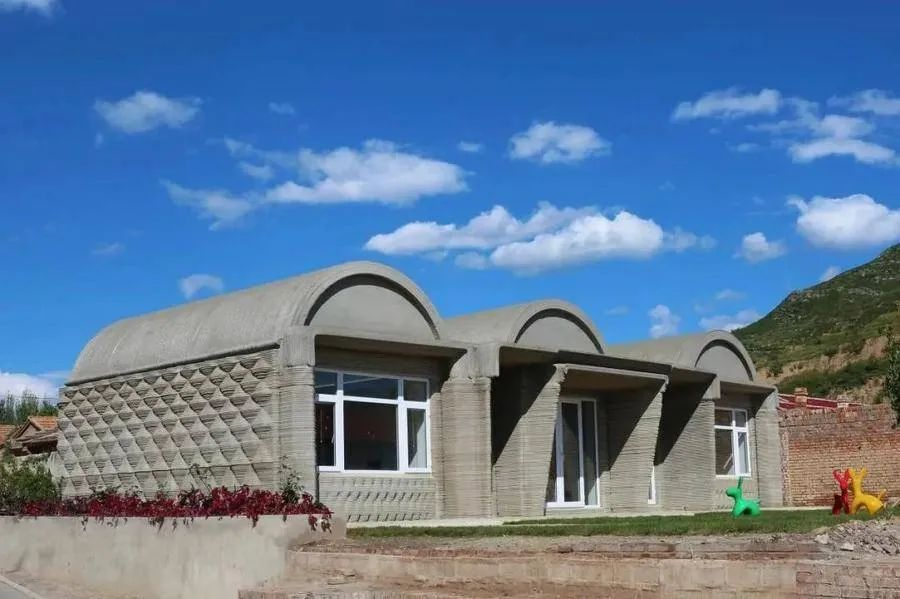
Wujiazhuang Juanzi farmhouse
02
The second speaker is Wang Hailong, a professor and doctoral supervisor at Zhejiang University, and the director of the Institute of Intelligent Construction and Engineering Management at Zhejiang University. The theme of Professor Wang Hailong's report is 3D printed concrete: materials, structures, printing processes and engineering applications. Specific exchanges were held on the issues and challenges in printing concrete materials, printing concrete structures, processes and engineering applications, as well as 3D printed concrete technology.

Professor Wang Hailong
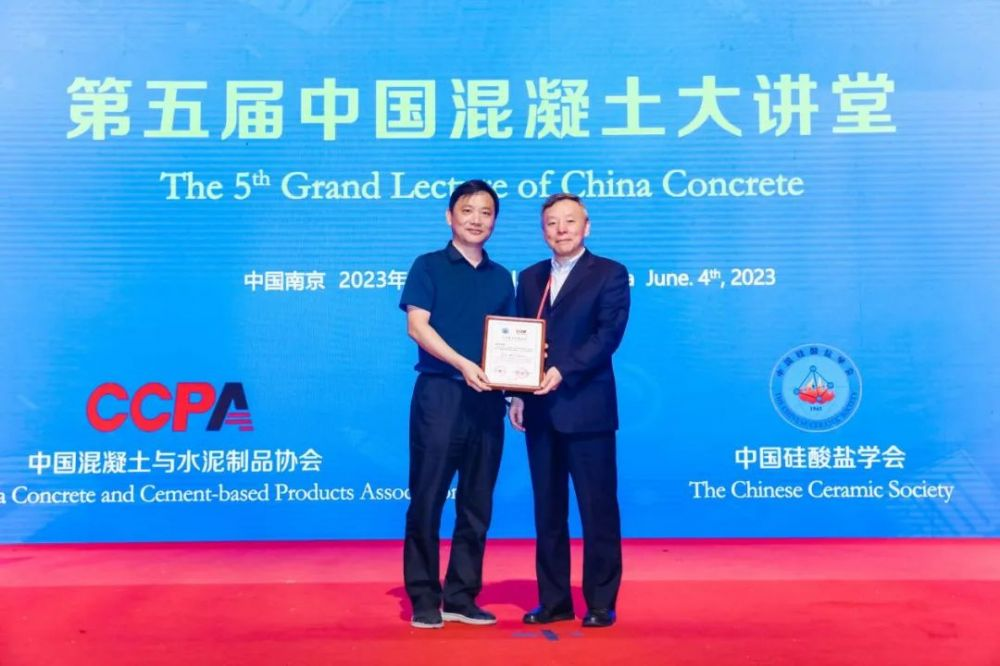
CCPA Honorary President Xu Yongmo issues Professor Wang Hailong with the Honorary Certificate of Speaker
Key project: Mars 1 Base Cultural and Tourism Hotel Project
The Mars 1 Base Cultural and Tourism Hotel is jointly designed and constructed by Zhejiang University, Hangzhou Guanli Intelligent Technology Co., Ltd., Shandong Jiji Additive Environmental Protection Technology Co., Ltd., and Yilan (Beijing) Planning and Design Co., Ltd. It consists of five individual buildings, with a height of 9 meters and a maximum diameter of 5.8 meters. Each building has two floors and a building area of approximately 45 square meters. The architectural design references the Mars base, with a three-dimensional curved (egg shaped) facade that fully embodies the advantages of 3D printing technology.
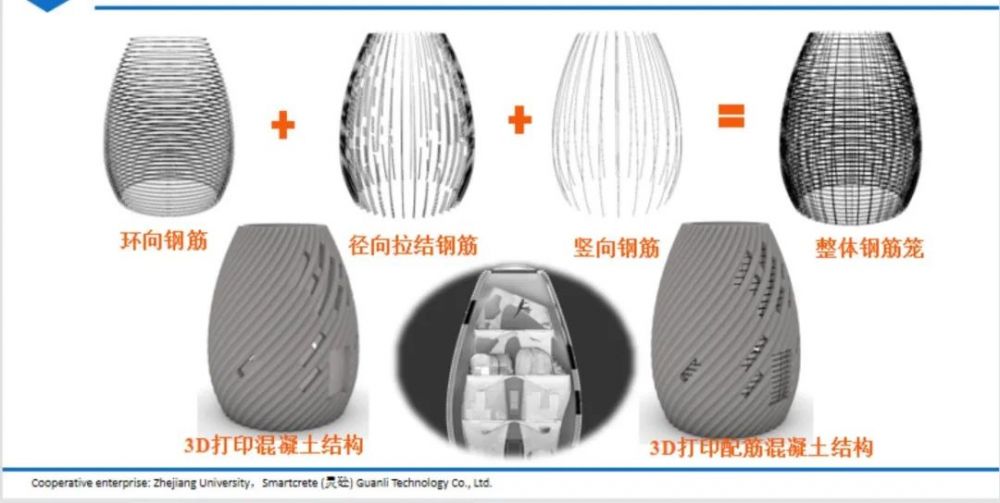
Mars 1 Base Cultural and Tourism Hotel Project-3D printing reinforced concrete structure
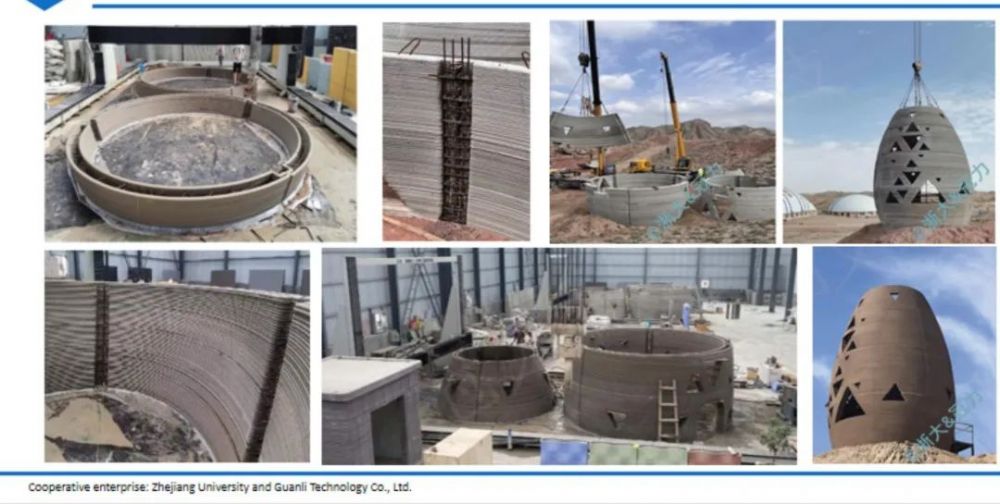
Mars 1 Base Cultural and Tourism Hotel Project during construction
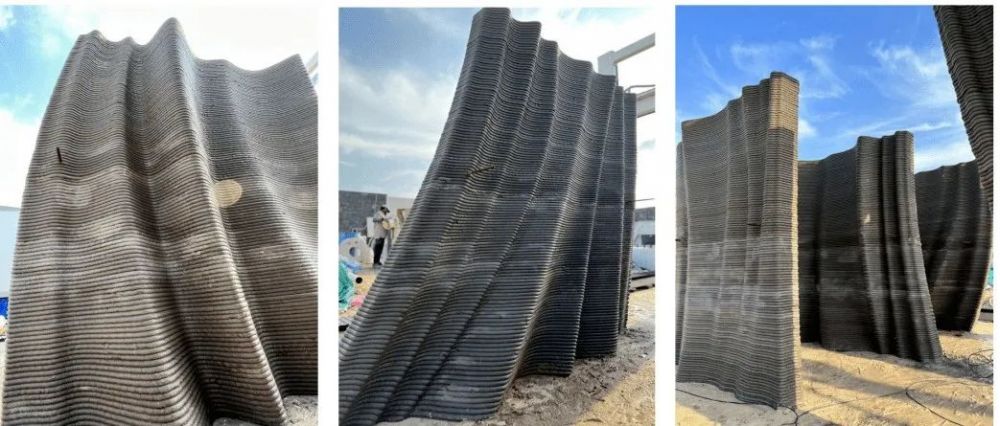
Saudi Durra Villa
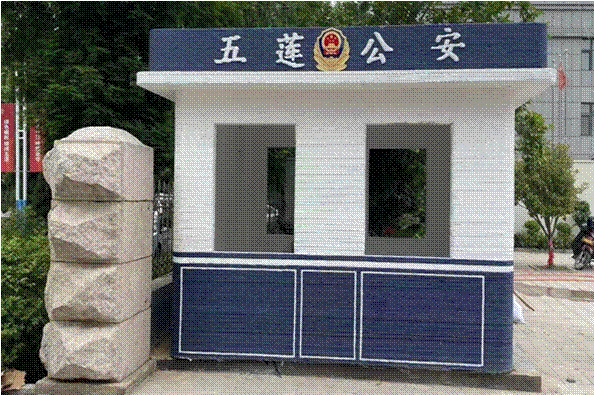
Overall printing of buildings
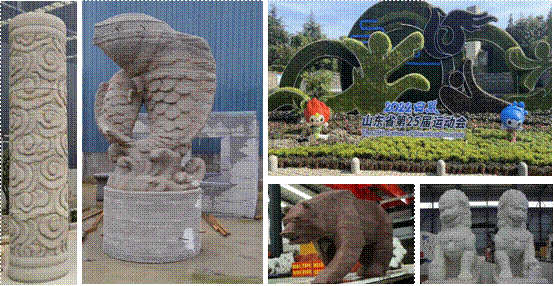
3D printing parts and components
Professor Wang Hailong also shared the application cases of prefabricated 3D printing technology in projects such as the Durra Villa in Saudi Arabia, the overall printing of public security sentries, 3D printing of park components, landscape sketches, and printing of residential courtyards under construction.
03
The last speaker is Dr. Li Lin, R&D Manager, Scientist, and Senior Engineer of the Cement Based Materials R&D Department of Saint-Gobain(Shanghai) Co., Ltd. Dr. Li Lin is mainly engaged in researching on functional additives for cement-based materials, new cementitious materials, resource utilization of solid waste, and intelligent manufacturing. Currently, he is responsible for the research and development of cement-based materials and regional technical support for Saint-Gobain Group in the Asia Pacific region. The topic of Dr. Li Lin's report in this concrete lecture hall is: Sharing of 3D architectural printing experience in Saint-Gobain.

Dr. Li Lin
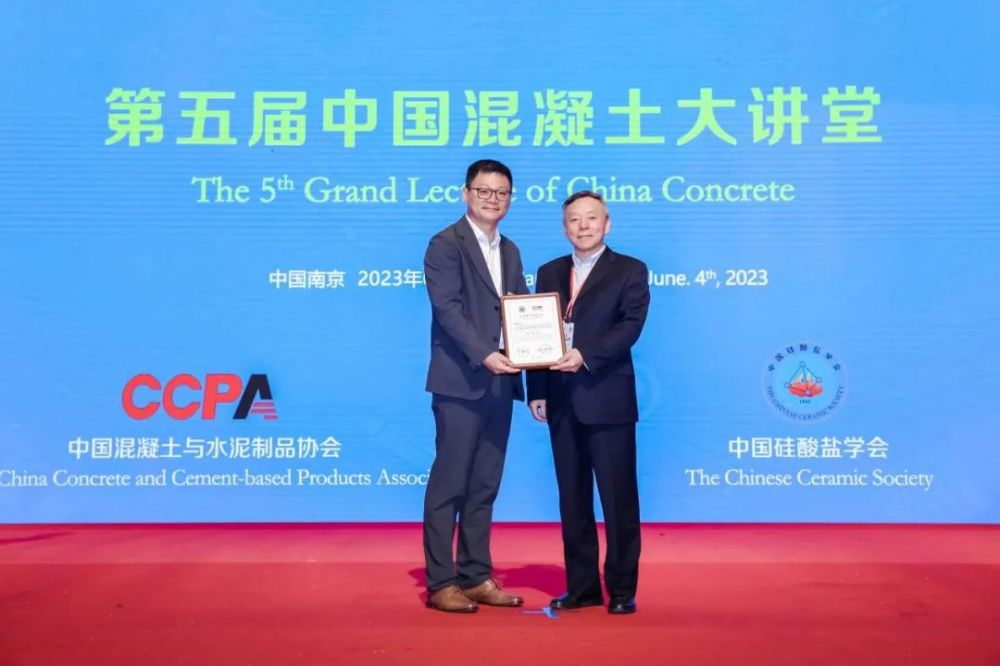
CCPA Honorary President Xu Yongmo issues Dr. Li Lin with the Honorary Certificate of Speaker
Why develop 3D printed concrete buildings? Dr. Li Lin proposed five obvious advantages of 3D printed concrete buildings:
u Fitting the digitization & automation in construction industry
u Improved control over realization process
u Increased/ different design possibilities
u Customization / Optimization
u Improved sustainability
Experience in 3D architectural printing in Saint-Gobain
Saint-Gobain Group has completed the development of a series of 3D printing materials and equipment, enhancing the interlayer bonding of 3D printing concrete and solving interlayer slip. The crack resistance of concrete has been improved and the durability of 3D printed concrete materials through extensive testing has been verified. At the same time, Saint-Gobain has also developed a 3D printing series guidance process to assist in designing printing components.
Dr. Li Lin shared the classic 3D printing architecture cases completed by Saint Gobain internationally, mainly divided into four categories: bridges, single-story houses, structures, and stairs.

▲Bicycle bridge in NL Gemert
In the Dutch town of Gemert, a small 26-foot-long bike bridge spans a canal. What makes this unassuming bridge unique is that it was 3D-printed using reinforced concrete. The Eindhoven University of Technology and BAM Infra construction company collaborated to create the bridge, which utilized 800 layers of reinforced, pre-stressed concrete. This method is more resource-efficient than traditional mold-based techniques. The structural design and engineering of the bridge was carried out by Witteveen+Bos, while Eindhoven University of Technology printed the bridge and BAM Infra assembled and installed it. The 3D-printing process involved the use of a special mortar provided by 3D.Weber.

▲The first 3D printed rental house in Europe
1. Full loadbearing construction
2. Double curved walls
3. No reinforcement applied
4. Permitted by local government for living
5. Goal: Last house to be printed on-site
6. Development house 2 and 3 in progress

▲Formwork: Station Driebergen Zeist
Station Driebergen Zeist formwork project fully embodies the advantages of 3D printed concrete: achieving curved surface modeling without templates, significantly reducing the construction period (80% reduction) and total construction period (60% -80% reduction) caused by traditional templates at the same cost.

▲Slopestairs in Amstelveen
At the Ouderkerkerlaan in Amstelveen, four 3D-printed concrete slope stairs have been installed by BAM contractor. Each staircase is a whopping 11 meters long, 5.3 meters high, and 2.5 meters wide. 3D.Weber produced these stairs in their own factory in Eindhoven, using an innovative production process that creates many hollow spaces. This has resulted in reduced CO2 emissions.
The 5th Grand Lecture of China Concrete is open for free. In the future, the Grand Lecture of China Concrete will continue to strive to create the highest level academic and technical exchange platform , introducing the latest achievements of the concrete industry to practitioners, architectural designers, and engineers. The 6th China Concrete Lecture Hall is planned to be held in the first half of 2024.


Get the latest updates with our newsletter
Follow us
-

CCPA Wechat
-

CCPA EXPO Wechat
