




Four Chinese Bridges Win Top Honors at the "Nobel Prize of Bridge Engineering"—The International Bridge Conference (IBC) Awards
The judging process for the 2025 International Bridge Conference (IBC) Awards has concluded, and four Chinese bridges have been recognized among this year's winners.
According to the China Highway and Transportation Society (CHTS), the judging process for the 2025 International Bridge Conference (IBC) Awards has concluded, and four Chinese bridges have been recognized among this year's winners. The honored projects include the Huangmaohai Sea-crossing Channel, Shuangbao Grand Bridge, part of Chongqing-Changsha Expressway, Juxing Bridge in Nansha, Guangzhou, and the Minjiang River Bridge Expansion Project in Yibin.
Huangmaohai Sea-crossing Channel
※ George S. Richardson Medal
The Huangmaohai Sea-crossing Channel connects Jinwan District in Zhuhai with Taishan in Jiangmen across a 14 km sea span. The project’s signature structures include the Huangmaohai Bridge (a triple-tower cable-stayed bridge with twin 720 m main spans) and the Gaolan Port Bridge (a dual-tower cable-stayed bridge with a 700 m main span). The design features double-curved single-column pylons paired with split steel box girders, blending structural force with aesthetic elegance. The "slim waist" tower shape has become an iconic architectural symbol in the Guangdong-Hong Kong-Macao Greater Bay Area. The project pioneered advances in multi-tower cable-stayed bridge systems, wind resistance control, prefabricated industrial construction, girder alignment control, intelligent construction, and green engineering, contributing significantly to technological progress in bridge construction.
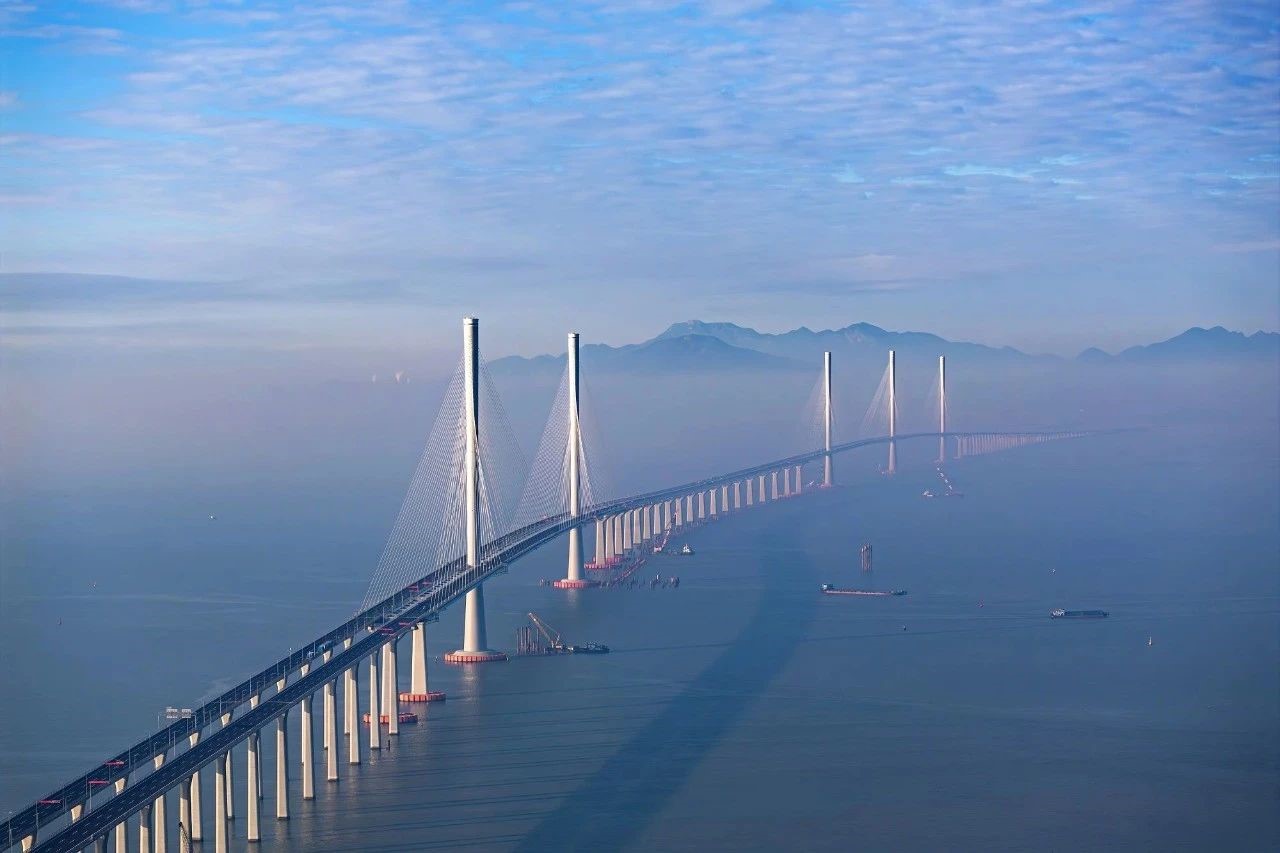
Image Source: Huangmaohai Sea-crossing Channel Management Center
The Shuangbao Grand Bridge, part of the Chongqing-Changsha expressway
※ Gustav Lindenthal Medal
Located in Wulong, Chongqing, the Shuangbao Grand Bridge is a control project of the Chongqing-Changsha Expressway and features a 2×405 m upper-deck steel tube concrete continuous arch bridge that spans a "W"-shaped deep valley. It currently holds the record for the world’s longest-span multi-arch bridge. Innovations for this mountainous project include a compound central arch foundation ("shallow excavation + pile foundation"), automatic arch segment construction control, 3D laser preassembly scanning, and high-performance 70 MPa manufactured-sand concrete infill, they have been solved the key technical problems in the construction of multi-span arch Bridges in mountainous areas.
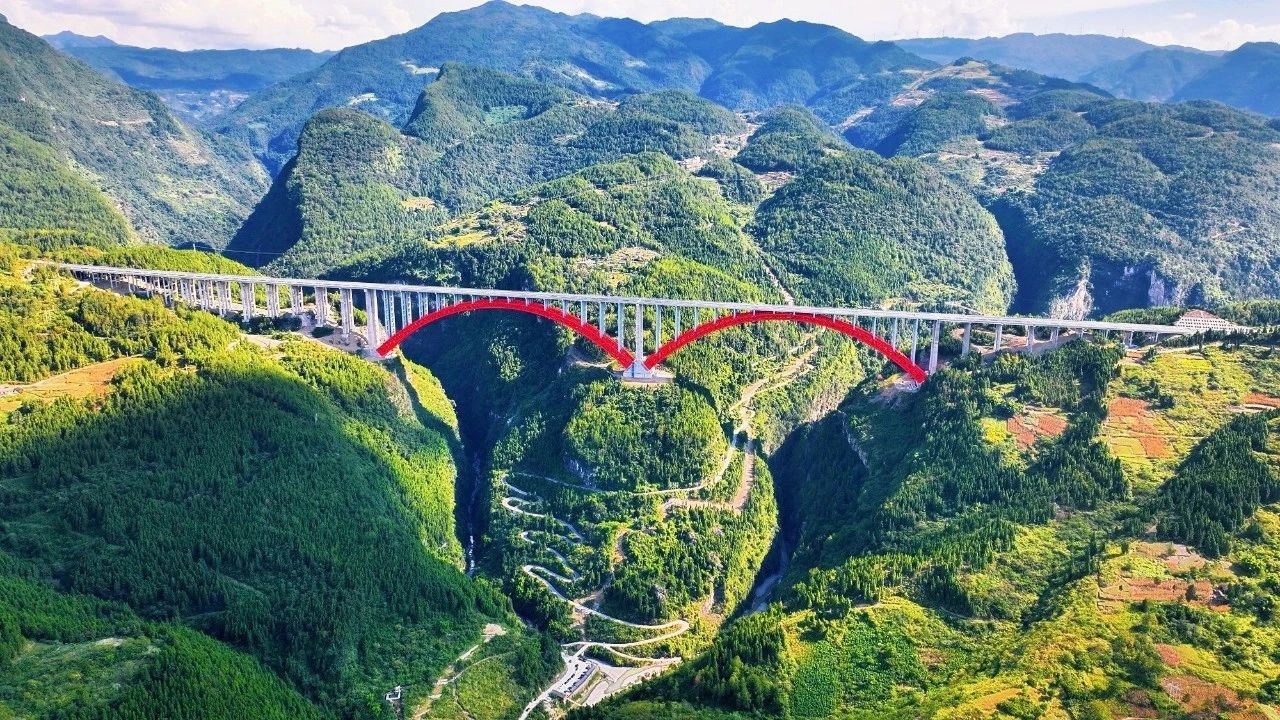
Image Source: CCCC Second Highway Consultants Co., Ltd.
Juxing Bridge, Nansha District, Guangzhou
※ Arthur G. Hayden Medal
The Juxing Bridge is a landmark pedestrian bridge in the heart of Nansha, the geometric center of the Greater Bay Area. Inspired by the concept of “three regions joining hands and forging a new star,” the bridge features a three-legged steel arch design, spanning the confluence of Jiaomen River and Wuzhou Channel to efficiently connect the surrounding banks in the shortest distance. With an ultra-flat rise-to-span ratio of 1:21 and a main span of 155 m, this innovative steel box arch bridge overcomes constraints related to building space, spatial scale, foundation conditions, and structural economy. Through an integrated architectural-structural design approach, the team pioneered an ultra-flat, large-span tri-leg arch bridge system suitable for soft foundations. The project also introduced a redundancy-equalized dynamic incremental control method, achieving an elegant balance between cultural expression, architectural form, and structural mechanics.
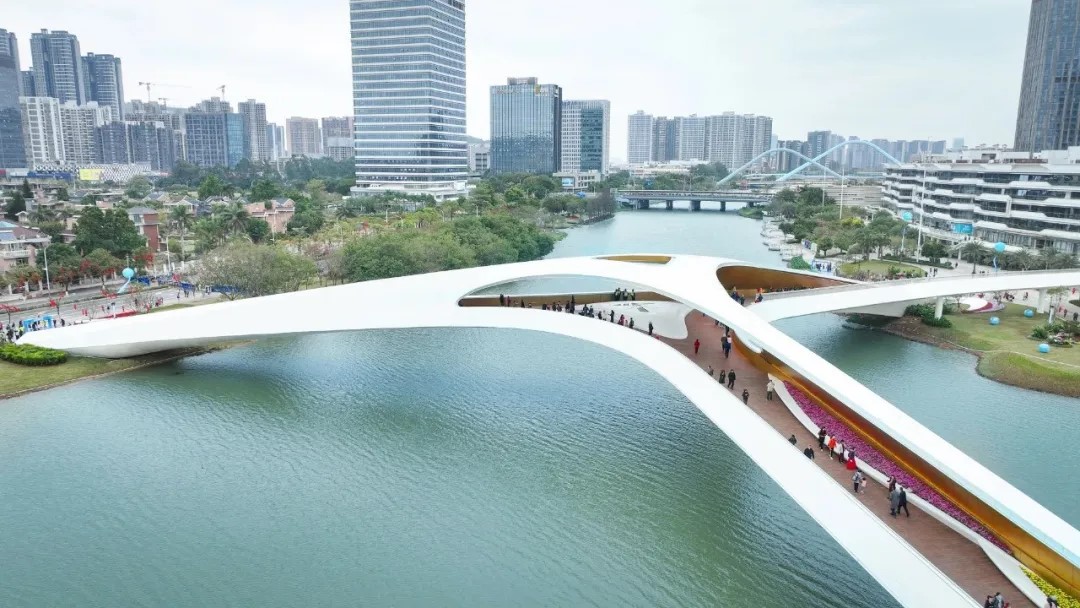
Image Source: Architecture and Engineering Co., Ltd. of Southeast University
Minjiang River Bridge Expansion Project, Yibin, Sichuan
※ Abba G. Lichtenstein Medal
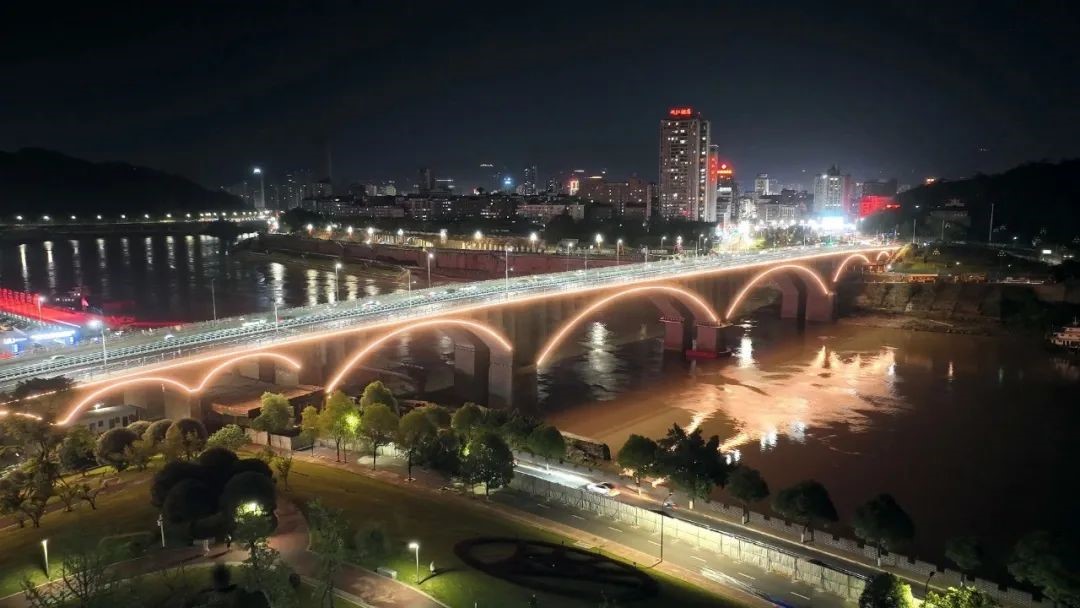
The Minjiang River Bridge, constructed in 1973, was the first highway bridge in Yibin. Its main span adopts a 55+100+100+55-meter open-spandrel, deck-type concrete arch design, representing one of China’s iconic large-span concrete arch bridge types from the 1970s. To address structural aging and traffic congestion, the bridge underwent a capacity-enhancing retrofit while preserving its historical character. The expansion increased traffic capacity by 50% and brought the structure up to the highest modern highway standards. The successful preservation of the original bridge façade serves the memory of Yibin residents and the legacy of Chinese concrete arch bridges, offering valuable references for similar retrofitting projects.


Get the latest updates with our newsletter
Follow us
-

CCPA Wechat
-

CCPA EXPO Wechat
