




New Smart Construction Model: Jianhua Supports Shenzhen’s Innovation and Entrepreneurship Accessible Service Center
The Shenzhen Innovation and Entrepreneurship Accessible Service Center Project (hereinafter referred to as the “Service Center Project”) is located at the core area of the Guanlan High-Tech Industrial Park in Longhua District, covering a land area of 26,500 m3 with a total floor area of 134,200 m3.
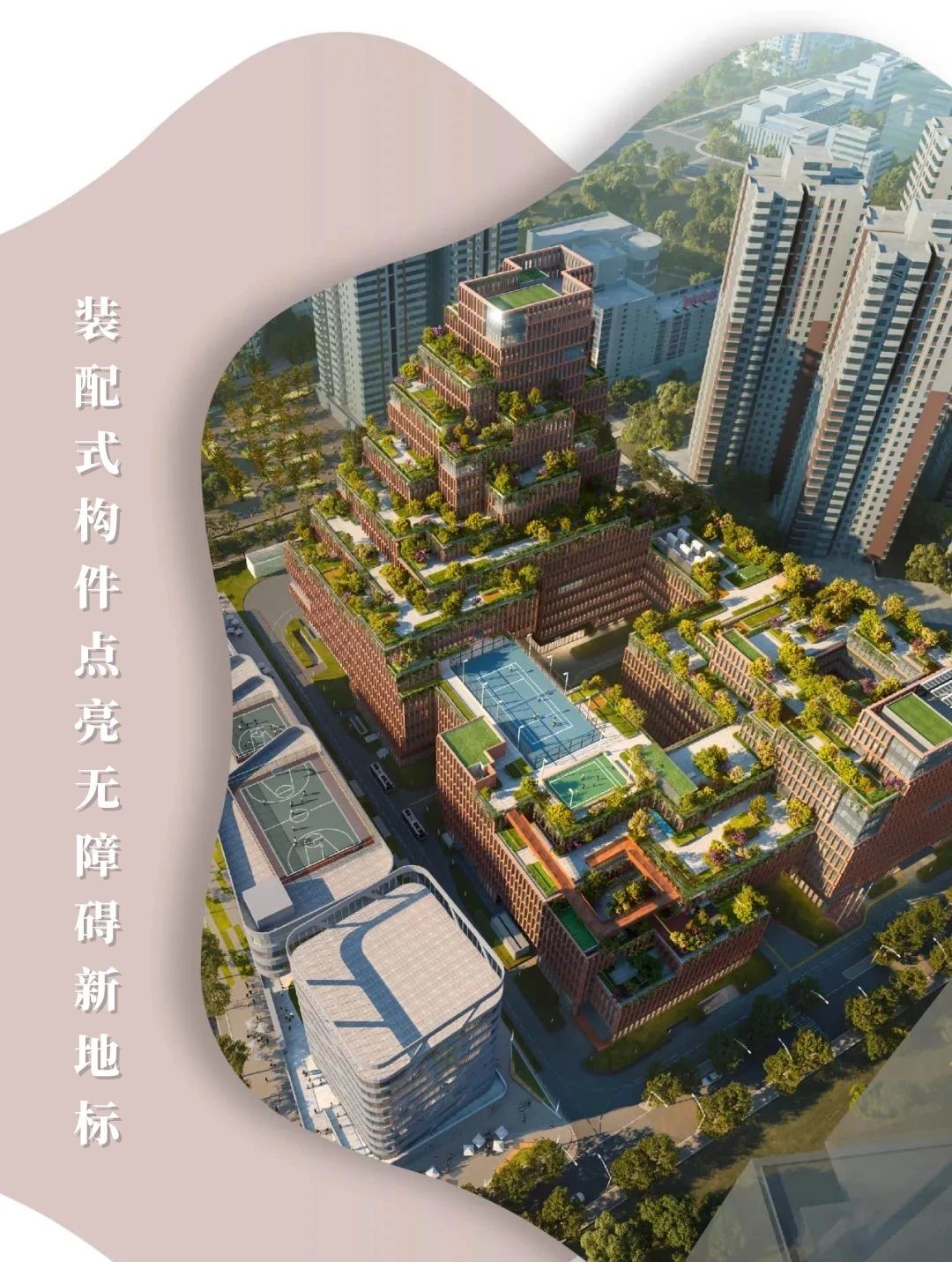
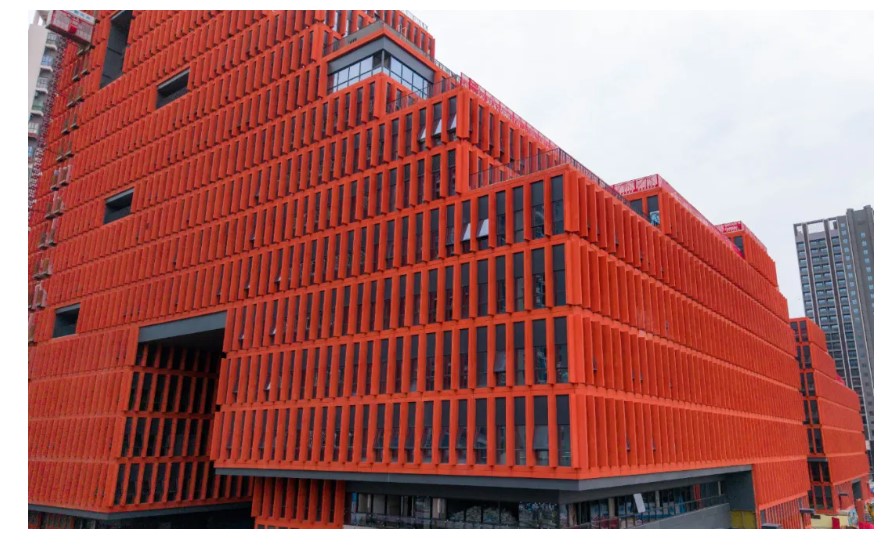
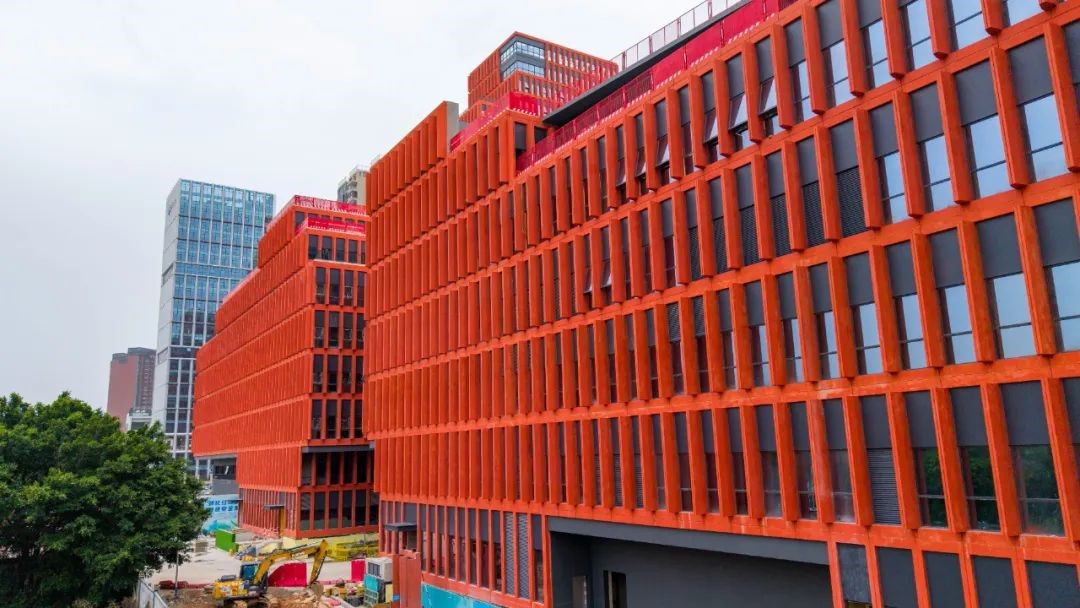
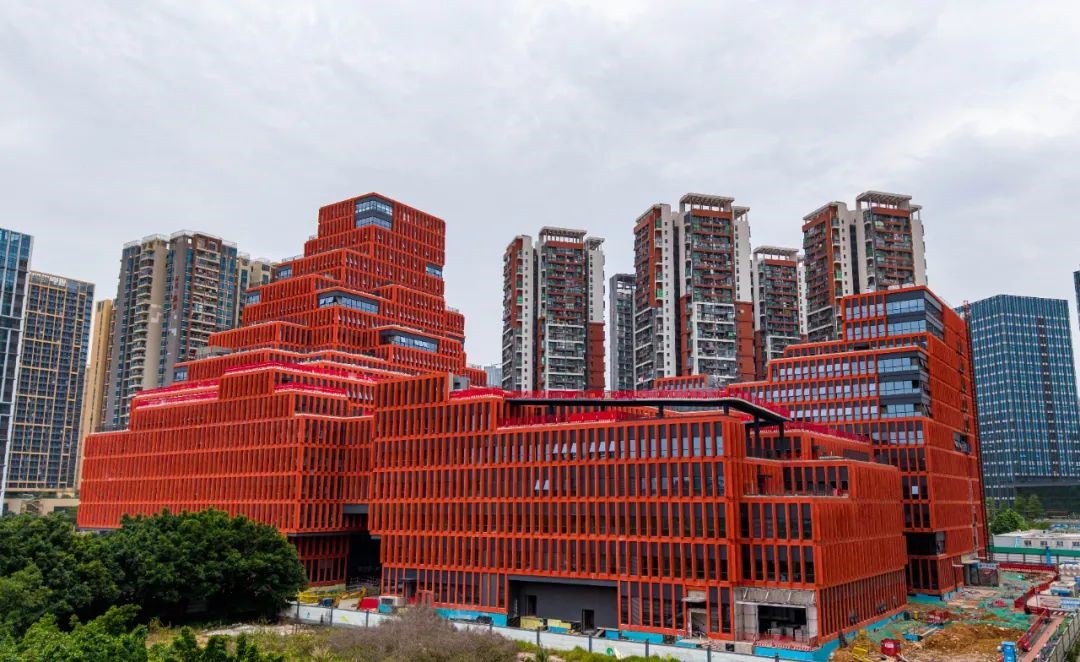
The Shenzhen Innovation and Entrepreneurship Accessible Service Center Project (hereinafter referred to as the “Service Center Project”) is located at the core area of the Guanlan High-Tech Industrial Park in Longhua District, covering a land area of 26,500 m3 with a total floor area of 134,200 m3. As China’s first mega-scale comprehensive service platform for persons with disabilities, it integrates vocational rehabilitation, educational training, innovation and entrepreneurship, cultural and sports activities, and assistive technology R&D. Inspired by the design concept of a “healing mountain,” the project features a mountainous architectural form composed of four independent tower blocks that step back in elevation, visually extending the barrier-free landscape park from the west side into the building interior. The result is a vertical forest ecosystem and a functional yet artistic new urban landmark.
Dual Advantages of Prefabricated Colored Concrete Facades
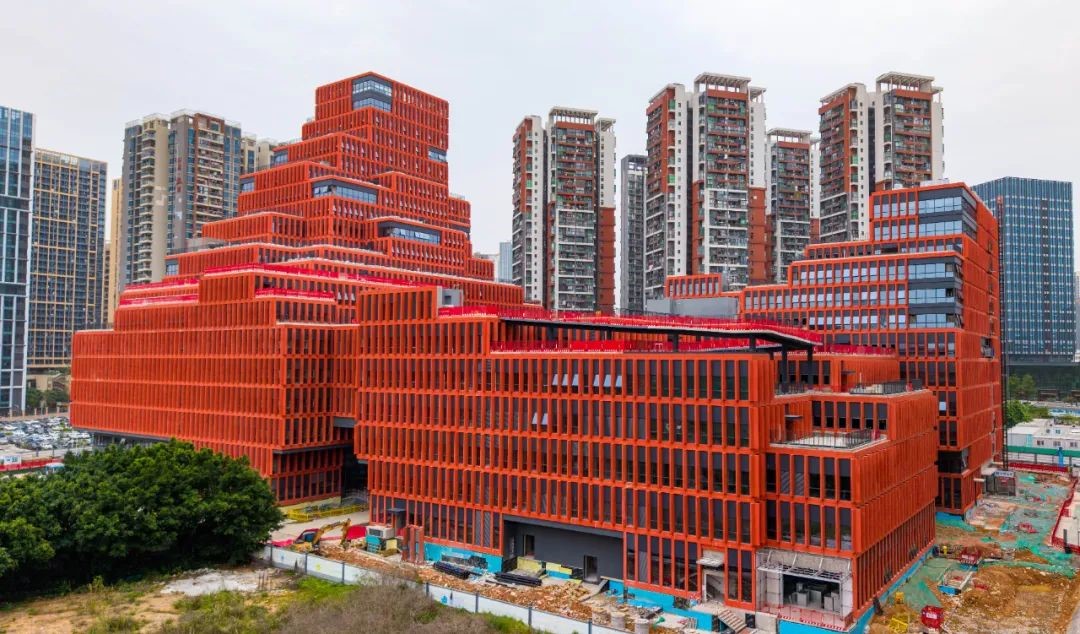
As one of the few large-scale prefabricated buildings in China with colored concrete façade panels, the Service Center project adopts a fully prefabricated construction approach. It utilizes precast concrete exterior wall panels, prefabricated staircases, steel truss deck slabs, and ALC lightweight interior partition walls—practicing the principles of low carbon, energy saving, and emissions reduction.
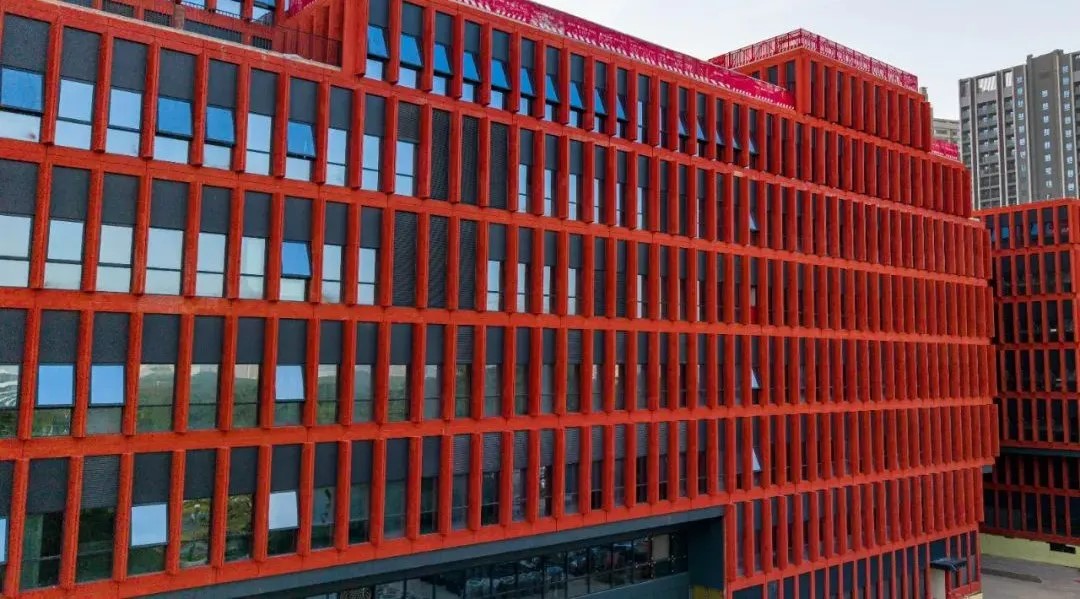
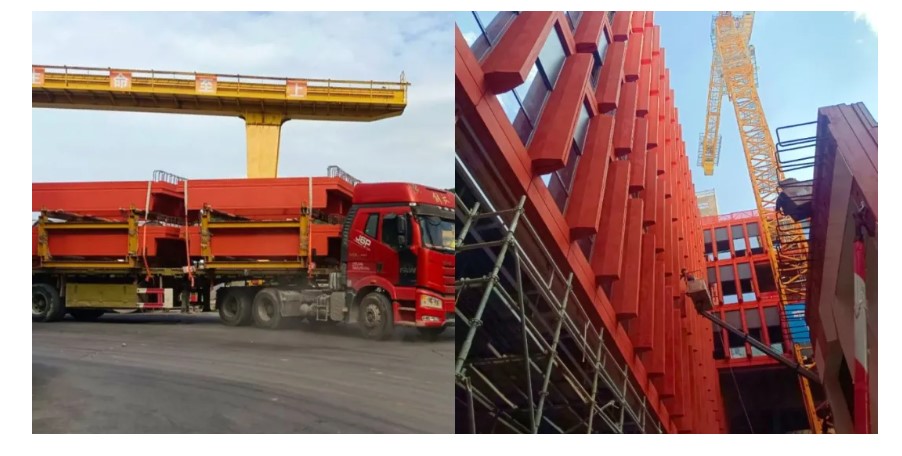
After fabrication at the precast plant, the colored concrete façade panels are transported to the construction site and installed using an “internal cast and external hoist” method. Compared with traditional concrete, these panels offer two major advantages: firstly, their strong decorative quality harmonizes with urban architecture and landscaping, meeting aesthetic demands; secondly, they provide one-step decorative functionality, eliminating the need for secondary finishing. This not only conserves resource and reduces pollution, but also enhances strength, construction efficiency, and the reliability of the façade finish.
Challenges in Large-Scale Colored Concrete Panel Construction
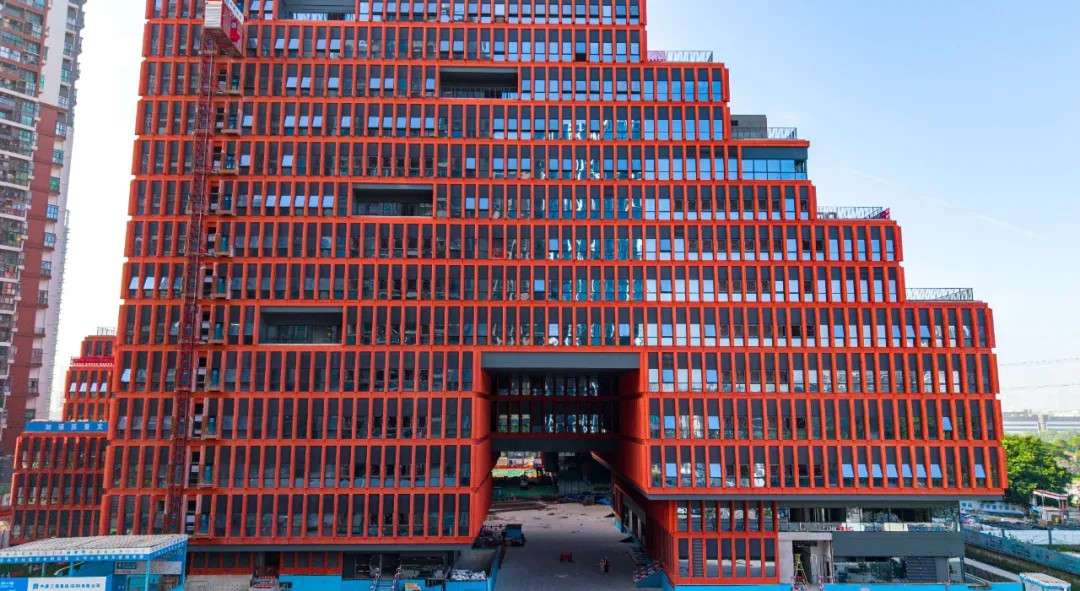
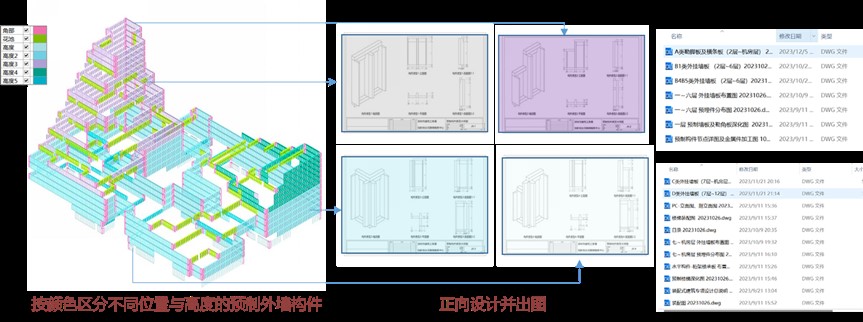
The project requires approximately 2,800 precast façade panels, with over 230 distinct types. The large quantity, high complexity, and strict quality standards make the construction process particularly demanding. As no secondary decorative work is allowed on these exterior panels, ensuring consistent color tones and surface quality of the precast colored concrete is of paramount importance.
Jianhua’s Multidimensional Solution
To achieve the optimal color and façade effect, the project team of Jianhua Construction Materials Group (hereinafter referred to as “Jianhua”) accessed the company’s local raw materials database and colored concrete mix design library. Based on the project’s material performance requirements, the team conducted multiple rounds of color tuning and sample testing, continuously optimizing color consistency, component details, and process standards. Through this rapid localization of raw material screening, mix proportioning, and process validation, the team ensured design consistency while reducing overall cost by over 20%.
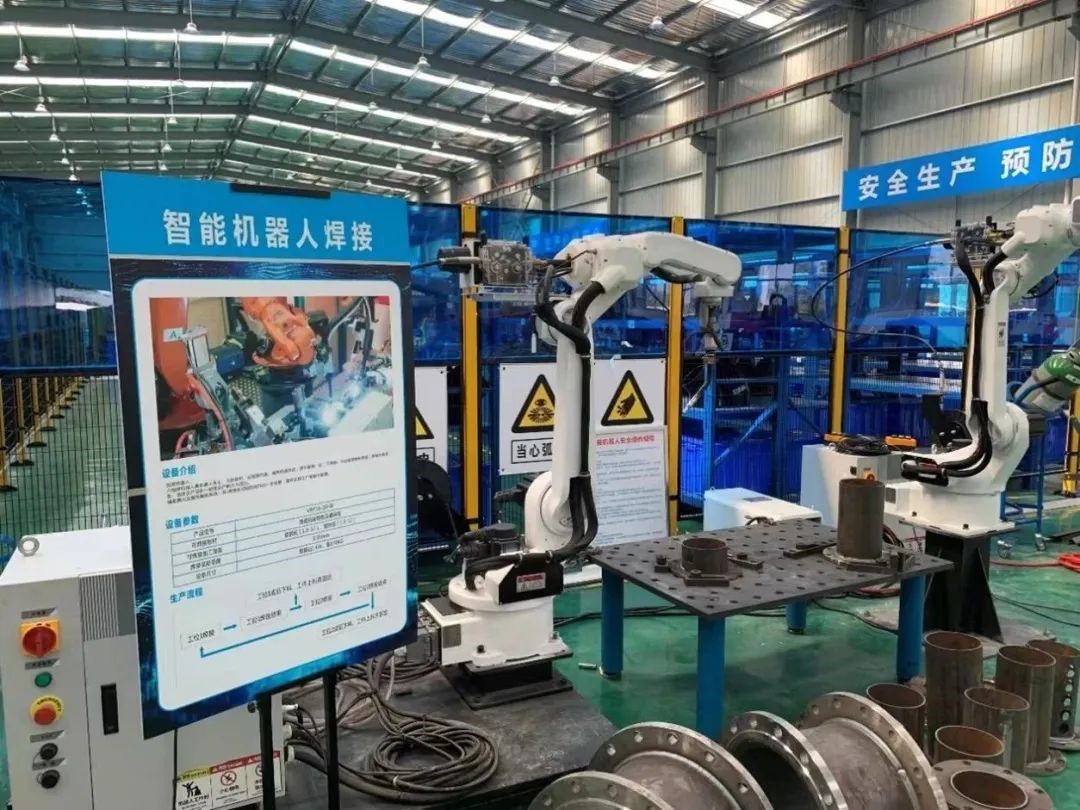
During the implementation phase, the team used Jianhua’s digital platform to synchronize production schedules with on-site progress. Early-input data such as component ID numbers and dimensions served as the foundation for scheduling and production reporting. The platform generated production tasks, initiated fabrication commands, and printed component labels with QR codes for tracking and installation.
Green, Low-Carbon, and Digitally Enabled Construction
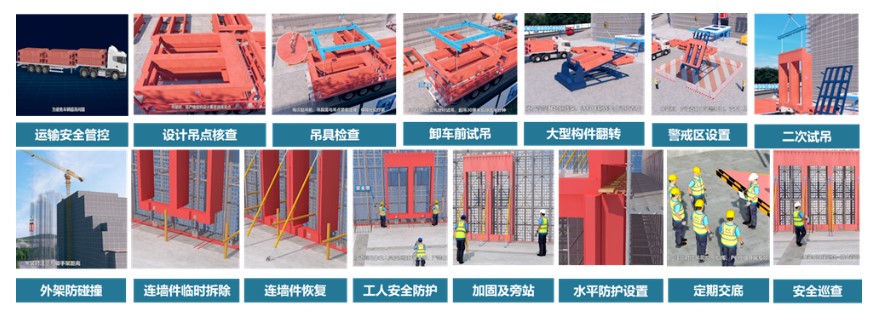
The project’s largest façade panels reach up to 5.4 m in height, 2.85 m in width, and 6.5 t in weight—posing high demands on tower crane efficiency and optimal layout of the venue. Jianhua’s technical team collaborated closely with the client throughout the design and construction process, leveraging BIM (Building Information Modeling) technology for full-process guidance. During the construction phase, BIM-enabled simulations optimized tower crane layout and material staging, significantly improving hoisting efficiency. Visualized simulations of the component installation process helped identify and avoid collision risks associated with complex geometries, ensuring both progress and quality.
Upon completion, this center will become a “new landmark” in Shenzhen’s barrier-free urban development and a model for replicable accessible facility construction nationwide. It embodies not only architectural aesthetics and functional excellence but also the city’s commitment to “equality, inclusion, and shared” development. The Shenzhen Innovation and Entrepreneurship Accessible Service Center is a testament to how design, technology, and care for people can shape a more humane urban future.


Get the latest updates with our newsletter
Follow us
-

CCPA Wechat
-

CCPA EXPO Wechat
