




Shanghai Grand Opera House’s 15-Meter Cantilever Marvel: How UHPC “Super Concrete” Supports a World-Class Curved Roof
Led by Shanghai Construction No.4(Group) Co., Ltd., with participation from Shanghai Mechanical Construction Group Co., Ltd., the research project “Key Construction Technologies for Complex Structures in the Shanghai Grand Opera House” has pioneered a revolutionary structural system featuring UHPC (Ultra-High Performance Concrete) for large-scale prefabricated assemblies.
Led by Shanghai Construction No.4(Group) Co., Ltd., with participation from Shanghai Mechanical Construction Group Co., Ltd., the research project “Key Construction Technologies for Complex Structures in the Shanghai Grand Opera House” has pioneered a revolutionary structural system featuring UHPC (Ultra-High Performance Concrete) for large-scale prefabricated assemblies. This innovation successfully addressed the unprecedented challenge of constructing ultra-thin, large-span cantilevered structures using UHPC for the main body of the Grand Opera House—the first such application in China.
By integrating parametric design and digital construction technologies, the team developed critical methods for building the double-helical free-form concrete thick-shell roof, solving construction difficulties associated with complex curved surfaces. Additionally, key technologies for assembling large-scale spiral stepped irregular steel roof structures were introduced, significantly improving construction efficiency for long-span spiral steel roofing systems.
These breakthroughs were instrumental in realizing the iconic curved roof of the Shanghai Grand Opera House. They not only overcame technical barriers in structural engineering but also ensured construction feasibility, efficiency, and cost-effectiveness—providing a solid foundation for the creation of a world-class “urban stage” in Shanghai.

Project Rendering
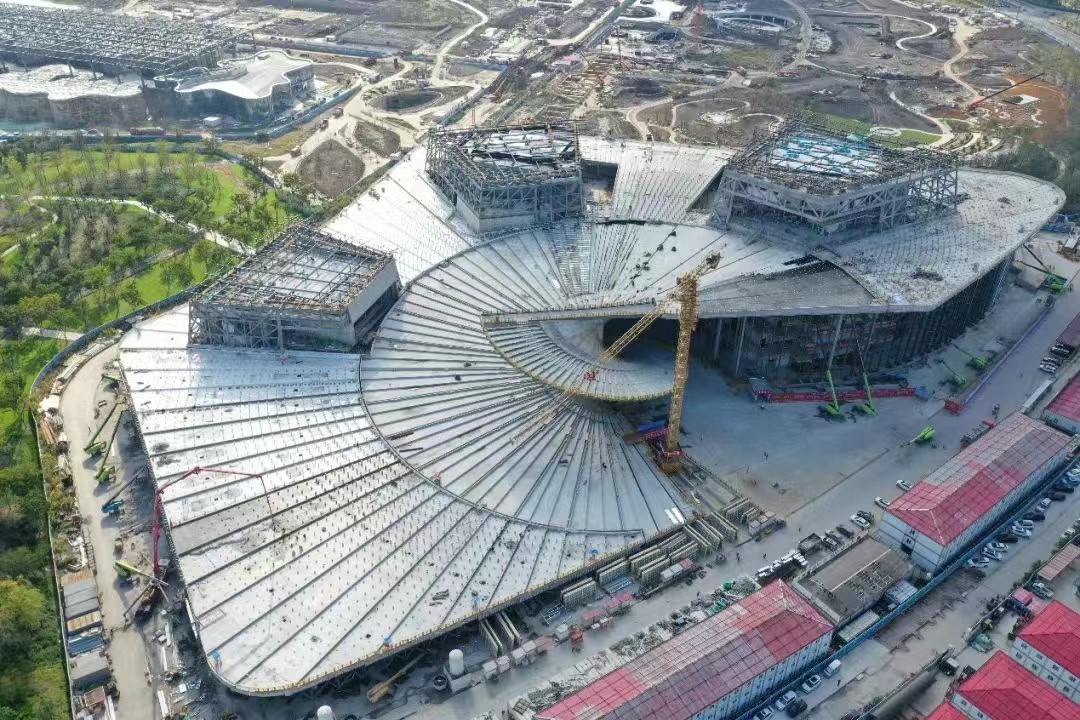
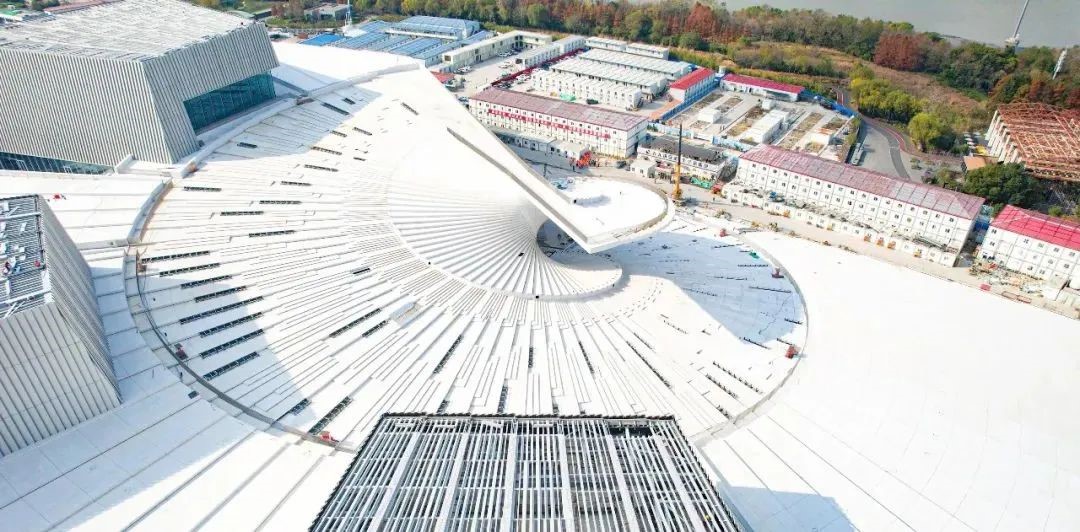
Structural Site Photo
Project Background
As a major cultural infrastructure project under Shanghai’s 13th Five-Year Plan, the Shanghai Grand Opera House is a central pillar in the city's effort to build a globally recognized cultural brand and establish Shanghai as the “Performing Arts Capital of Asia.” The complex project includes three opera halls (large, medium, and immersive), as well as supporting spaces for theater operations, education, and exhibitions. The site covers 53,000 m², with a total floor area of 146,000 m²—75,000 m² above ground and 71,000 m² underground.
Architecturally, the opera house draws inspiration from the form of a traditional Chinese folding fan. Blending the dynamic aesthetics of opera with cultural symbolism, a grand white spiral staircase ascends skyward, unfolding like an open fan—an elegant embodiment of Chinese artistic beauty.
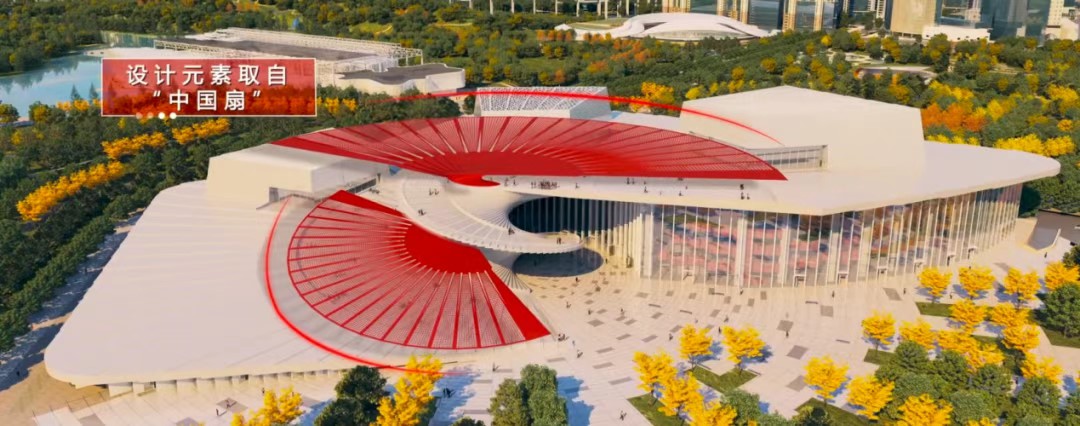
Illustration of the “Chinese Folding Fan” Concept
However, beneath this strikingly lightweight appearance lies an exceptionally complex structural system, posing immense challenges for the construction team.
Zone A: Required ultra-thin cantilever beams exceeding 15 m in length, with a strict cross-sectional height limit of 725 mm—pushing the span-to-depth ratio beyond known precedents.
Zone B: Featured overlapping, double-helical, free-form concrete thick-shell structures exceeding 1.5 m in thickness, the structure resembles a long-span spatial curved shell in appearance, with construction principles theoretically similar to those of inclined concrete walls. However, in terms of structural function, it behaves more like a generalized column. As such, it does not fall under any currently defined category of typical structural components.
Zones C and D: Included large-area, long-span spiral steel roofing structures that integrates multiple demanding design challenges, including inward-leaning façades on all four sides, dual-direction cantilevers, a maximum clear height of 65 meters, and a maximum span of 27 meters.
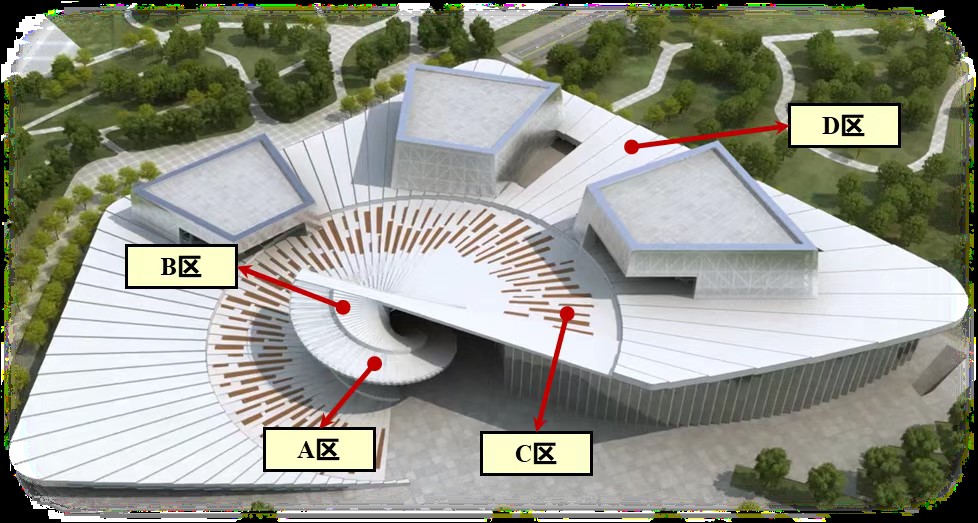
Roof Structure Model of the Shanghai Grand Opera House
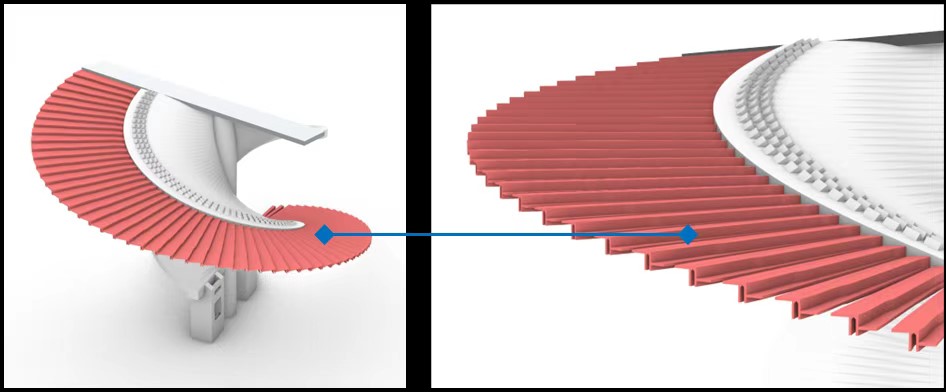
Zone A: 15-Meter Cantilever Beam-Slab Structure
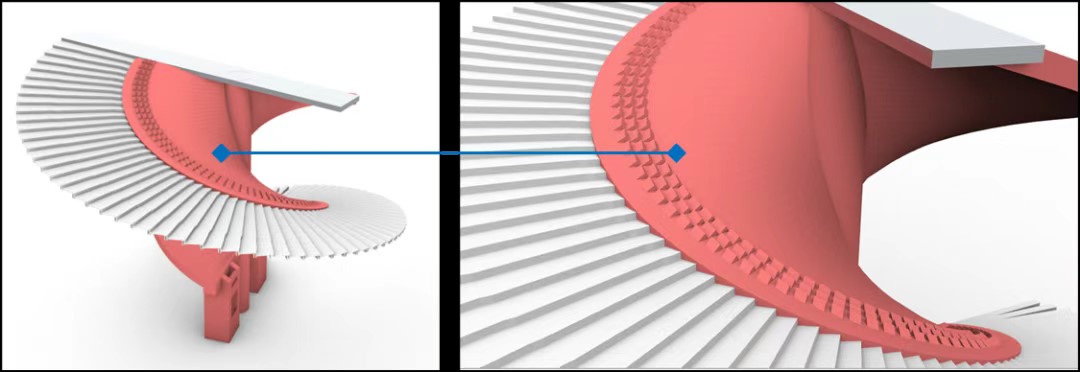
Zone B: Double-Helical Free-Form Concrete Shell Structure
Technological Innovations
1. Key Construction Technologies for Ultra-Thin, Large Cantilevered Pre-Stressed UHPC Fan-Shaped Structures
To control the beam height in Zone A under 725 mm while achieving a 15-meter cantilever, the team used UHPC with compressive strength up to 165 MPa, combined with delayed bond prestressing techniques. A construction method using both precast and cast-in-place UHPC was developed. A UHPC-to-concrete delayed-bond prestressed anchorage connection node and an embedded steel component interlocking system within the concrete thick shell were proposed and applied, theoretically resolving the feasibility issues associated with implementing UHPC structural systems.
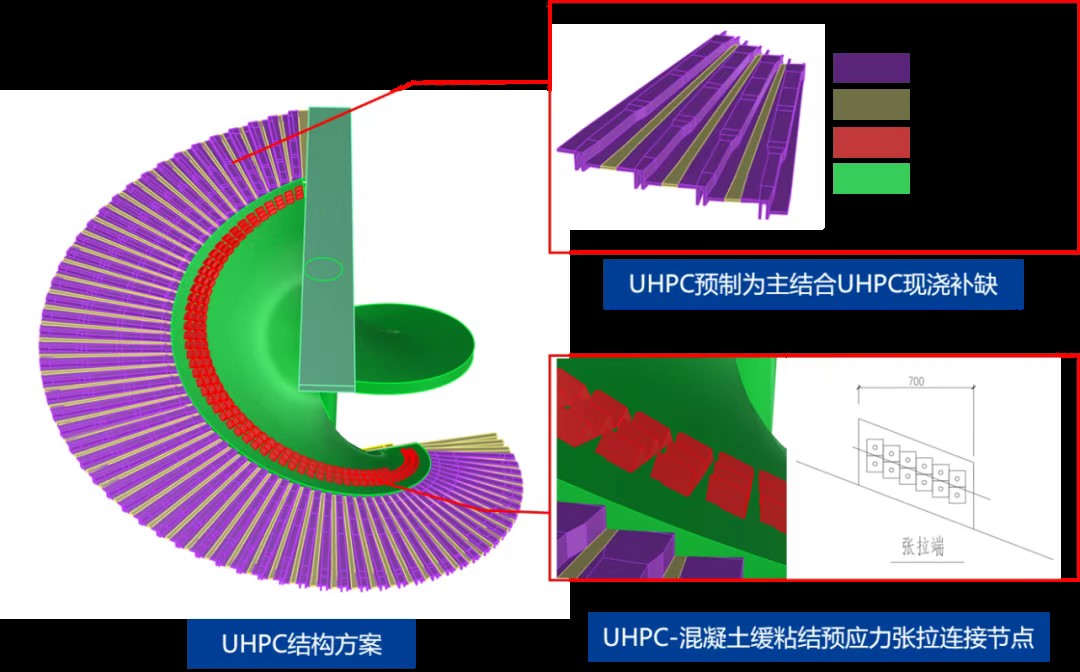
Building on this foundation, in response to uncertainties surrounding the load-bearing capacity, construction procedures, and techniques of UHPC components, full-scale tests were conducted on large UHPC elements. These tests explored the feasibility and stability of the entire construction process for UHPC structures. As a result, UHPC material preparation methods and prefabrication/cast-in-place construction techniques suitable for large-scale application in the building sector were developed. These technologies were directly applied to the UHPC structural system in the core area of the Shanghai Grand Opera House, marking the first use of UHPC as a primary load-bearing structural system in domestic building construction. This breakthrough further promotes the widespread application of UHPC materials and innovative structural systems in architectural engineering.
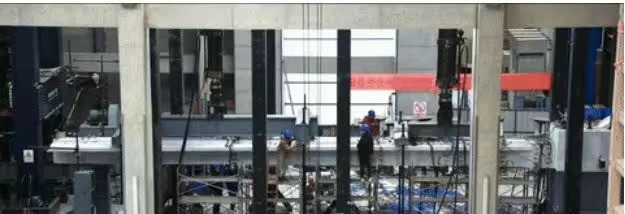
UHPC Full Scale Test
2. Key Construction Technologies for Double-Helical Free-Form Concrete Thick Shells
To address the construction challenges of the double-helical free-form concrete thick-shell structure in Zone B of the core area of the Shanghai Grand Opera House, the project team integrated digital detailing and digital surveying technologies, and innovatively proposed and developed three core technologies: a parametric optimization method for free-form surfaces, a temporary support system for the double-helical free-form concrete thick-shell structure, and a digital positioning technique for curved structures. These technological advancements effectively overcame the construction barriers associated with complex curved concrete structures.
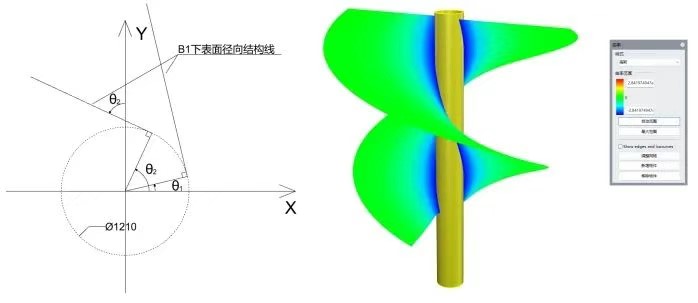
Parametric Optimization of Free-Form Surfaces
Building upon this foundation, the team further developed a series of innovative construction techniques for large-scale curved concrete structures, including a spatial free-form surface concrete formwork system, a spatial curved rebar installation process, a through-tie rod system for curved concrete thick shells, in-situ casting techniques for curved thick-shell concrete, and prestressing construction methods tailored to curved thick-shell structures. These comprehensive solutions fundamentally resolved the technical difficulties in constructing large-scale free-form concrete structures.
The successful application of the above key technologies enabled the completion of the double-helical free-form concrete thick-shell structure at the Shanghai Grand Opera House, not only demonstrating the feasibility and reliability of the techniques but also generating significant economic benefits.
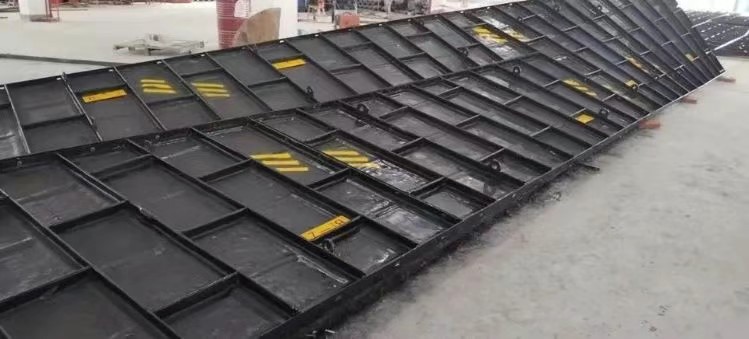
Customized GFRP Curved Large Formwork
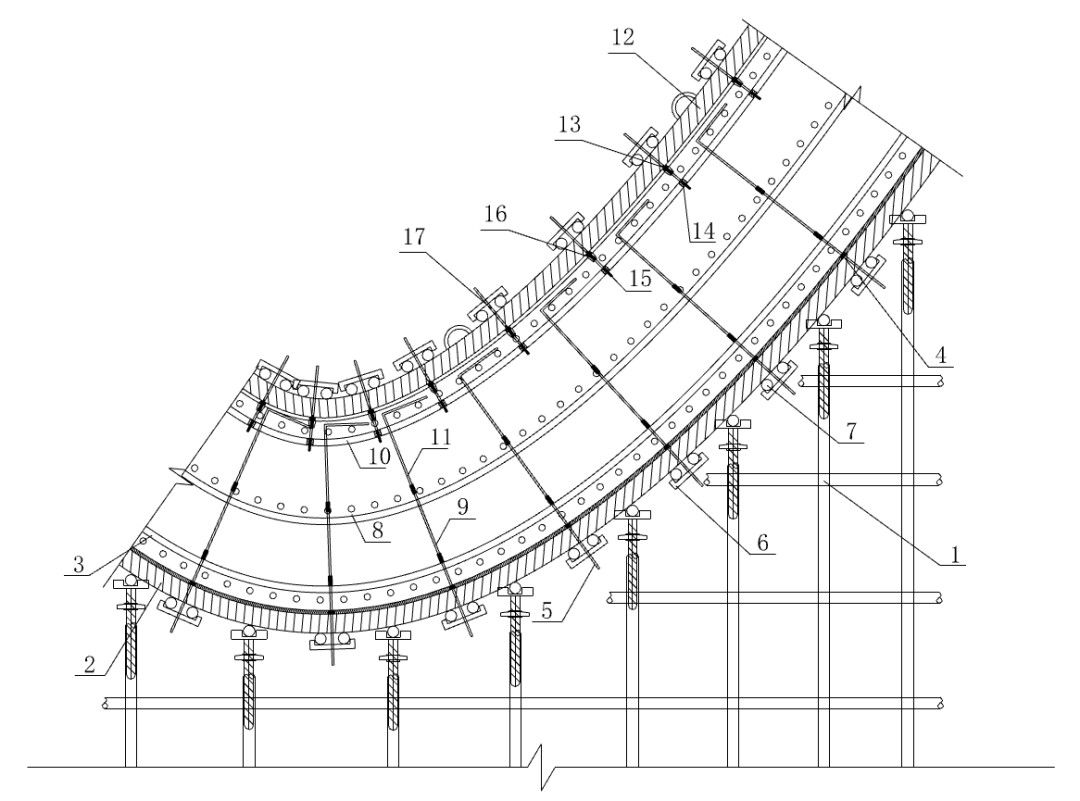
Through-Tie Rods for Curved Concrete Shells
3. Key Construction Technologies for Large-Area Spiral Stepped Irregular Steel Roof Structures
To address the issues of low construction efficiency and high technical difficulty in building the large-span steel roof structure of the Shanghai Grand Opera House, a specialized installation method for long-span irregular roof systems was developed. Through systematic analysis of the overall construction organization and targeted upgrades to conventional mechanical equipment, a comprehensive installation and unloading control system based on computer-simulated construction technology was established, significantly enhancing the precision and efficiency of steel roof construction.
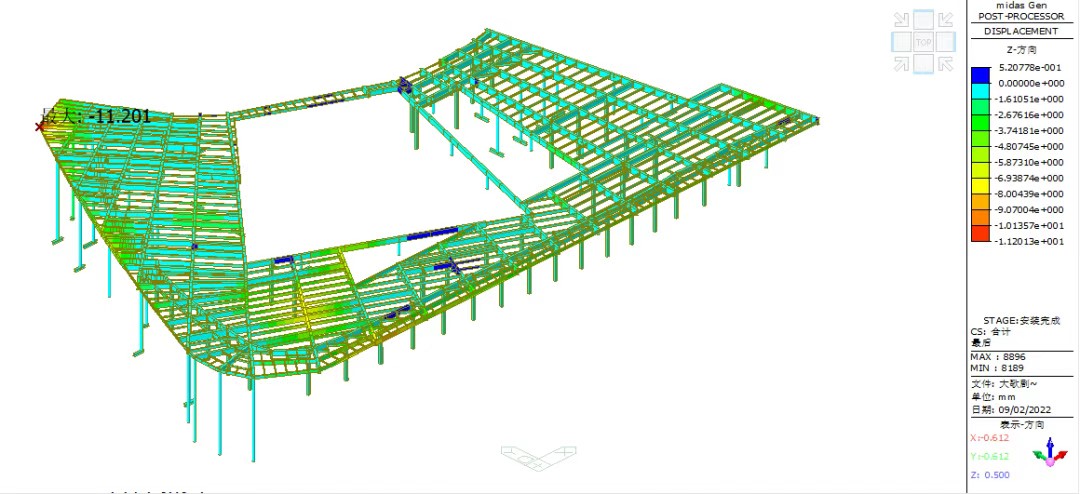
Steel Roof Structure Simulation
In response to the ultra-tall tower-type steel trusses with inward-leaning façades on all four sides and dual-direction cantilevers, the team independently designed and developed a complete modular temporary support system. This system enabled segmented arching and simultaneous installation at the cantilever ends, while the integration of computer-simulated data analysis during the unloading phase ensured the precise installation of the dual-cantilever tower-type vertical steel trusses.
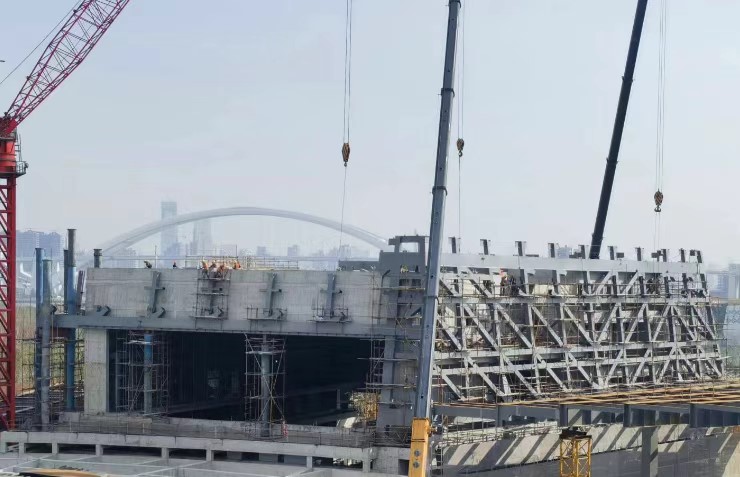
Implementation Diagram of Moulding Bed Support System
Technical Achievements
The research has resulted in 16 invention patent applications, with 1 already granted. It has also led to the development of 2 construction methods, the publication of 5 scientific papers, and the registration of 2 computer software copyrights. According to a novelty search conducted by the Shanghai Science and Technology Novelty Search and Consulting Center of the Chinese Academy of Sciences, the overall findings have reached an internationally advanced level.
Application and Industry Impact
The technologies developed have been successfully applied in the Shanghai Grand Opera House project, setting a national benchmark for the use of UHPC in main structural systems. They demonstrate the viability of digital construction for heavy-load, free-form concrete structures and provide valuable experience in complex spatial steel structures. By overcoming the many challenges posed by the opera house’s distinctive architectural form, these innovations ensured structural safety, improved efficiency, and reduced costs. The project has thus played a crucial role in advancing China’s capabilities in building landmark cultural infrastructure—and in establishing Shanghai as a world-class cultural metropolis.


Get the latest updates with our newsletter
Follow us
-

CCPA Wechat
-

CCPA EXPO Wechat
