




[Concrete Science and Technology Award] Retrospective on Award-Winning Achievements (Part 1)
[Concrete Science and Technology Award] Retrospective on Award-Winning Achievements (Part 1)
First Prize in Scientific and Technological Progress Category – 2020
Project Title: Development and Application of Key Technologies for a Series of High-Performance Prefabricated Piles
Completed by: Jianhua Construction MATERIALS(China)COMPANY Limited
Project Overview:
To address critical issues such as the insufficient bearing capacity of conventional pipe piles in super high-rise buildings, frequent accidents caused by improper use of precast piles in retaining and revetment projects, and the limited applicability of precast piles in complex geological and corrosive environments, the project team carried out long-term systematic research and achieved a series of independent innovations in four major areas: development of new high-strength, high-performance prefabricated piles and associated technologies; specialized pile types and systems for revetment and retaining applications; invention of high-efficiency mechanical joints; and engineering-oriented research on pile planting construction methods.
As a result, the team successfully developed a series of high-performance, high-strength concrete prefabricated piles and complete technological systems. A comprehensive design methodology and technical standards were established, forming a complete engineering application framework. This enables the effective use of high-capacity precast piles in superstructures, as well as in pile foundations for complex geological or corrosive conditions, and ensures correct application in revetment and retaining projects. The technology has been widely adopted across foundation engineering in various sectors, including construction, highways, railways, water conservancy, and port and marine infrastructure.
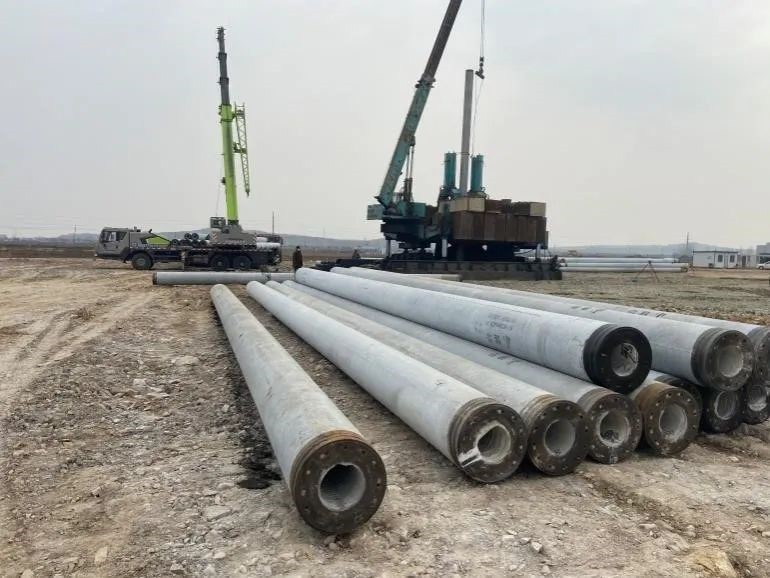
Anti-corrosion Pile

Pile Foundation Project of the Artificial Island for the Hong Kong–Zhuhai–Macao Bridge
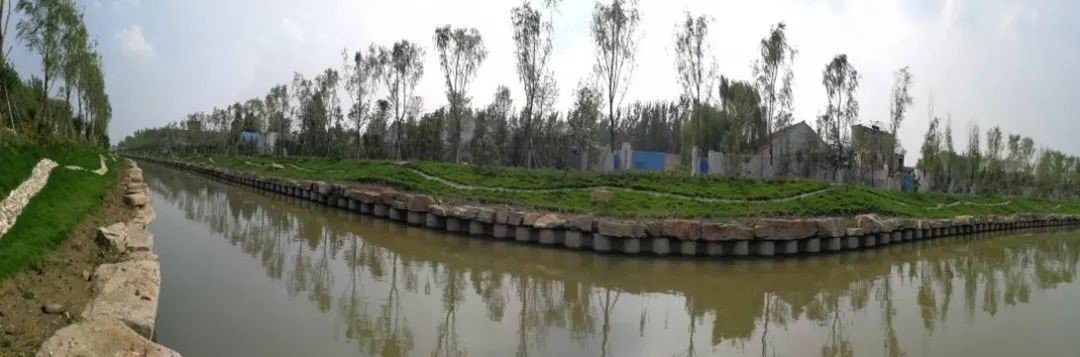
Pile Foundation Project of the Artificial Island for the Hong Kong–Zhuhai–Macao Bridge
First Prize in Scientific and Technological Progress Category – 2023
Project Title: Research on Key Technologies and Equipment for Vertical Production of Prefabricated Wall Panels
Completed by: Beijing Yantong Building Components Co., Ltd., Beijing Building Industrialization Group Co., Ltd., Chengde Green Building Energy Saving Technology Co., Ltd., Hebei Xindadi Electromechanical Manufacturing Co., Ltd.
Project Overview:
Vertical mold production is one of the main manufacturing methods for prefabricated components in industrialized building construction. Compared with horizontal mold processes, vertical molding offers advantages such as reduced space requirements, lower energy consumption, and improved production efficiency. However, vertical production of prefabricated components in China still faces several challenges, including: the lack of mature and compatible cavity molds and demolding-edge systems; absence of automated rebar processing equipment—current semi-automated or manual approaches lead to low production efficiency, poor product precision, and high energy consumption; and a lack of systematic research on high-stability, early-strength, self-compacting concrete (SCC) and its forming technologies.
To tackle the key technical difficulties in vertical production—such as mold assembly/disassembly, rebar processing, and concrete forming—this project brought together equipment manufacturing and automation control entities to carry out comprehensive technical development. The research focused on early-strength SCC and lifting-forming techniques, integrated large-scale vertical mold equipment and rebar processing systems, and the optimization of vertical production processes.
The main research contents and technological achievements of the project are as follows:
Developed a modular large-scale vertical mold system equipment suitable for in-place assembly/disassembly of longitudinal rib hollow core wall panels. This enabled automated vertical production and low-energy curing of wall-type components such as sandwich insulated wall panels with side-form rebar extension and internal wall panels.
Proposed new technologies including horizontal multi-station enclosed stirrup welding, complex mesh reinforcement welding, and vertical rebar cage assembly, and developed a series of automated rebar processing machines.
Developed early-strength, high-stability, lifting-type self-compacting concrete, composite polycarboxylate water reducing agent, and vibration-free vertical lifting forming technologies for prefabricated components—achieving significant improvements in both production efficiency and product quality.
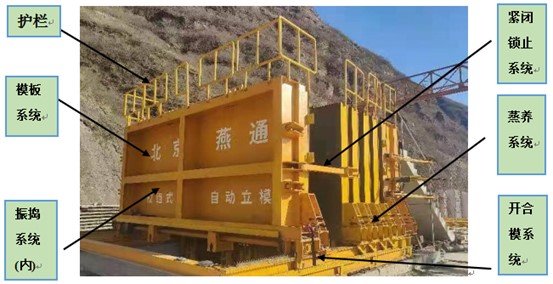
Assembly of Grouped Vertical Molds
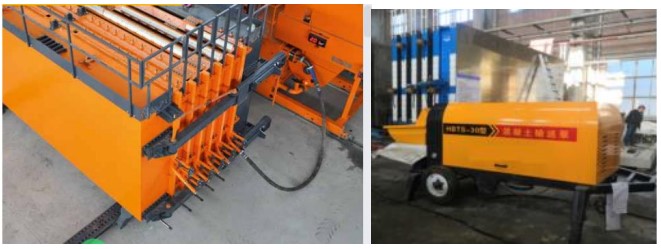
Lifting Pump and On-Site Casting
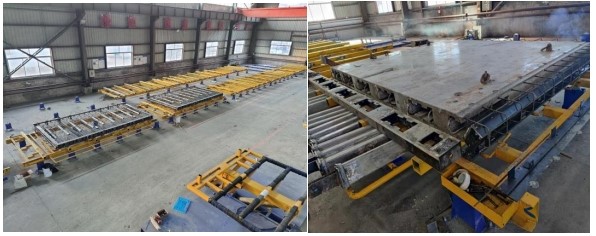
Combined Horizontal–Vertical Production Process Flow
Project Title: Key Technologies and Application of Fully Prefabricated UHPC-RC Large-Segment Thin-Walled Box Composite Girders
Completed by: Anhui Transport Consulting & Design Institute Co., Ltd., Anhui Transportation Holding Group Co., Ltd., Jianhua Construction MATERIALS(China)COMPANY Limited, Hefei University of Technology
Project Overview:
Ultra-High Performance Concrete (UHPC) is considered the most innovative cement-based engineering material developed in the past thirty years. In the context of bridge engineering's growing demand for lightweight, high-strength, rapid construction, long durability, and low-carbon green solutions, UHPC offers tremendous application potential.
This project, based on the separated interchange bridge of the Chuzhou–Tianchang Expressway, developed a fully prefabricated UHPC-RC large-segment thin-walled box composite girder. This structural system consists of factory-fabricated reinforced concrete bridge deck panels and factory-fabricated UHPC thin-walled U-shaped segments with minimal or no reinforcement, which are assembled using specialized connection techniques. To reduce the consumption of UHPC material and the self-weight of the structure, external prestressing tendons are used to connect the UHPC girder segments, enabling the realization of a thin-walled box girder system. The UHPC main girders are connected to the prefabricated concrete deck panels using clustered shear connectors and cast-in-place wet joints.
This structure leverages UHPC's superior compressive strength to withstand high stresses introduced by external prestressing in slender cross-sections, while its exceptional flexural performance allows the conventional concrete deck panels to fully perform their function.
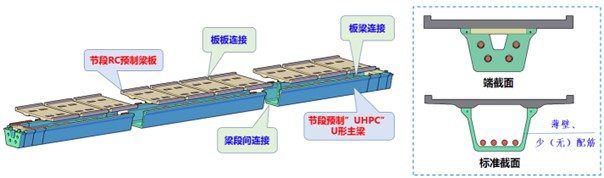
Schematic Diagram of Fully Prefabricated UHPC-RC Box Composite Girder Structure
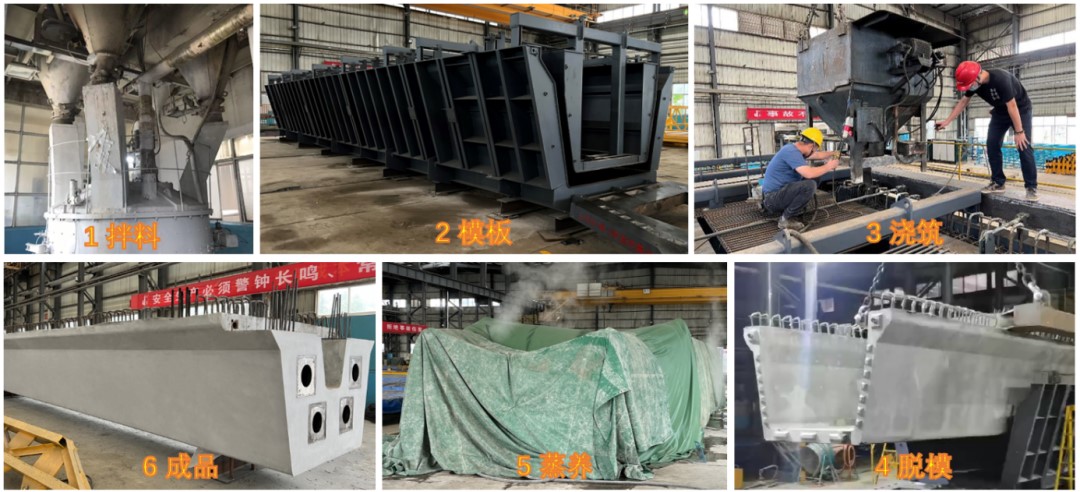
The production of prefabricated components
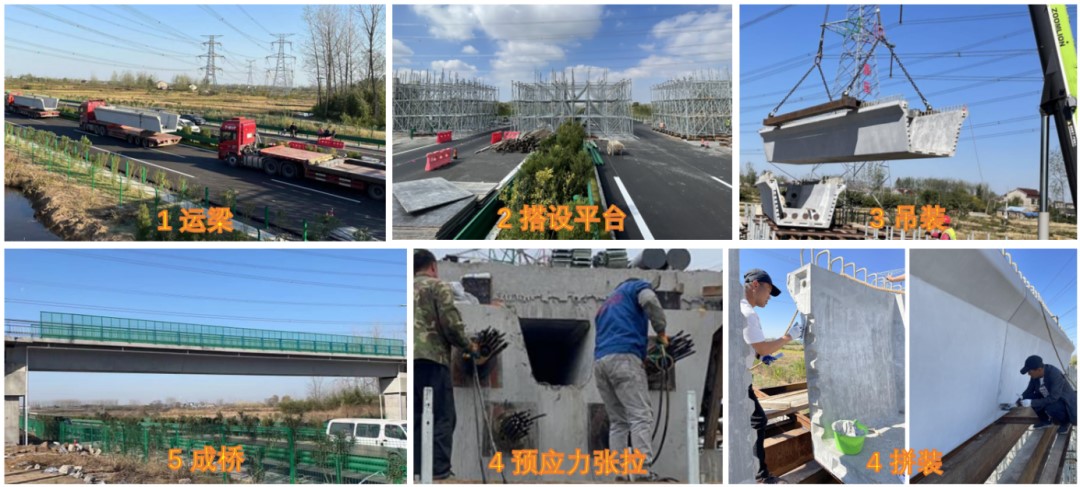
Installation Site


Get the latest updates with our newsletter
Follow us
-

CCPA Wechat
-

CCPA EXPO Wechat
