




[Concrete Science and Technology Award] Retrospective on Award-Winning Achievements (Part 6)
[Concrete Science and Technology Award] Retrospective on Award-Winning Achievements (Part 6)
Second Prize for Scientific and Technological Progress in 2021
Project Title: Research and Application of Key Technologies for Prefabricated Prestressed Concrete Composite Slab Floor Systems
Completed by: China Construction Science & Technology Group Co., Ltd.; China Construction Science & Technology (Shenzhen-Shanwei Special Cooperation Zone) Co., Ltd.
Project Overview:
In recent years, China has actively promoted new industrialized construction to accelerate the transformation and upgrading of the construction industry. On this basis, many composite floor systems have been independently developed or adapted from advanced international technologies. While these systems meet current evaluation standards for prefabricated buildings, they do not fully leverage the advantages of prefabricated composite structures in design, production, and construction, particularly the benefits of prestressing technology. As a result, the design remains complex, production and installation efficiency is low, forming quality is unsatisfactory, and costs are much higher than those of traditional cast-in-place floors—hindering the advancement of new construction industrialization.
To address these challenges, the research team conducted in-depth studies on the application of prestressed ribbed concrete composite slabs, long-span prestressed concrete hollow slabs, and heavy-load long-span prestressed concrete double-T slabs. They established complete sets of key technologies for design, production, and construction, providing technical support for prestressed composite slab floors in prefabricated buildings under varying spans, loads, and functional requirements.
Through finite element simulations, structural bearing capacity tests, and fire resistance assessments of related components, the project verified both the service performance and fire safety of pre-tensioned prefabricated prestressed composite slab floors, expanding their application in high-rise buildings. In production technology, the project optimized long-line production methods for prestressed ribbed concrete slabs and concrete hollow slabs, and designed a movable self-supporting mold platform production line for double-T slabs—improving efficiency and reducing costs. Additionally, three construction methods were developed, achieving results such as formwork-free, support-free or reduced-support installation, and high construction efficiency.
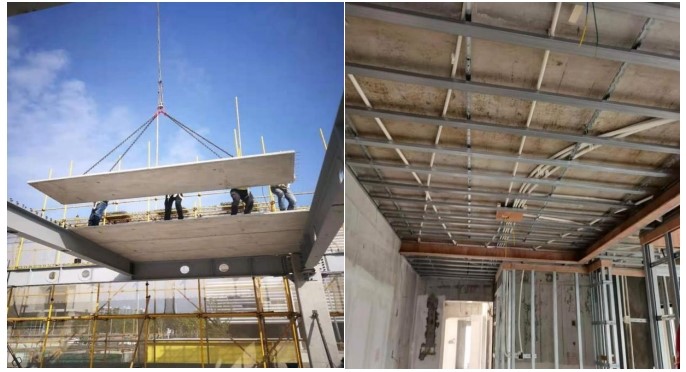
Application of prestressed ribbed concrete composite slab in Changzhen Public Housing Project, Shenzhen
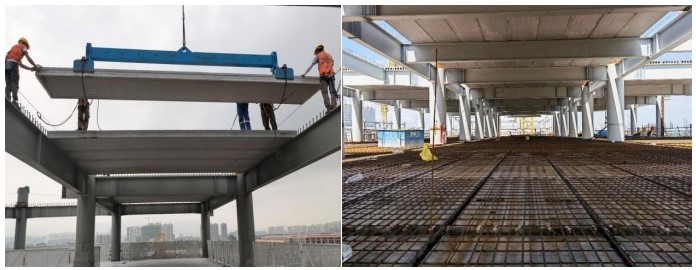
Application of prestressed concrete hollow slab in Pingshan New Energy Vehicle Industrial Park Project
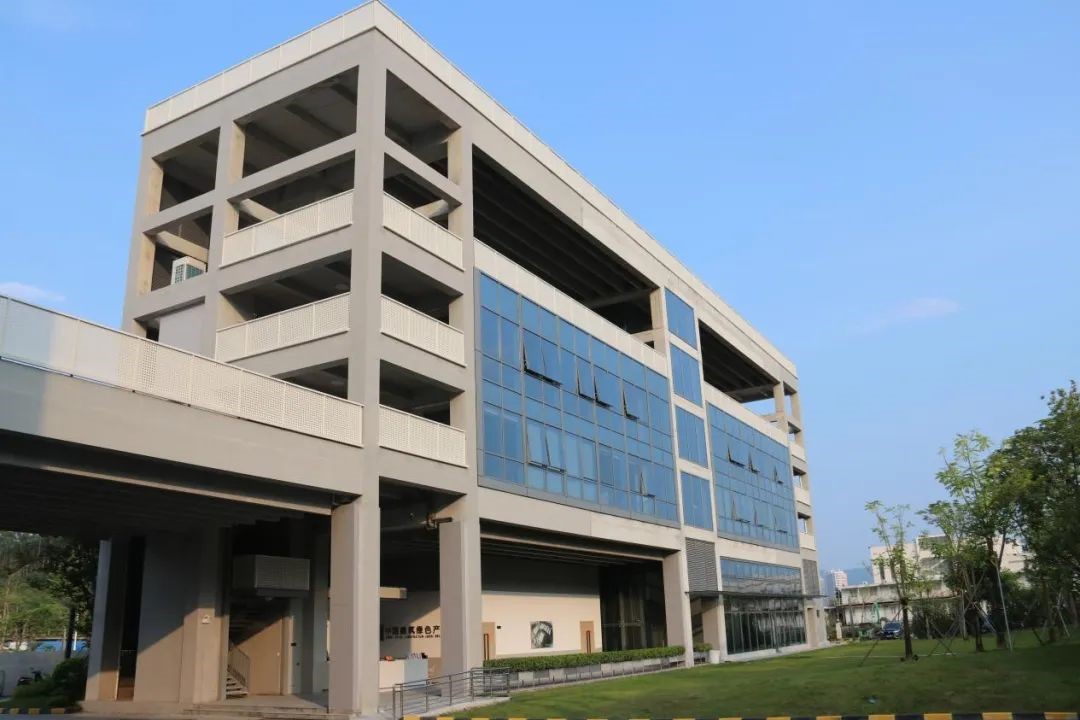
Application of prestressed concrete double-T slab in the Integrated Building of CSCEC Green Industrial Park
Project Title: Development and Application of Mobile Digitalized Production Line for Building Components Units
Completed by: Shanghai Construction Building Materials Technology Group Co., Ltd.; Shanghai Construction Group Co., Ltd. (SCG); Shanghai Research Institute of Building Sciences Co., Ltd.; Hebei Xindadi Electrical and Mechanical Manufacturing Co., Ltd.
Project Overview:
With China’s economic transformation and upgrading, the prefabricated construction industry has experienced rapid growth. However, factory automation in this industry remains relatively low. Prefabricated component manufacturing is still dominated by manual processes, leading to low efficiency, high labor demand, resource waste, low mold reuse rates, and poor production environments. The shift in construction modes has also created urgent demand for upgrading technical equipment, as existing precast production lines and machinery leave much room for improvement.
This project tackled the shortcomings of conventional fixed-mold production lines—such as high energy consumption, poor working conditions, and high labor intensity—as well as the limitations of traditional flat-mold assembly lines, including low adaptability, weak fault tolerance in serial production, low efficiency, and low mold assembly efficiency.
Guided by industrial optimization design theories and modular, standardized design methods, the project developed matrix-style mobile unit layout technologies based on fixed mold platforms, and new intelligent parallel-control technologies for PC component production. Key breakthroughs include solutions for automated control of reciprocating linear movements on single lines and transverse movement across multiple lines, digital-encoded track and functional equipment parallel-control technologies, high-precision modular universal mold systems with quick assembly/disassembly, and coordinated technologies for side-tilting fixed mold platforms and multifunctional mobile vibration-tilt equipment.
To solve the problems of low production efficiency of each production process of PC components, low level of production synergy and labor productivity, to form a complete set of concrete component production technology and equipment research, and to continuously improve the efficiency of precast component production and digital production level.
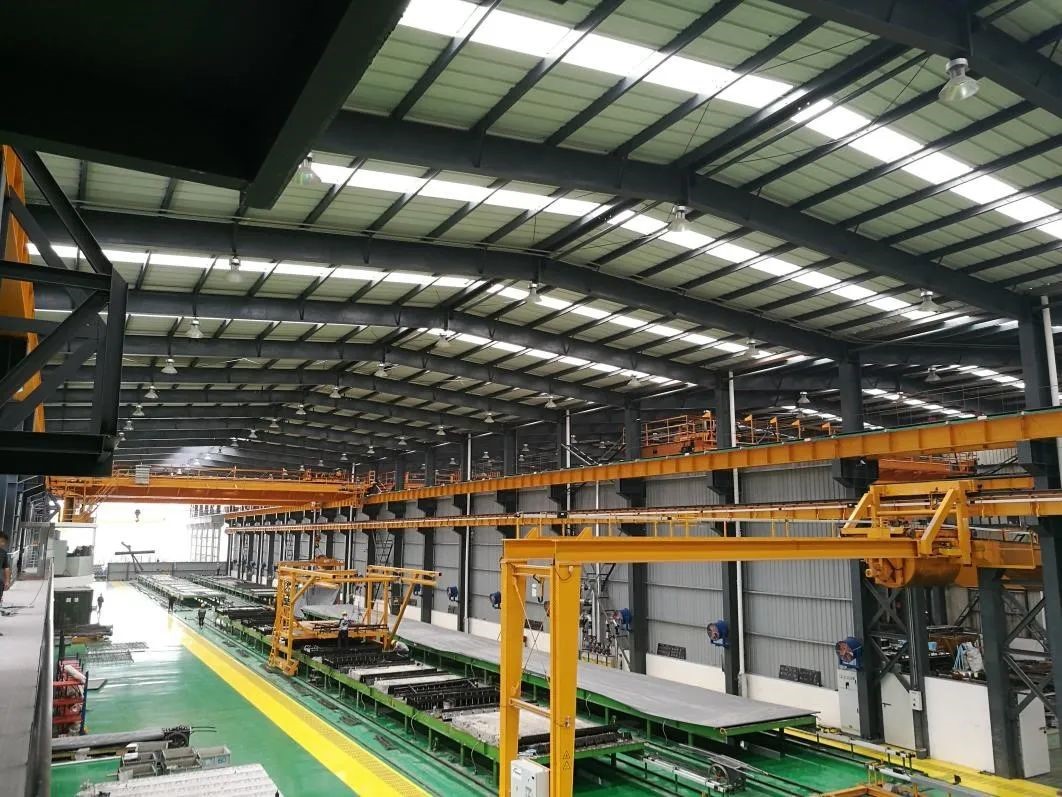
Example of mobile digitalized production line for building components units
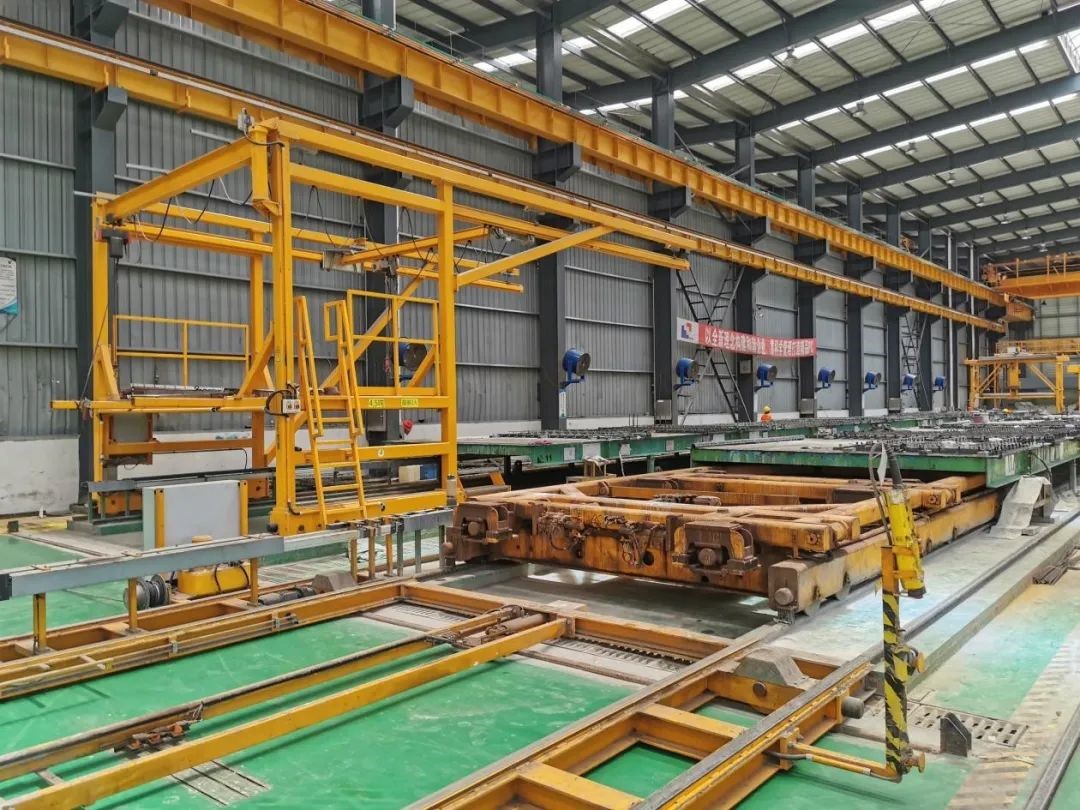
Example of mobile digitalized production line for building components units


Get the latest updates with our newsletter
Follow us
-

CCPA Wechat
-

CCPA EXPO Wechat
