




Guangdong’s First Trial: 3D-Printed Green Noise Barriers for Expressways
 Printing
On October 28, wave-shaped roadside noise barriers drew public attention along the Chengbei section of the reconstruction and expansion project of the Changchun-Shenzhen Expressway (Heyuan–Huizhou section). This marks the first application of 3D-printed noise barriers on an expressway in Guangdong, offering a smarter and greener solution for highway noise control.
On October 28, wave-shaped roadside noise barriers drew public attention along the Chengbei section of the reconstruction and expansion project of the Changchun-Shenzhen Expressway (Heyuan–Huizhou section). This marks the first application of 3D-printed noise barriers on an expressway in Guangdong, offering a smarter and greener solution for highway noise control.
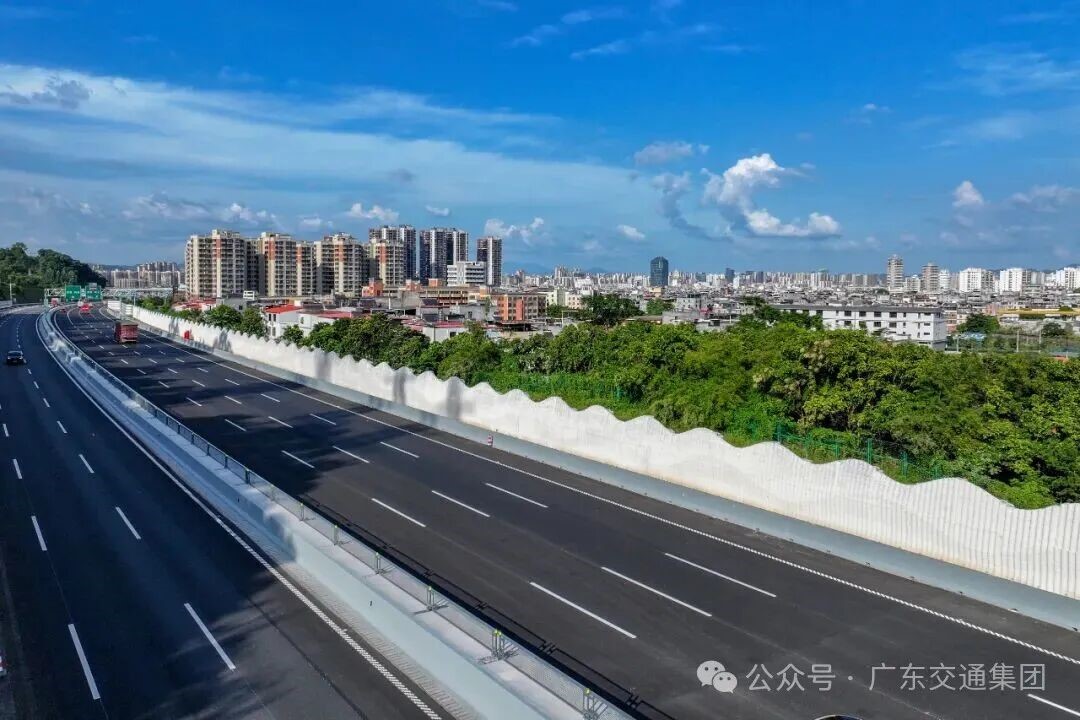
3D-Printed Roadside Noise Barriers
How Are They Made?
To explore new construction approaches, the project team introduced 3D printing technology. Before printing, digital software is used to break down the three-dimensional model of the noise barrier into multiple flat “puzzle blocks.” Through digital modeling and programming, a set of 3D printing drawings is generated.
A 3D printer then follows the programmed path, extruding concrete material continuously, stacking and bonding each layer from bottom to top until a robust monolithic structure is formed. Compared with traditional processes, the technology offers advantages such as faster forming, reduced manual labor, enhanced sound absorption performance, and greater flexibility for producing complex curves and patterns.
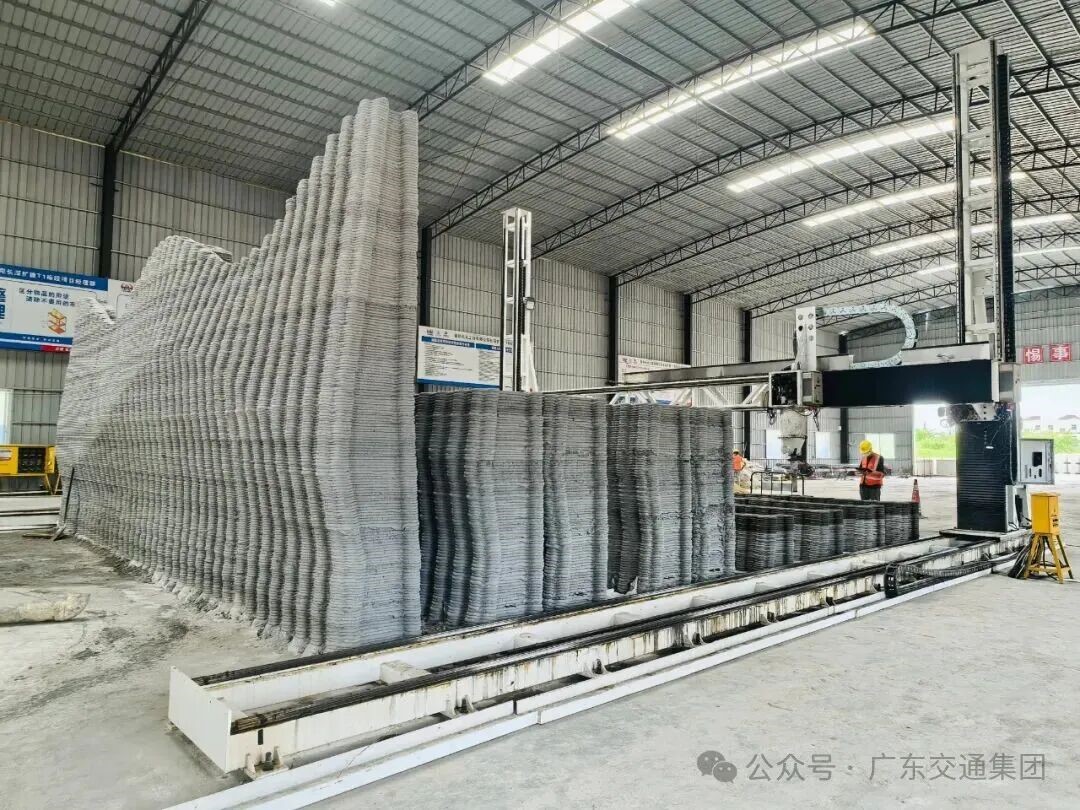
On-site 3D printing of the noise barriers
To ensure high printing quality, the project deployed vision and multi-sensor monitoring systems, and used digital twin technology to build a virtual replica synchronized with the physical printer, enabling real-time monitoring of the printing process.
The noise barrier’s architectural design also incorporates local cultural elements of Heyuan, presenting dynamic landscapes of mountains and rivers and enhancing its visual appeal. Eco-friendly phosphorescent materials will later be added, allowing the barriers to emit soft light at night—beautifying the nighttime driving environment while improving road safety.
As a key project under Guangdong’s “14th Five-Year Plan,” the scheme integrates the concept of “carbon peak and carbon neutrality goals” throughout the construction cycle, promoting green and low-carbon development through technological innovation.
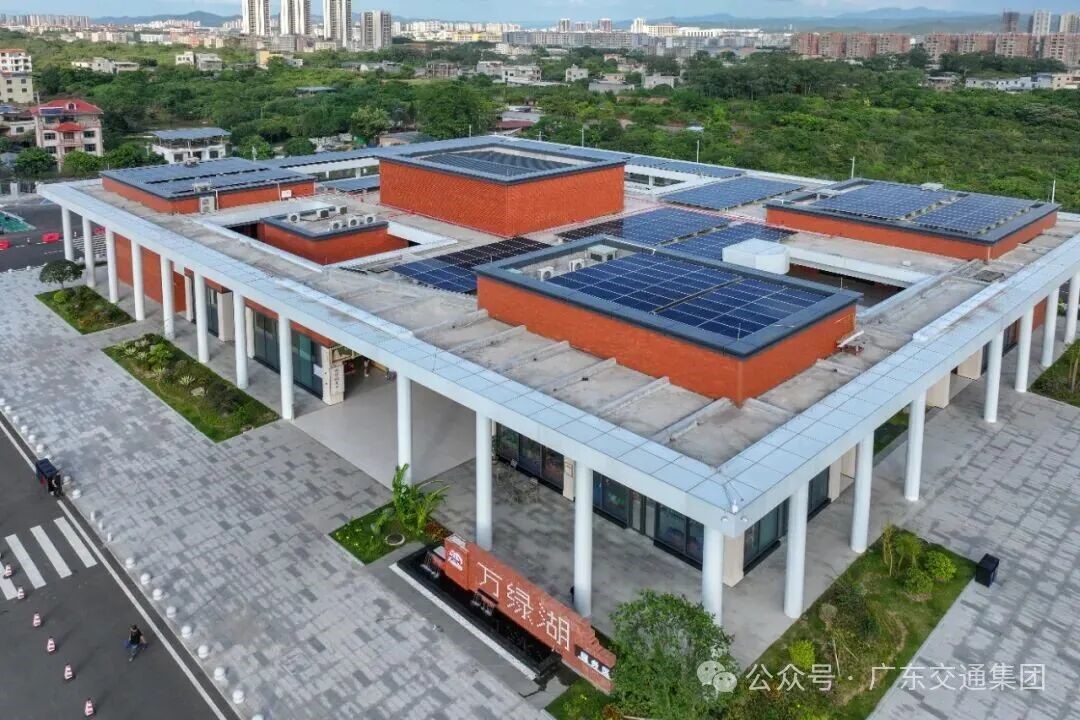
Relocation and reuse of photovoltaic panels
The project built Guangdong’s first photovoltaic-powered intelligent girder yard, generating nearly 1.1 million kWh of green electricity annually. Upon completing girder production, the photovoltaic panels were relocated to the Wanlyu Lake Service Area for continued use, combining temporary facilities with permanent operations.
A pilot section uses modular ecological retaining walls, allocating nearly 40% of the protective surface area for vertical greening to form a three-dimensional landscape belt that significantly enhances the roadside environment. On key segments, PA-13 drainage-type porous asphalt pavement was applied to improve rainy-weather drainage and reduce traffic noise pollution.
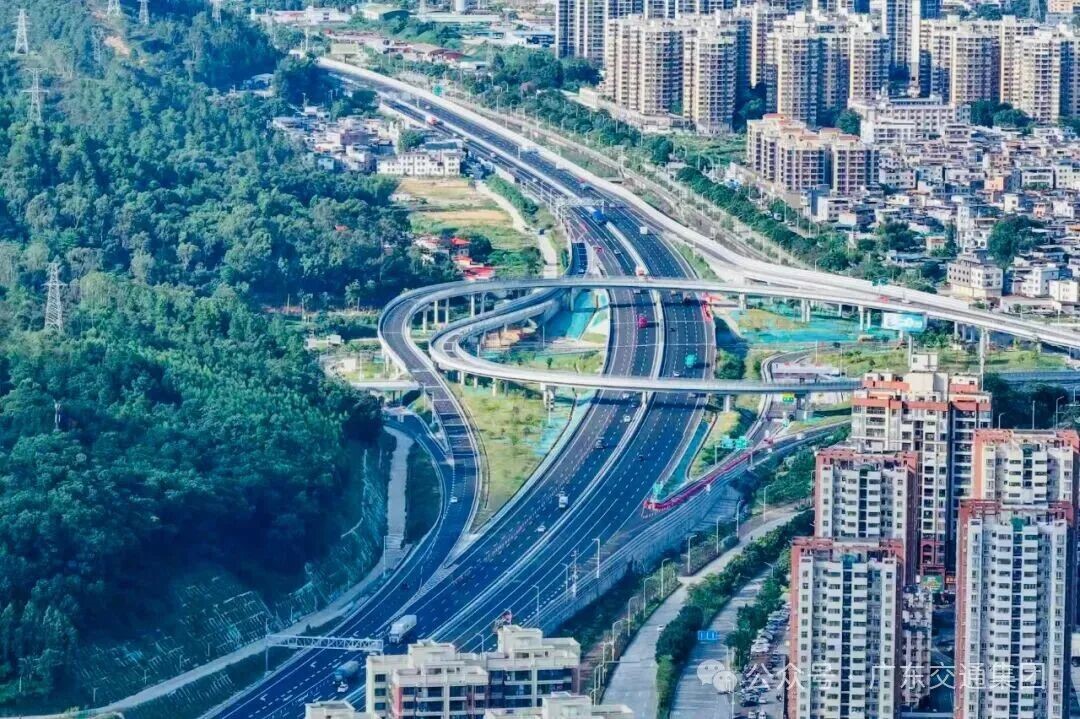
Aerial view of the project
The reconstruction and expansion project of the Changchun-Shenzhen Expressway (Heyuan–Huizhou section) extends approximately 116.6 km, starting from Dongyuan County in Heyuan and ending in Huizhou’s Huiyang District. It is being upgraded to a dual eight-lane expressway standard. Construction of the remaining pavement and bridge works is accelerating, with the goal of achieving full completion and opening to traffic by the end of the year.
Editor's Choice


Get the latest updates with our newsletter
Follow us
-

CCPA Wechat
-

CCPA EXPO Wechat
