




Seven Scientific and Technological Achievements, Including Unmanned Cement Production Lines, Support the Construction of Better Homes
 Printing
During the 14th Five-Year Plan period, China’s building materials industry has made remarkable progress in scientific and technological innovation, with a series of disruptive and critical technologies achieving breakthroughs. Yesterday, the China Building Materials Federation (CBMF) released the Seven Breakthrough Scientific and Technological Achievements of China’s Building Materials Industry in 2025.
During the 14th Five-Year Plan period, China’s building materials industry has made remarkable progress in scientific and technological innovation, with a series of disruptive and critical technologies achieving breakthroughs. Yesterday, the China Building Materials Federation (CBMF) released the Seven Breakthrough Scientific and Technological Achievements of China’s Building Materials Industry in 2025.
Seven new products and technologies were unveiled collectively by the CBMF, including a “thinking” super unmanned cement factory, ultra-pure silicon carbide manufactured with laser technology, ultra-high shading glass, a digital platform that “understands R&D,” an “ultra-cool cement”, silicon-based aerogel with exceptional temperature resistance, and a new generation of ultra-wide display glass. These achievements mark significant progress in technological innovation across high-end materials, intelligent manufacturing, and green, low-carbon transformation in China’s building materials industry.
During the 14th Five-Year Plan period, the industry has continued to increase investment in innovation. In 2024, R&D expenditure intensity reached 1.32%, an increase of 0.44 percentage points compared with 2020. Through the establishment of a “challenge-based competition” mechanism for major scientific research projects, the industry has accelerated breakthroughs in key areas such as green and low-carbon technologies, artificial intelligence, and advanced materials.
Journalists Visit the World’s First Unmanned Cement Production Line
Among the seven breakthrough achievements released in 2025, the world’s first unmanned cement production line made its official debut. How does it differ from traditional cement production lines? Previously, reporters from China Media Group (CMG) conducted an on-site visit to explore its distinctive features.
CMG Reporter Gu Junling:
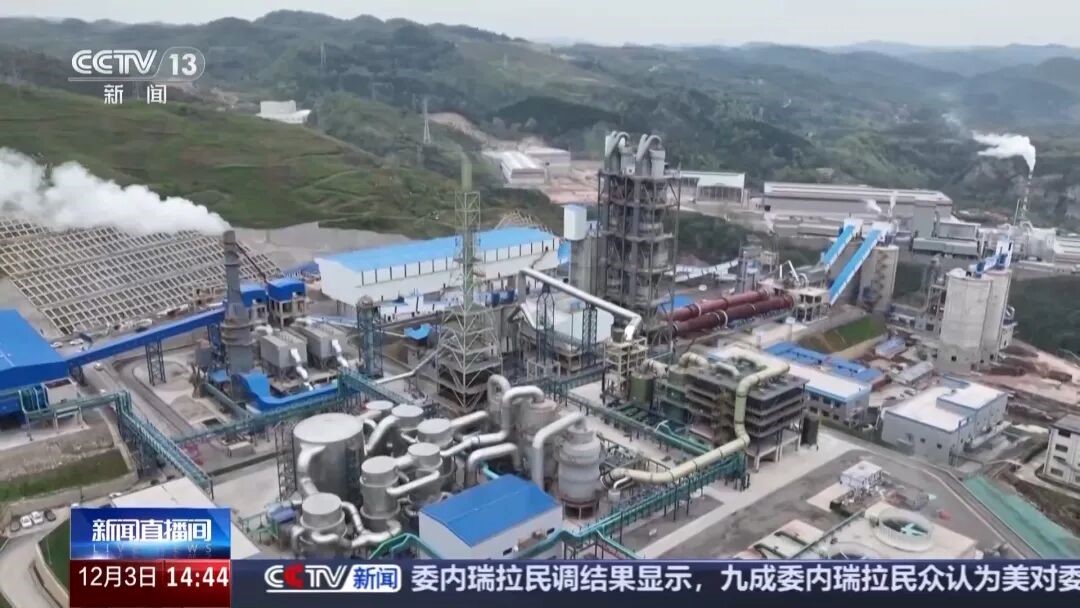
Behind me is the most critical stage of cement production—preheating and calcination. Limestone extracted from the quarry is ground into powder and preheated from top to bottom in this towering structure behind me. It then enters the cylindrical, continuously rotating reddish-brown cement rotary kiln. After calcination at temperatures exceeding 1,000 degrees Celsius, the material is cooled to form the cement clinker we are familiar with.
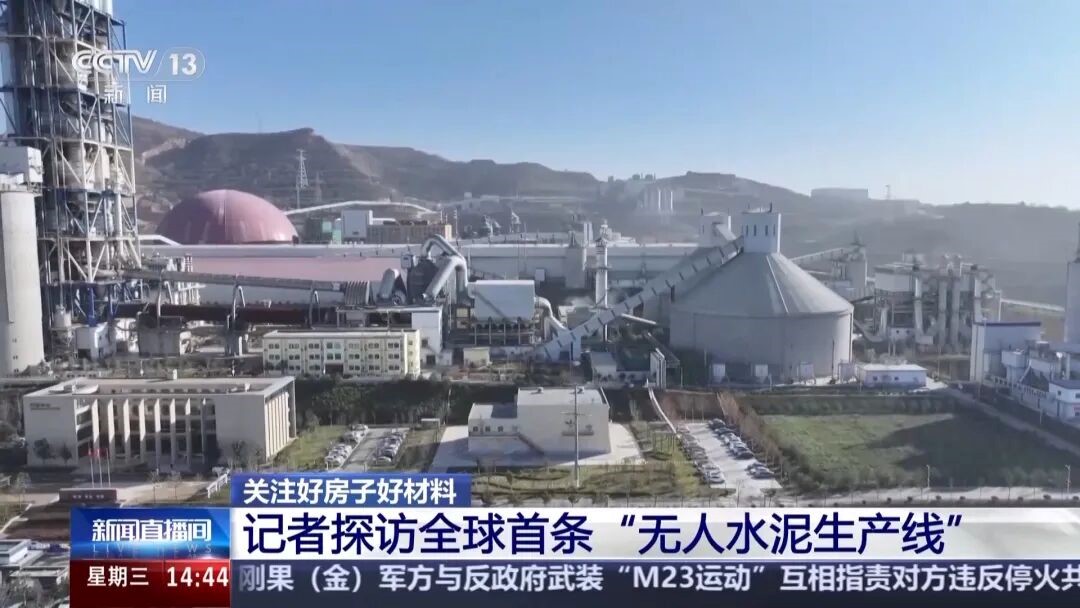
In a traditional cement plant, this process requires at least 6 to 10 workers operating on site. However, as we can see today, the entire production process here has been fully automated and unmanned.
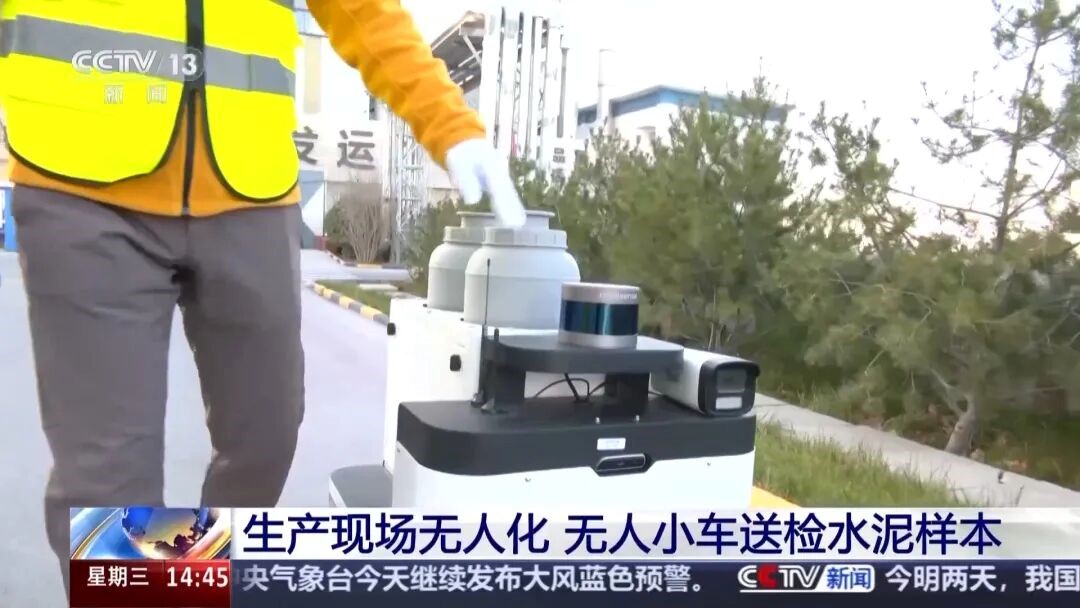
As I walk through the plant, an unmanned transport vehicle passes by. The two gray containers it carries hold cement samples to be delivered for testing. Previously, this task required round-the-clock manual operation in three shifts, with more than 20 trips per day. Now, with autonomous vehicles, labor intensity has been significantly reduced.
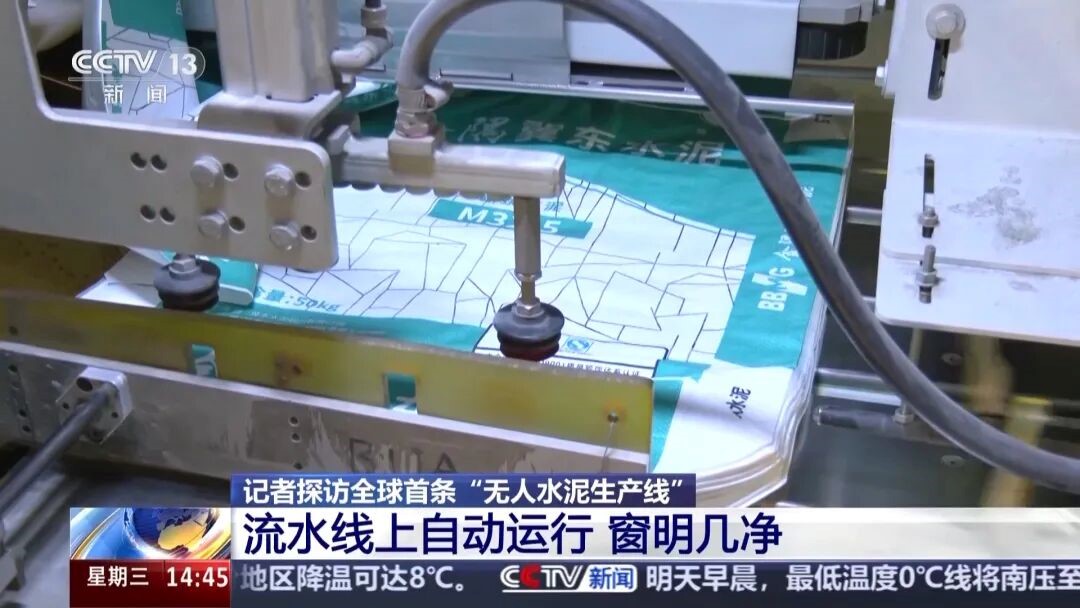
This is the final stage before cement leaves the plant—the packaging workshop. We can see cement bags moving in an orderly manner along the production line for automatic packaging. In the past, such workshops were filled with dust. But now, the environment is clean and bright—so clean that even wearing white gloves and touching surfaces leaves no visible dust.
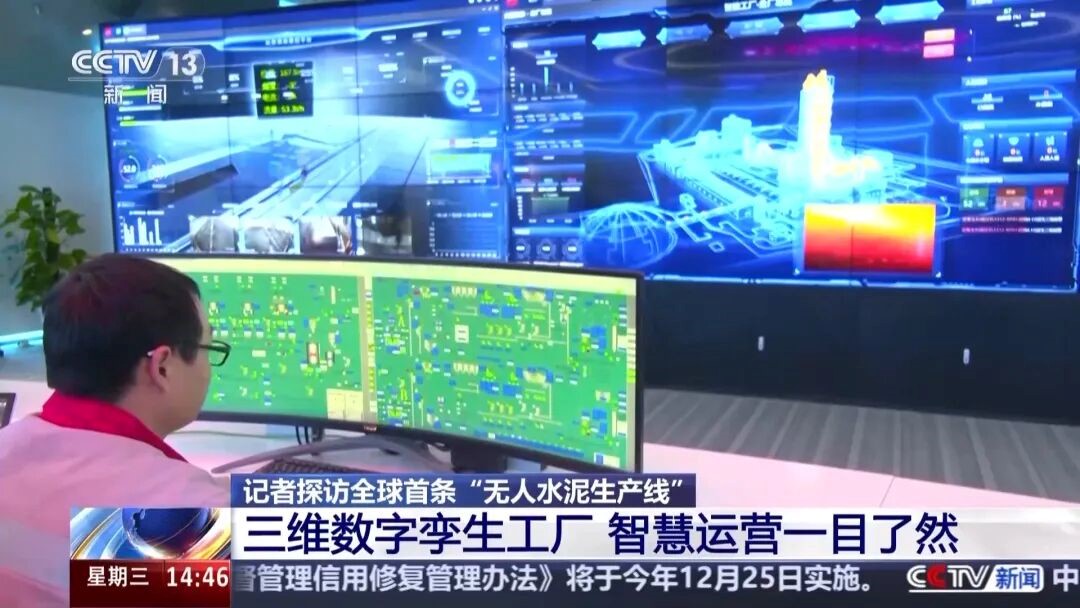
Of course, the plant is not completely without people. Many positions that once required on-site operation have now been relocated to the smart operation center. Relying on the physical plant, a virtual three-dimensional digital twin factory has been established. Staff are protected from harsh outdoor conditions and can operate the entire facility with just a mouse click. More than 35,000 data points, including production quality, environmental performance, and safety indicators, are clearly displayed in real time.
World’s First “Ultra-Cool Cement”: Cooling, Fire-Resistant and High-Strength
In addition to the unmanned cement production line, another innovation closely related to the construction of better homes is the world’s first “ultra-cool cement”, which can cool itself without electricity and also features excellent fire resistance and compressive strength. CMG reporters and testing personnel conducted a series of on-site experiments to verify its outstanding performance.
CMG Reporter Ao Gang:
The outdoor temperature is currently around 20°C. As we can see, the thermometer is rising rapidly and has reached 40°C. Meanwhile, the surface temperature of the panel coated with “ultra-cool cement” has quickly dropped to about 24°C. Even in winter, the temperature difference between the two panels exceeds 10 degrees Celsius, clearly demonstrating the remarkable cooling effect of the ultra-cool cement coating.
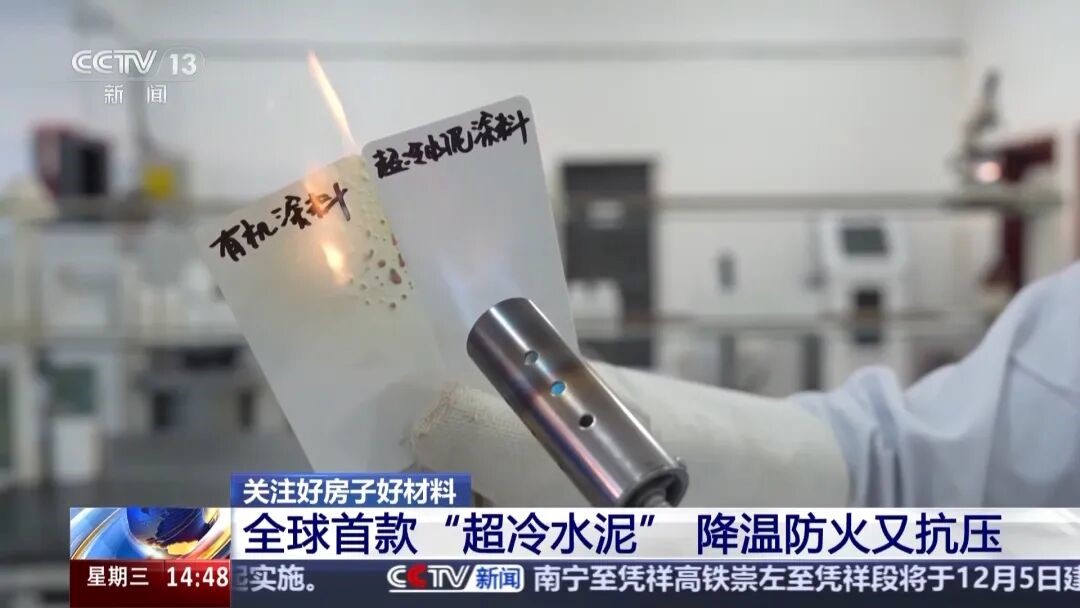
In addition to its cooling capability, the ultra-cool cement also meets Class A fire-resistance standards. Let’s conduct a fire test. When the flame is applied, the ordinary coating on the left has already ignited, while the ultra-cool cement coating on the right shows no signs of combustion. As we can see, the left side continues burning, whereas the right side remains intact.
The ultra-cool cement concrete also exhibits excellent compressive strength. In the compression test, pressure is continuously applied to the sample. At the moment the concrete fails, the recorded pressure exceeds 100 megapascals.
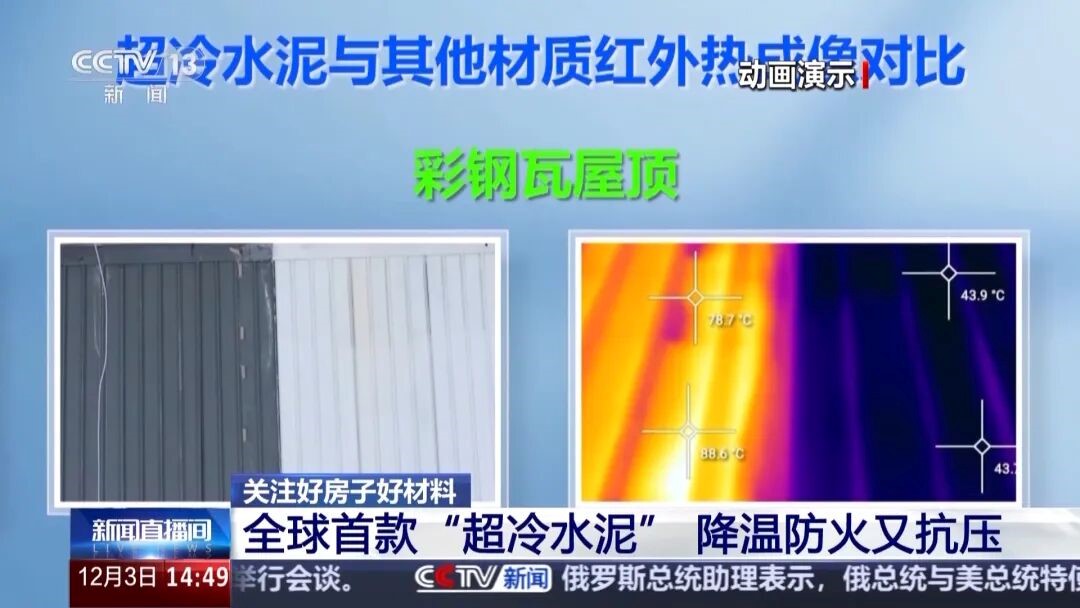
According to researchers, the exceptional performance of ultra-cool cement stems from its 96.2% solar reflectance and 96% thermal emissivity. Through the combined effects of reflection and radiation, the material achieves continuous cooling without energy consumption. With its Class A fire resistance and high compressive strength, the material can be widely applied to building roofs and façades, urban pavements, grain storage facilities, and cold-chain warehouses. It offers strong support for mitigating the urban heat island effect and reducing building energy consumption.
Editor's Choice


Get the latest updates with our newsletter
Follow us
-

CCPA Wechat
-

CCPA EXPO Wechat
