




China’s First “USB Style” High-Rise Modular Building Debuts in Shenzhen, with Three Hidden High-Tech Breakthroughs in a 55-Meter Staff Dormitory
On January 26, as the final steel structural module was hoisted into place, the supporting dormitory project for the emergency campus of Shenzhen Third People’s Hospital successfully topped out.
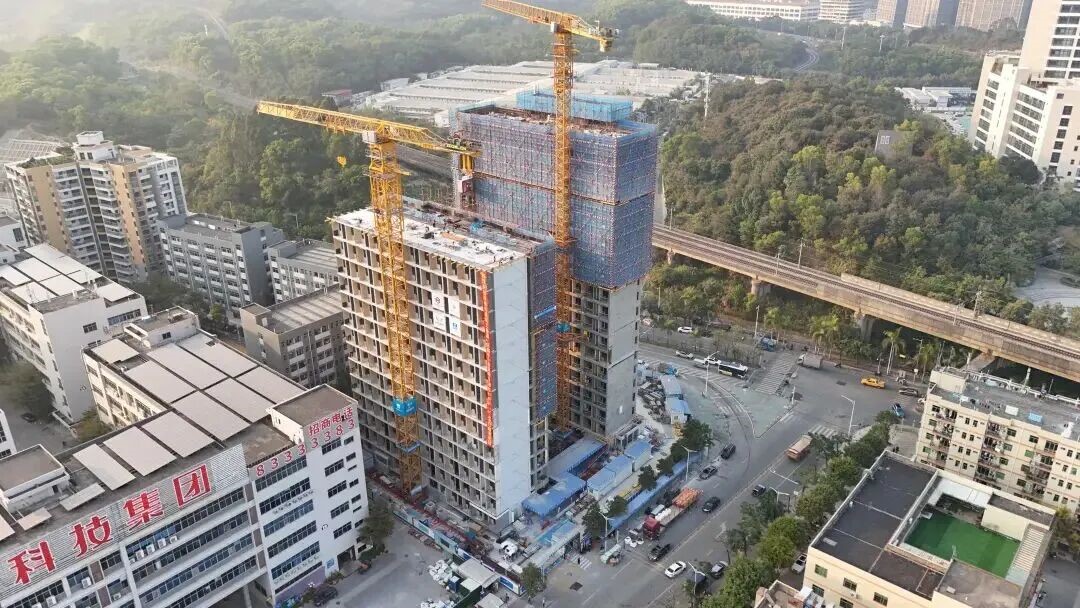
Topping Out of Project Modular Box Units
On January 26, as the final steel structural module was hoisted into place, the supporting dormitory project for the emergency campus of Shenzhen Third People’s Hospital successfully topped out.
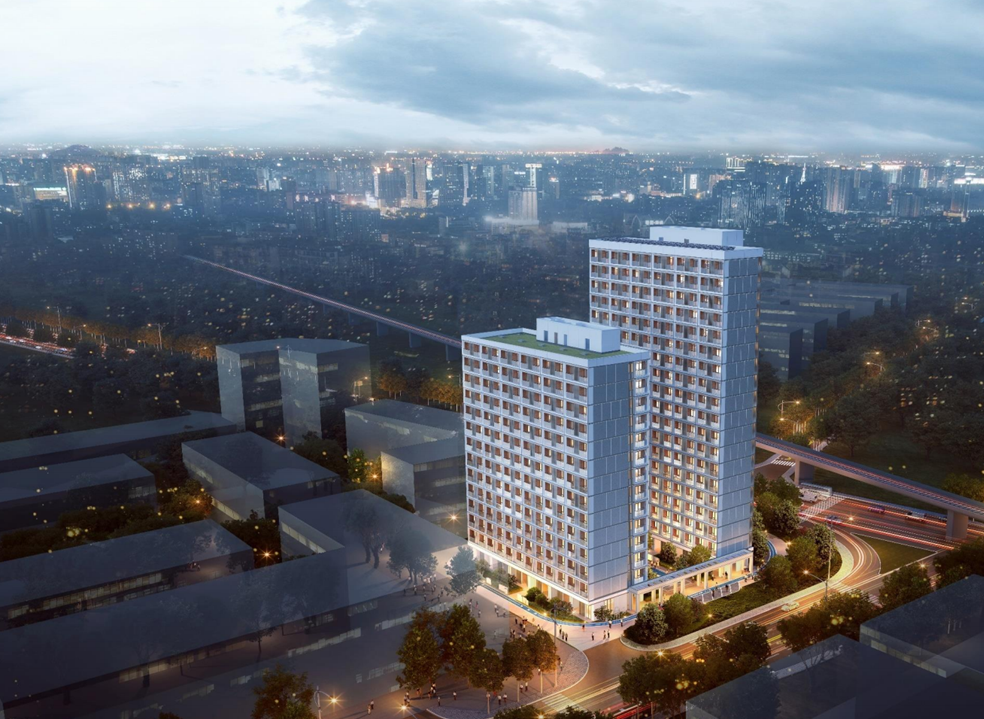 Rendering of the project (Building No. 1 on the left)
As a key medical-support project for high-quality development in Shenzhen, the project occupies 4,465 m2 with a total floor area of 26,000 m2. It comprises two buildings, Buildings 1 and 2. Upon completion, it will provide 425 dormitory units, offering centralized accommodation for medical staff at the emergency campus and meeting the needs of emergency standby and isolation housing during major public health incidents.
Part 01: Three Major Firsts Break Through the Bottleneck of High-Rise Modular Construction
01 China’s first high-rise modular building to apply a new self-aligning, stud-free rigid connection joint for steel structural modules
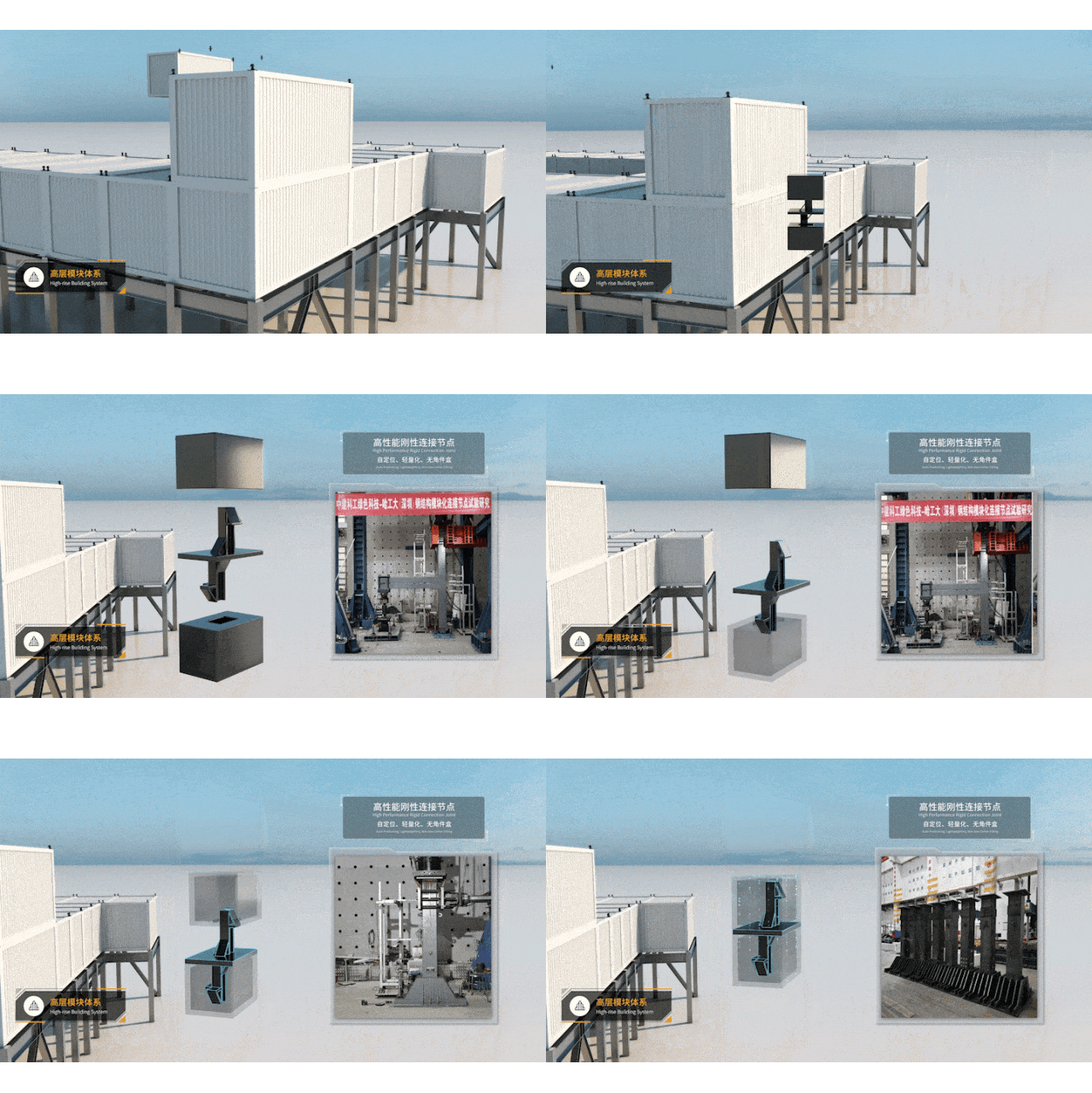
Schematic diagram of the connection joint
Conventional steel modular buildings are typically stacked and connected mainly by bolts or welding. As building height increases, these joints can become weak points, compromising stability. The key breakthrough of this project lies in a brand-new connection system: a self-aligning, stud-free rigid connection joint for steel modules.
This node delivers two core advantages.
Speed: self-alignment is achieved through limit plates and positioning plates, making installation as easy as plugging in a USB device. Installation efficiency is tripled.
Stability: after module alignment and docking, high-strength grout is poured into the node. Once hardened, it forms a rigid connection, similar to adding a reliable joint between two stacked modules, delivering stronger seismic performance and more stable wind resistance.
The technology has been appraised by academicians and other experts and is recognized as internationally leading.
02 China’s first high-rise prefabricated enhanced stacked-module and shear-wall modular building implemented in practice
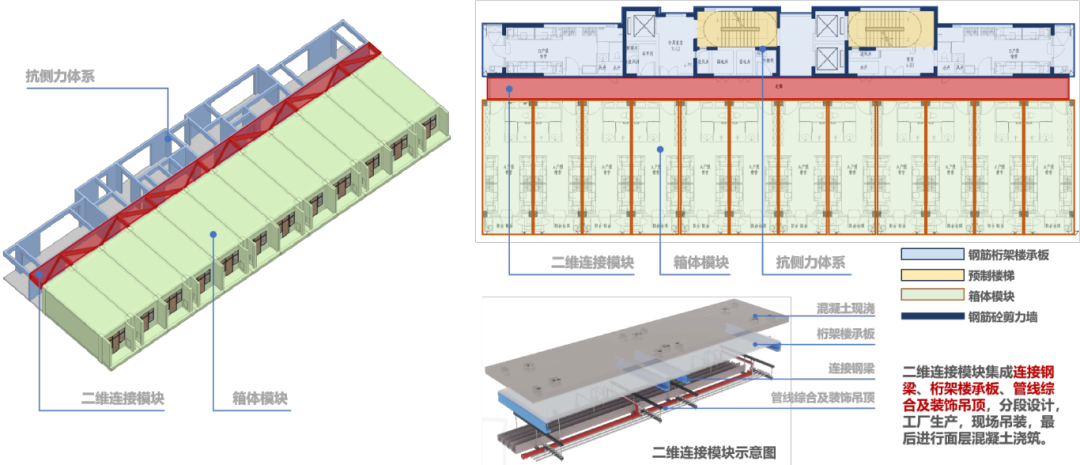
Enhanced stacked-module and shear-wall modular system
Building 1 can be understood as two parts: “modules” and “walls.” On the south side are factory-prefabricated steel modular rooms that quickly create the living spaces. On the north side is a cast-in-place reinforced concrete shear wall that further increases lateral stiffness. The two are connected through two-dimensional connection modules, combining the efficiency of modular construction with the economy of conventional structures.
Together, the reliable connection nodes and the “stacked modules plus shear wall” system form China’s first high-rise steel stacked-module shear-wall system designed for high wind-pressure regions, with a theoretical height capacity of up to 100 m. The system is applied in Building 1 of this project, which stands 55 m tall.
03 China’s first high-rise steel modular building with a high prefabrication rate and fully integrated interior fit-out
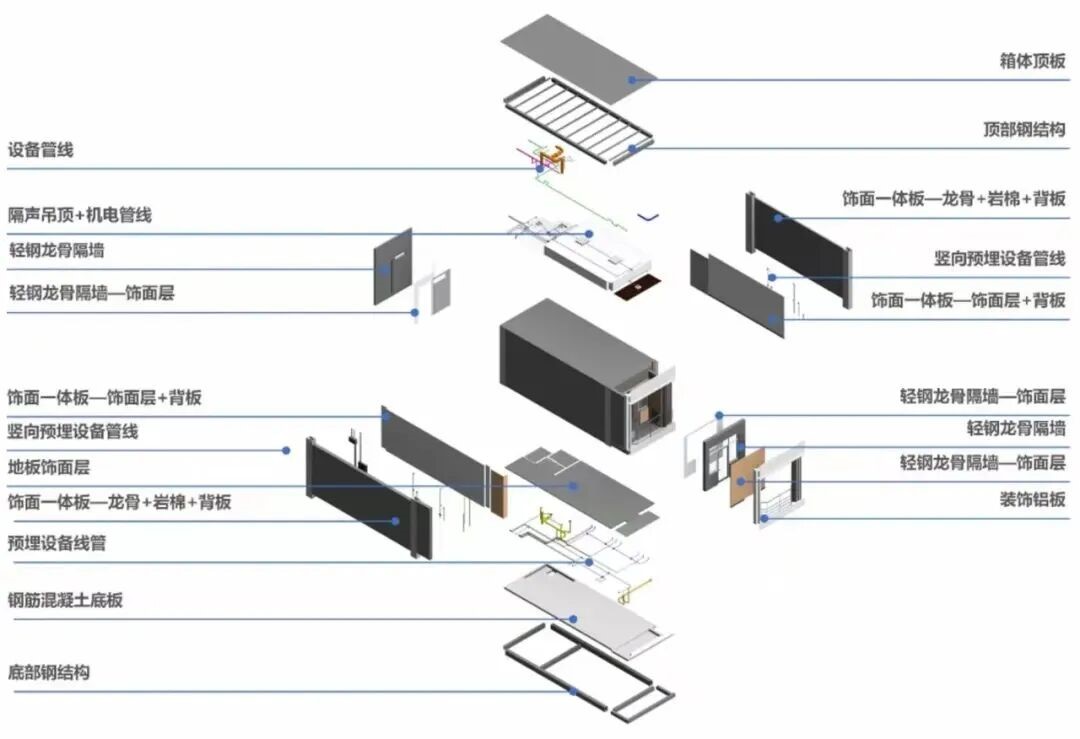 Exploded view of the modular box unit
Building 1 contains 168 fully finished modules, accounting for 65.8% of the building’s total floor area, setting a new record for fully finished coverage within the same structural system.
Part 02: “Smart Construction” Powered by Full-Process Technology
Building this “LEGO-like house” relies on multiple technologies working together.
01 AI-driven design for efficiency and safety
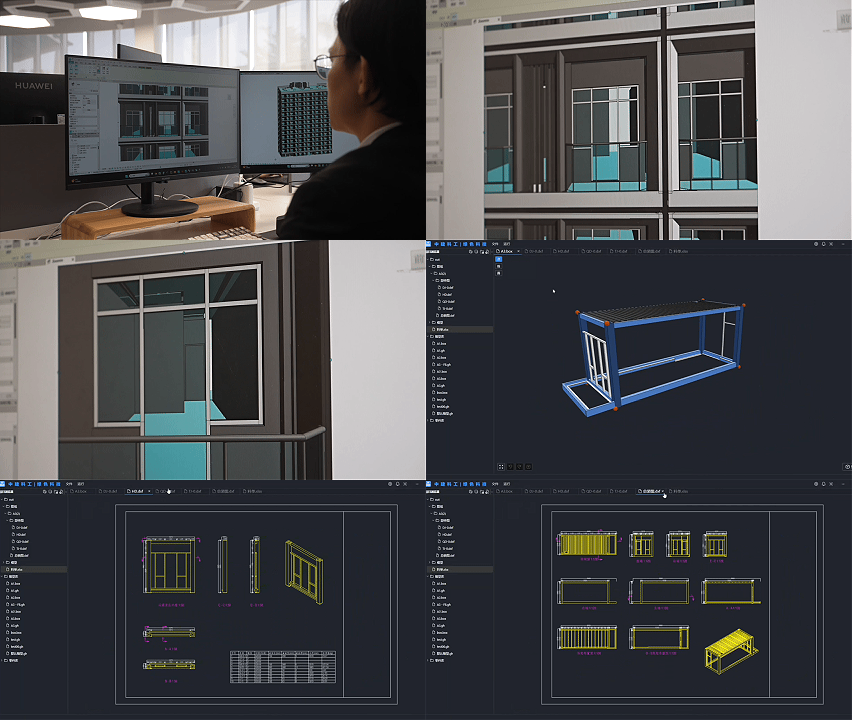
AI Intelligent Design Platform of CSCEC Science and Industry
The project uses CSCEC Science and Industry’s intelligent design platform for modular products. It enables one-click generation from “3D model to 2D drawings to production bill of materials,” increasing overall design efficiency by 80% and cutting more than 60% of labor and time costs.
02 Standardized production to boost efficiency
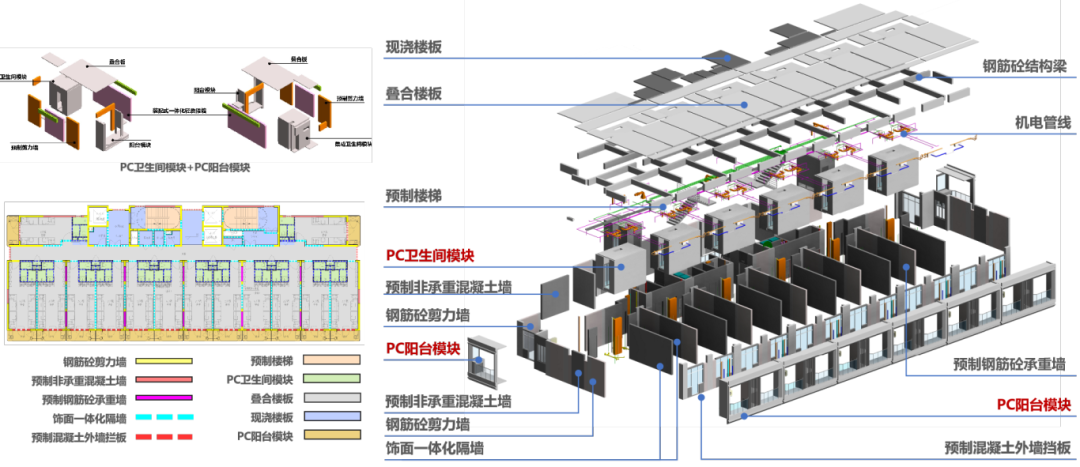
Overall schematic of modular construction
Components such as floor slabs and staircases adopt unified specifications, reducing non-standard parts by 27%. Dorm rooms are standardized modules with an integration rate above 95%.
03 Millimeter-level precision with end-to-end traceability
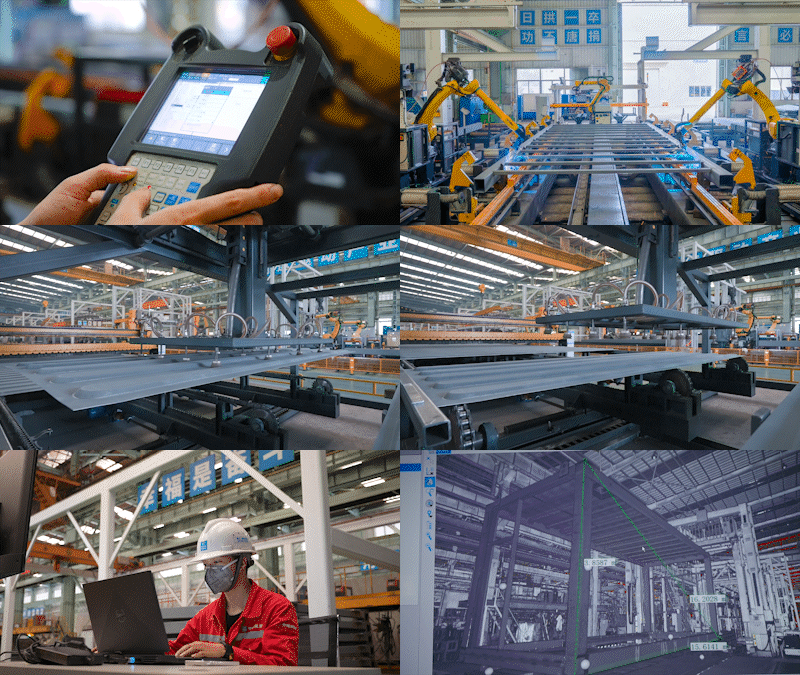
Smart modular manufacturing plant
The factory is equipped with intelligent equipment including laser cutting, welding robots, and 3D measurement systems. Structural tolerances are controlled within 2 millimeters, ensuring tight-fitting assembly. Each module undergoes 12 rigorous inspection procedures before leaving the factory, delivering “premium quality at delivery.” Each module also carries its own dedicated QR-code “ID,” enabling full traceability from production through installation.
04 Stacking tests to rehearse installation

Conducting a stacked module test to evaluate the connection joints
Workers conduct stacking tests in the factory to verify the fit and performance of the connection nodes in advance, ensuring smooth on-site docking. This “simulate first, build later” approach reduces on-site lifting operations by 70% and improves overall construction efficiency by 25% compared with traditional methods.
Part 03: A “Gentle” DNA Inside a Steel Frame
From the earliest design stage, the project has focused on creating a warm and comfortable home for medical staff.
01 Larger space
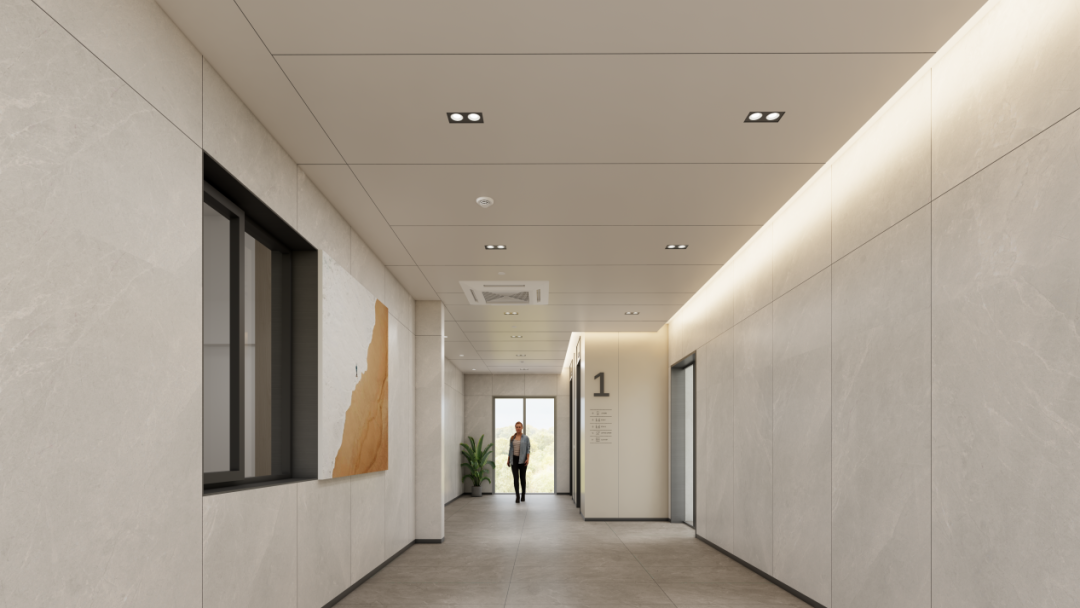
Rendering of the ground-floor lobby
The dormitories adopt a linear layout, providing 425 rooms to accommodate up to 1,700 residents. The floor-to-floor height of 3.6 m to 3.9 m is 20% to 30% higher than the national standard. Circulation adopts a T-shaped layout with a centralized core, clean and efficient flow lines, and clear functional zoning to maximize usable space. Public support rooms are arranged on the ground-floor open space to further improve site efficiency.
02 Complete amenities
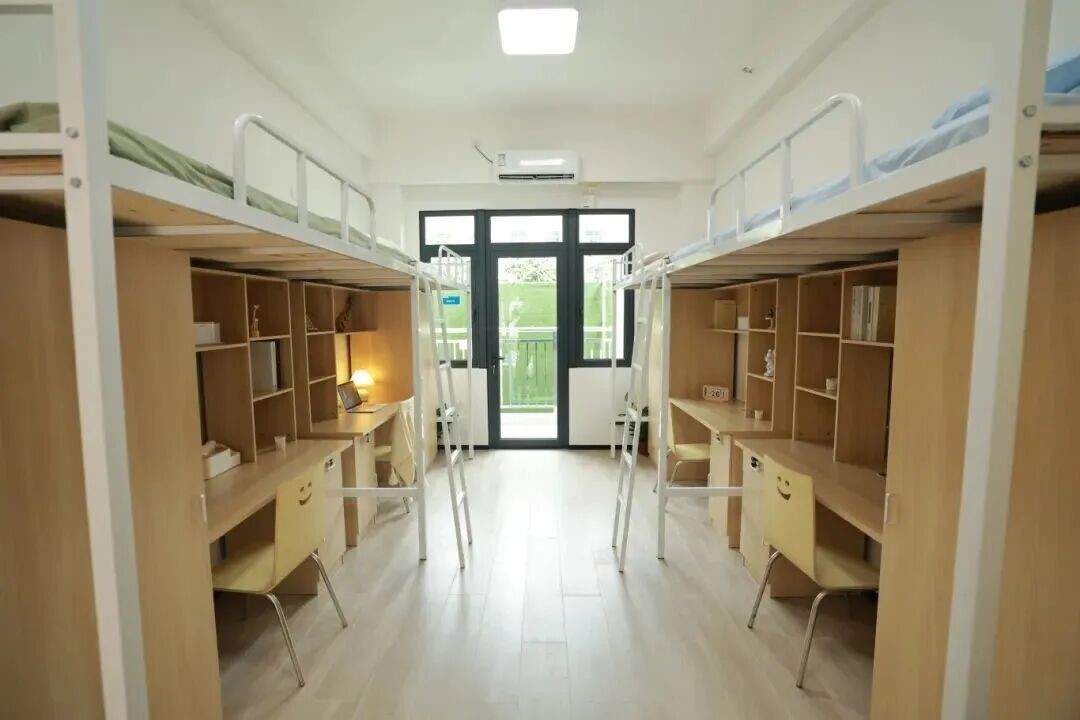
The clean and tidy dormitory room
Each room comes fully furnished for move-in readiness. The ground floor includes facilities such as a laundry room, emergency handling room, canteen, and convenience store to meet daily needs.
03 Quiet and safe
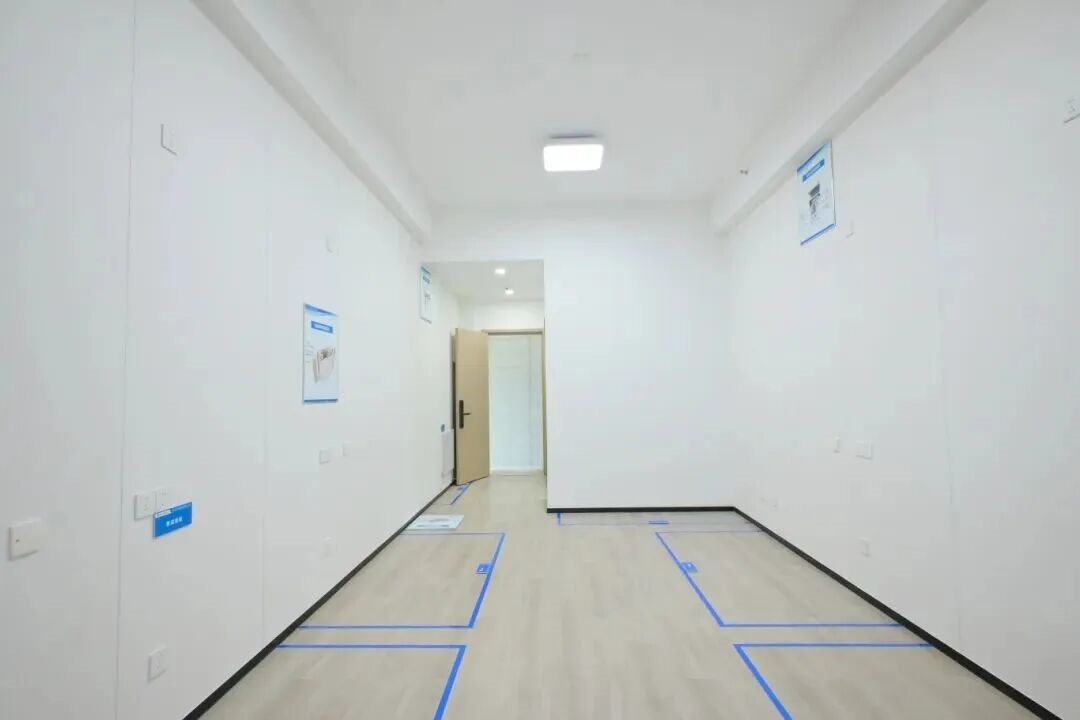
Wall cladding with an integrated decorative-and-MEP panel
The project adopts a comprehensive sound insulation system. The wall panels use integrated MEP panels with a two-hour fire-resistance rating, delivering better thermal and acoustic performance and providing a quiet, safe resting environment for shift-working medical staff.
04 Accessible circulation
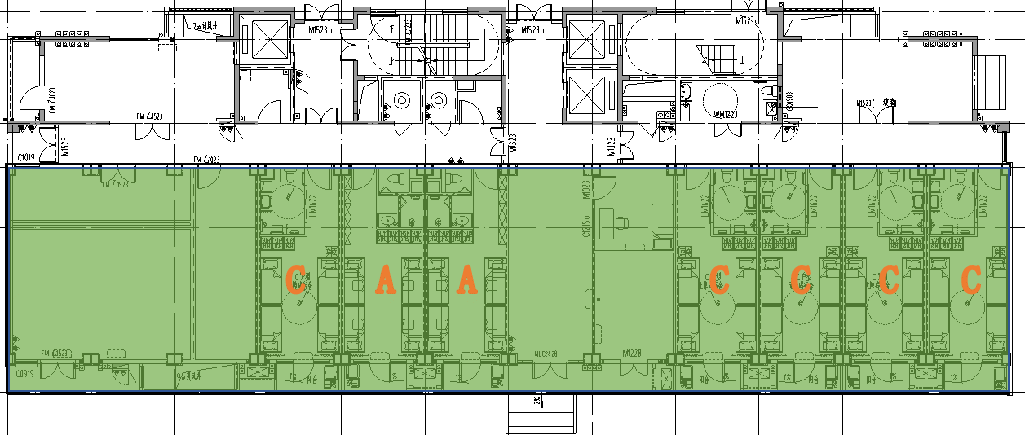
Ground-floor plan (Type C is an accessible dormitory unit)
Dedicated accessibility design is incorporated. Elevators feature deeper and wider cabins with step-free entrances, and five accessible units are provided on the first floor.
05 Green and comfortable
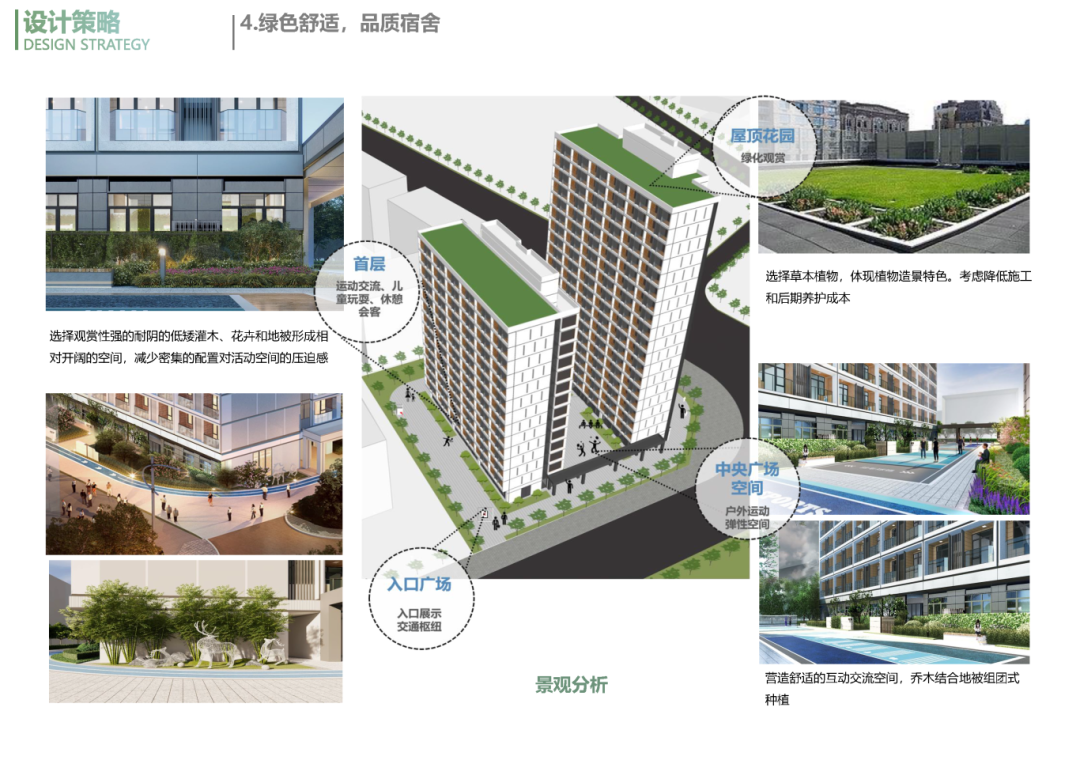
Landscape design rendering
Essential living facilities are arranged on the ground-floor living zone. Outdoor courtyards and the central plaza include activity areas such as badminton courts. Landscaping is thoughtfully arranged across the ground floor, plaza, and rooftop garden, achieving a 30% overall greening coverage and creating comfortable spaces for interaction and relaxation.
06 A “Good Homes” demonstration project
The project meets standards for safety, comfort, sustainability, and smart features for residential buildings, and has been selected as a “Good Homes” demonstration project for the first National Building Technology Exhibition organized by China’s Ministry of Housing and Urban-Rural Development.
From the three major firsts that overcome technical bottlenecks, to full-process smart construction that secures quality at every step, this is yet another technological upgrade by CSCEC Science and Industry in the field of high-rise modular buildings. It proves that modular buildings can be built tall, built strong, and built warm. In the future, CSCEC Science and Industry will continue to drive innovation and contribute further to the industrial transformation of China’s construction sector.


Get the latest updates with our newsletter
Follow us
-

CCPA Wechat
-

CCPA EXPO Wechat
