




The "carbon peaking and carbon neutrality goals" mission of low-carbon concrete —— sidelights of the expert symposium on promoting the development of low-carbon concrete
 Printing
On November 4th, 2021,the Ready-Mixed Concrete Branch of China Concrete and Cement-based Products Association (CCPA) and Guojian Lianxin Certification Center jointly organized an expert symposium on "Low-carbon concrete", which was conducted online and offline. Focusing on "What is low-carbon concrete?" "How to define new cementitious materials and their application fields?" "What's the problem solved by new cementitious materials?” the meeting witnessed a heated and extensive discussion.
On November 4th, 2021,the Ready-Mixed Concrete Branch of China Concrete and Cement-based Products Association (CCPA) and Guojian Lianxin Certification Center jointly organized an expert symposium on "Low-carbon concrete", which was conducted online and offline. Focusing on "What is low-carbon concrete?" "How to define new cementitious materials and their application fields?" "What's the problem solved by new cementitious materials?” the meeting witnessed a heated and extensive discussion. Experts have reached a lot of consensus on the definitions, technical requirements, research and development and application of "new cementitious materials" and "low carbon concrete". The meeting was presided over by Shi Haixia, Secretary General of Ready-Mixed Concrete Branch.

On October 26th, 2021,the State Council issued Action Plan for Carbon Dioxide Peaking Before 2030 (hereinafter referred to as the Action Plan). In the chapter "Promoting the carbon peak of building materials industry" of the Action Plan, it is clearly pointed out that "strengthening the research and development and application of new-type cementitious materials, low-carbon concrete, wood and bamboo building materials and other low-carbon building materials". The concept of "low-carbon concrete" first appeared in the blockbuster document issued by the State Council. This means that "low-carbon concrete" will become an important engine and promoter of building materials industry in the historic process of national "carbon peaking and carbon neutrality goals” promotion, bearing and embodying the expectation and hope of low-carbon development of the whole industry.

Jiang Zhengwu, a professor at Tongji University: Which link is the most important when transforming concrete into low-carbon concrete? Emphasis is placed on cementitious materials, namely cement. The use of low-carbon cementitious materials equates to reduce carbon directly. New cementitious materials, special cement and high performance cement are the promotion and modification of ordinary cement, which have not been widely used at present yet. In addition, replacing aggregate with solid waste and strengthening recycling are also the embodiment of low-carbon concrete.
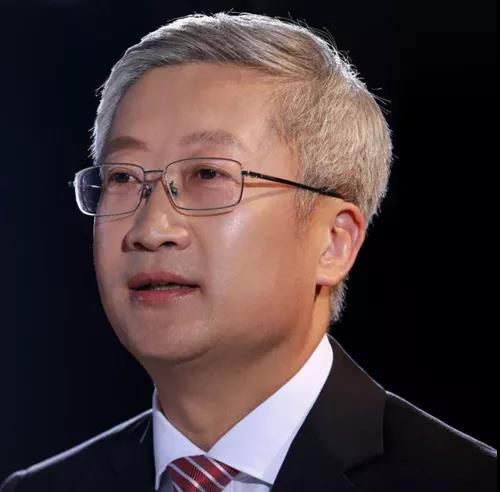
Wang Dongmin, Professor of China University of Mining and Technology (Beijing): Durability is an important dimension of low-carbon concrete. Thinking about low-carbon concrete from the perspective of durability. It is hoped that the durability of low-carbon concrete can be built by using low-carbon cementitious materials, excellent additives, and replacing aggregates with solid wastes that fully meet the standards, so as to reduce carbon for a long time by extending the life of buildings.
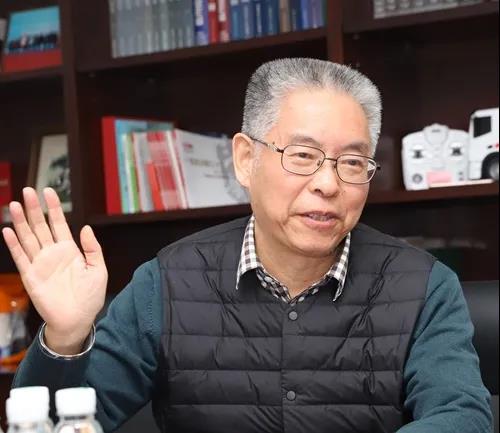
Professor Yan Peiyu of Tsinghua University: Starting from the strategy of low-carbon development, we call for the resumption of the production of 325# cement. As 32.5 strength grade cement accounts for more than one third of German cement output, the quality of cement has nothing to do with the variety. At present, the decline of cement quality and the increase of market confusion in China are not unrelated to the cancellation of P.C.32.5 composite portland cement. Therefore, P.C.32.5 composite portland cement should be restored in China's cement standard.

Yin Jingyu, deputy general manager of Guojian Lianxin Certification Center: The carbon footprint of concrete mainly comes from cement and its own production and transportation energy consumption. According to the carbon footprint of the whole life cycle, cement accounts for about 80% of the carbon footprint of concrete. The carbon footprint of transportation ranks second about 9%. It is difficult to quantify the carbon footprint of concrete in the use stage (including life, carbonation removal), scrap recycling and recycled aggregate application stage. The purpose of carbon footprint quantification is to guide enterprises to reduce the carbon footprint of products by using lower carbon cement and more environmentally friendly transportation methods.
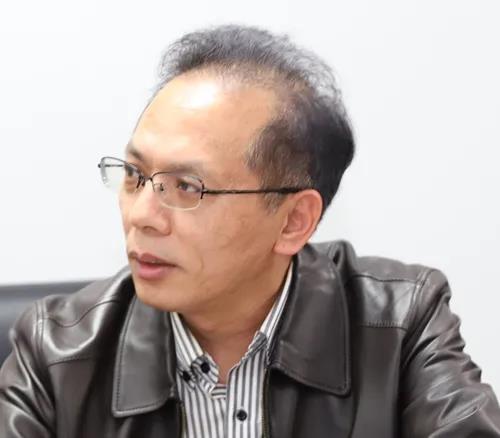
Gong Xianzheng, a professor at Beijing University of Technology: Pay attention to the accounting methods and rules of carbon emissions of low-carbon concrete and new cementitious materials.

Zhang Bin, head of carbon neutralization technology research and development in China Resources Cement Technology R&D Co., Ltd.: The problem of insufficient resources of auxiliary materials need to be solved if we want to develop new cementitious materials.

Qi Guanghua, professor-level senior engineer of China West Construction Group New Material Technology Co., Ltd: Great efforts need to be done to move from carbon cycle to carbon balance, which requires not only strength and durability, but low carbon has become another constraint of concrete.
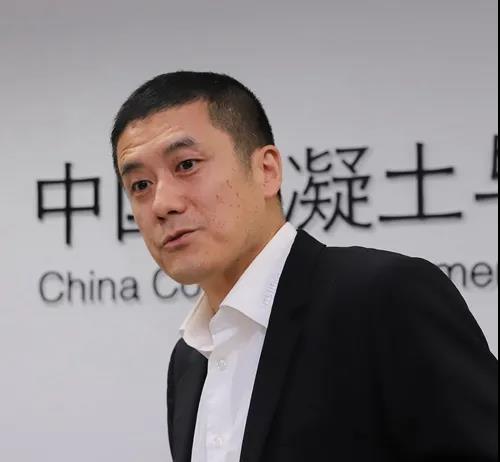
Zhang Weihong, strategic and public relations manager of Liebherr Group: Energy saving accounts 3% of the reduction of carbon in cement and concrete proposed by Europe, with alternative energy sources 12% and clinker replacement 37%.

Zhou Chunsheng, Professor of Harbin Institute of Technology: Capturing carbon means regenerating the waste concrete, which forms carbon cycle. Transforming waste concrete into recycled aggregate is a way to capture carbon, forming carbon cycle. This requires the development of new technologies while concrete has advantages in this respect. We still have a long way to go to achieve this goal.
Editor's Choice


Get the latest updates with our newsletter
Follow us
-

CCPA Wechat
-

CCPA EXPO Wechat
