




2025 Ready-Mixed Concrete Industry Development Report
 Printing
In 2025, the cumulative national production of ready-mixed concrete was 2.288 billion m3, a year-on-year decrease of 8.7%. The production of ready-mixed concrete has declined year-on-year for four consecutive years, further confirming industry demand is shifting from a plateau to a downturn.
In 2025, the cumulative national production of ready-mixed concrete was 2.288 billion m3, a year-on-year decrease of 8.7%. The production of ready-mixed concrete has declined year-on-year for four consecutive years, further confirming industry demand is shifting from a plateau to a downturn.
2025 was a very unusual year, with the impact of changes in the external environment deepening, and the prominent contradiction of strong domestic supply and weak demand. The country has vigorously promoted the development of new quality productive forces tailored to local conditions, strengthened scientific and technological innovation, cultivated and expanded emerging industries, and transformed and upgraded traditional industries, achieving positive results.
Constrained by the downturn in fixed-asset investment in traditional infrastructure, real estate, and the construction industry, the total fixed-asset investment in 2025 fell by 3.8% year-on-year, among which infrastructure investment declined year-on-year, and the slump in real estate investment intensified; in 2025, the cumulative national production of ready-mixed concrete was 2.288 billion cubic meters, a year-on-year decrease of 8.7%. The production of ready-mixed concrete has declined year-on-year for four consecutive years, further confirming industry demand is shifting from a plateau to a downturn.
Review of the Ready-Mixed Concrete Industry
(I) Production Solidifies a Downward Trend
1. Investment Continues to Shrink, Demand for Ready-Mix Concrete Continues to Decline
Since 2022, affected by factors such as the continuous shrinkage of real estate investment and the slowdown in infrastructure investment growth, ready-mixed concrete production has fallen for four consecutive years. In 2025, the cumulative national production of ready-mixed concrete was 2.288 billion m3, a year-on-year decline of 8.7%. The demand for ready-mixed concrete has been continuously shrinking and is still in a downward trend. Figure 1 shows the comparison of ready-mixed concrete production and year-on-year growth rates over the past two decades.
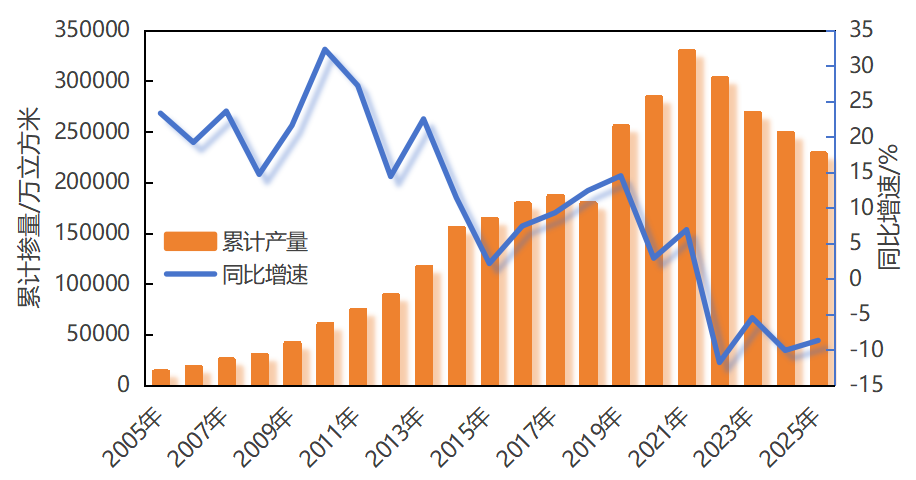
Figure 1 Comparison of Ready-Mixed Concrete Production and Year-on-Year Growth Rates Over the Past Twenty Years
2. The Production Decline in Six Major Regions in 2025 Slows Slightly Compared to the Same Period Last Year
Cumulative production in all six major regions of the country declined year-over-year in 2025, with all regions experiencing drops of more than 5%; the East China region saw a double-digit decline. Compared with the previous year, except for South Central China, the decline in production in the other five regions narrowed slightly. Figure 2 shows the year-on-year growth rate of ready-mixed concrete production in the six major regions nationwide over the past ten years.
From a provincial perspective, in 2025, among the 31 provinces, municipalities, and autonomous regions nationwide, only 4 provinces saw a year-on-year increase in production, while 27 provinces experienced a year-on-year decline in cumulative production. Among the provinces, municipalities, and autonomous regions with declining production, 11 provinces saw a decline of more than 10%, and 2 provinces exceeded 20%. Figure 3 shows the comparison of the cumulative production growth rates of commercial concrete in various provinces, municipalities, and autonomous regions in 2025.
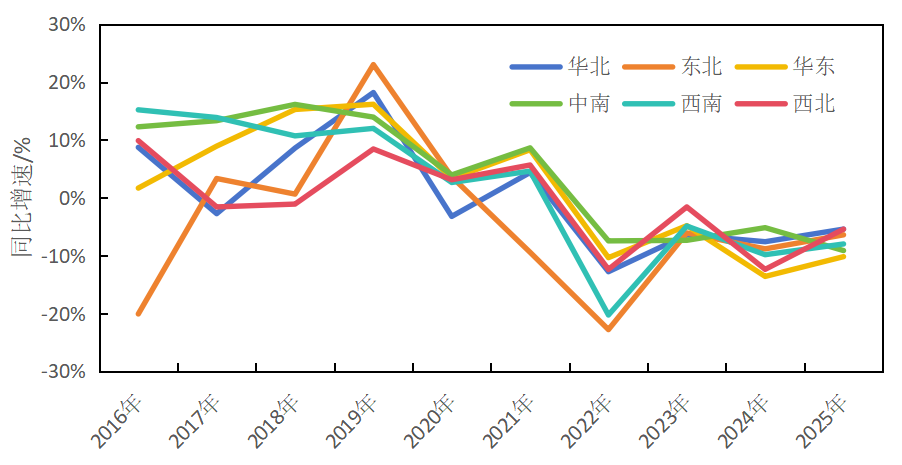
Figure 2 Year-on-Year Growth Rate of Ready-Mixed Concrete Production in Six Major Regions Nationwide Over the Past Ten Years
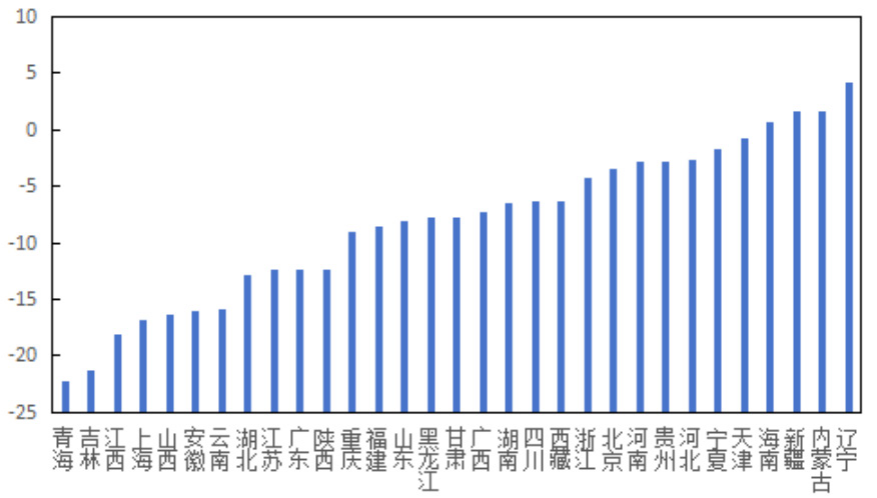
Figure 3 Comparison of Cumulative Production Growth Rates of Commercial Concrete by Province, Municipality, and Autonomous Region in 2025
(II) Prices Continue to Fall
The price of ready-mixed concrete over the past decade has maintained a downward trend after peaking at the end of 2021. Following the COVID-19 pandemic, the contradiction between supply and demand has become increasingly prominent. By the end of 2025, the price had broken a ten-year record low, dropping by more than 220 yuan/m3 from its peak. Figure 4 shows the decline in the average price of commercial concrete nationwide at the end of 2025.
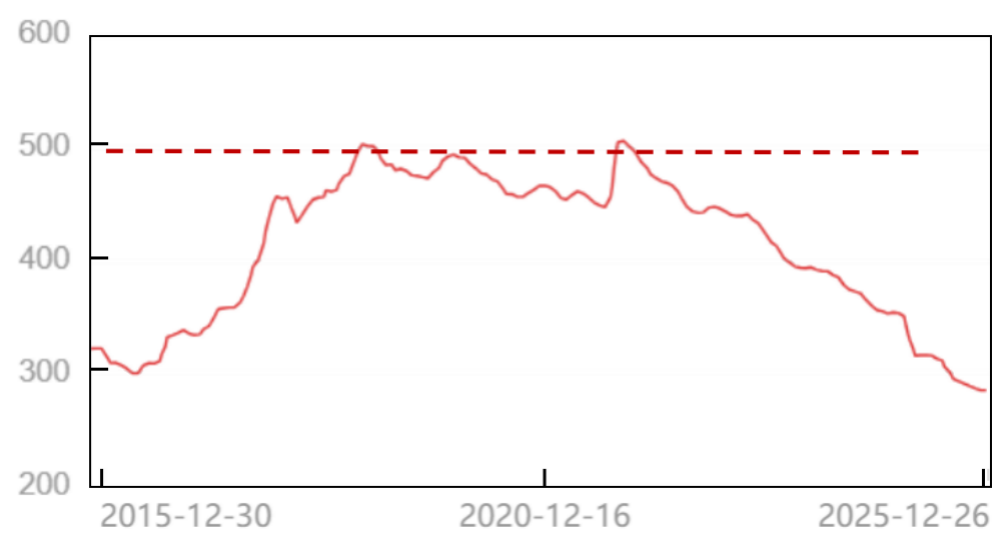
Figure 4 Decline in the Average Price of Commercial Concrete Nationwide at the End of 2025
Looking at the monthly trend within the year, the national price of ready-mixed concrete experienced a substantial adjustment before the Spring Festival in 2025, and a second major price plunge occurred between June and August, after which prices stabilized at a low level. At the end of 2025, the national average price of ready-mixed concrete was 284 yuan/m3, a decrease of more than 50 yuan/m3 from the beginning of the year. Figure 5 shows the monthly trend of national commercial concrete prices in 2025.
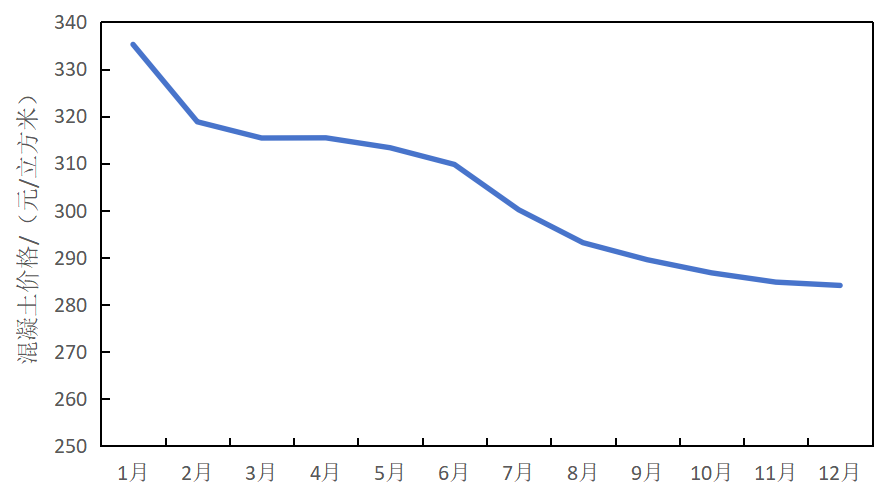
Figure 5 Monthly Trend of National Commercial Concrete Prices in 2025
Regionally, at the end of 2025, the average market price of ready-mixed concrete in East China was the highest, yet it still did not exceed 300 yuan/m3; North China and Northeast China became price depressions, with average market prices around 260 yuan/m3 at the end of the year. Compared with the same period in 2024, the price decline in South Central China was the largest, exceeding 20%; the price decline in Southwest China was the smallest, at less than 15%. Figure 6 shows the average prices of commercial concrete and their year-on-year status in the six major regions nationwide at the end of 2025.
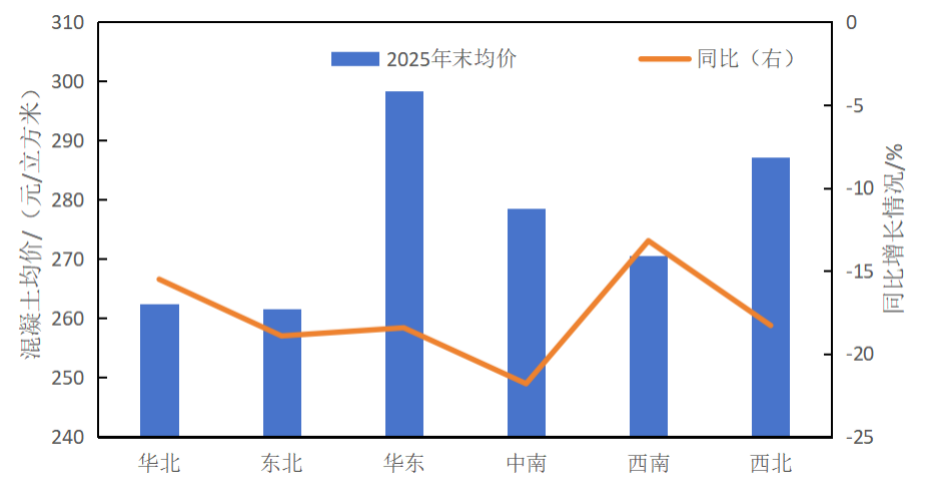
Figure 6 Average Prices of Commercial Concrete and Year-on-Year Status in Six Major Regions Nationwide at the End of 2025
From the intra-year trend, the prices of ready-mixed concrete in East China and South Central China steadily declined in 2025, while the prices in the other 4 regions underwent significant adjustments during different periods. Figure 7 shows the trend of commercial concrete price changes in the six major regions nationwide in 2025.
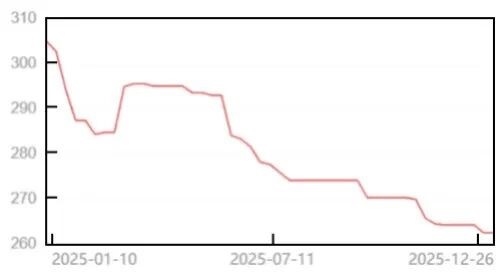
(a) North China
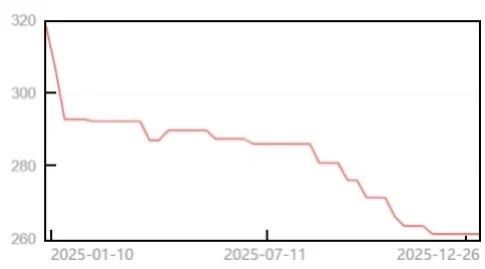
(b) Northeast China
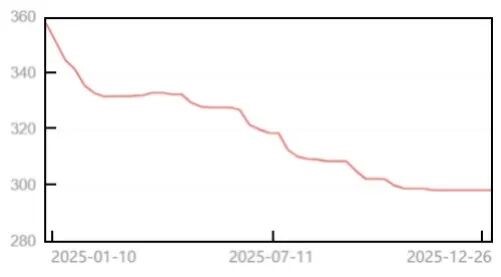
(c) East China
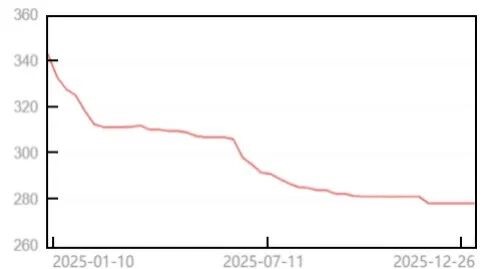
(d) South Central China
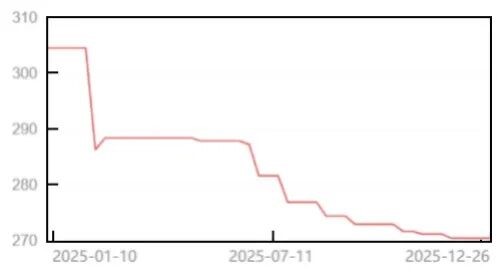
(e) Southwest China
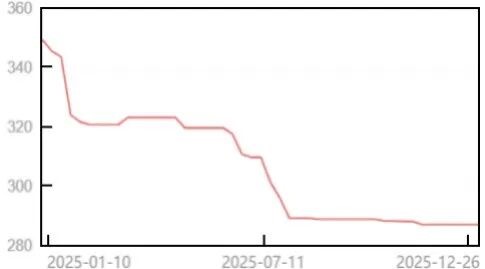
(f) Northwest China
Figure 7 Trend of Commercial Concrete Price Changes in Six Major Regions Nationwide in 2025
From a provincial perspective, comparing the end of 2025 with the beginning of the year, prices fell in all 30 provinces, municipalities, and autonomous regions nationwide (excluding Tibet), except for Chongqing. Excluding Chongqing and Xinjiang, the average market prices in the other provinces, municipalities, and autonomous regions all fell by more than 10 yuan/m3. There were 15 provinces, municipalities, and autonomous regions with a drop of more than 50 yuan/m3, among which Shanghai and Shaanxi saw drops exceeding 100 yuan/m3. Figure 8 shows the rise and fall of average market prices at the end of 2025 compared to the beginning of the year across various provinces, municipalities, and autonomous regions.
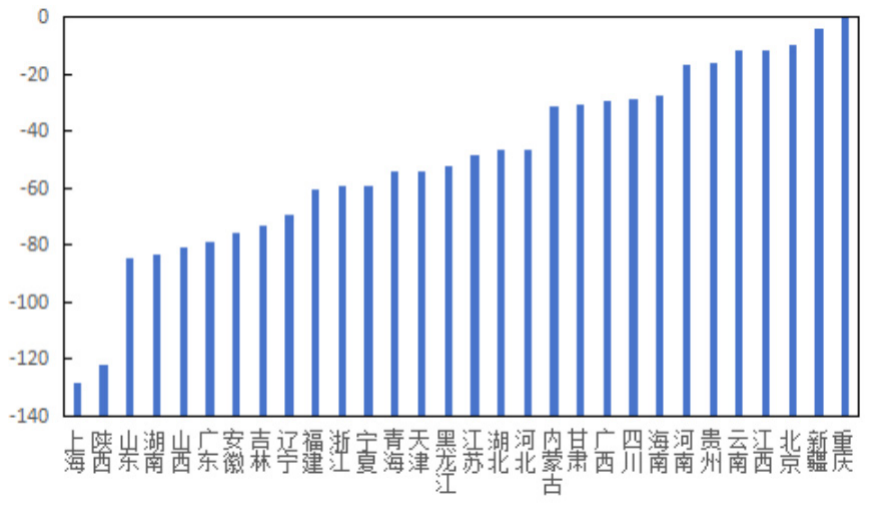
Figure 8 Rise and Fall of Average Market Prices at the End of 2025 Compared to the Beginning of the Year Across Provinces, Municipalities, and Autonomous Regions
(III) Economic Benefits Shrink Rapidly
According to statistics, from January to December 2025, the main business income of the concrete and cement-based product industry above designated size decreased by 15.5% compared to the same period last year, and the total profit decreased by 28.2% year-on-year. The entire industry’s main business income has been declining year-on-year since 2022, while the industry’s profit began to decline year-on-year prior to the main business income starting in 2011. Since 2024, the total profit of the entire industry has decreased by more than 20% year-on-year.
The annual production of the ready-mixed concrete industry in 2025 is expected to drop by nearly 10% year-on-year, with the annual average price dropping by more than 10%, and the industry’s main business income is expected to decrease by about 20%. The concrete sales volume and sales revenue of most listed companies have declined significantly, and product gross profit margin levels have also dropped notably.
Opportunities and Prospects for Industry Development
The way out for the ready-mixed concrete industry lies in “reconstruction.” Currently, the industry is experiencing the growing pains of transitioning from the old era of “scale expansion” to a new era of “quality and efficiency competition.” The path out of this predicament does not lie in waiting for the market to recover, but in taking the initiative to carry out a threefold reconstruction. The first is the reconstruction of product, shifting from homogenized ordinary concrete to high value-added products such as high-performance, special, and green low-carbon concrete; the second is the reconstruction of operational, utilizing digital and AI technologies to achieve ultimate cost reduction and efficiency enhancement in production, logistics, and management; the third is the reconstruction of business model, shifting from simply selling concrete to providing comprehensive “materials + technology + services” solutions, and even exploring new models such as capacity sharing and logistics platforms. The future of the industry belongs to those enterprises that can face deep-seated contradictions head-on and dare to carry out radical innovations in technology and management.
(I) Low-Volume Operation Capability is the Core Competitiveness of Ready-Mixed Concrete Enterprises under the Current Situation
Ready-mixed concrete costs are mainly concentrated in raw materials, mixing production, transportation, pumping, sales, capital, and labor. For a long time, raw material costs have been the main battleground for enterprises to reduce costs and increase efficiency, but as the industry matures, the gap in raw material costs between mixing plants is shrinking day by day. Affected by the sharp decline in concrete demand, the average annual sales volume per mixing plant is less than 100,000 m3, and in some areas, it is even as low as 50,000 m3. Against this backdrop, maintaining the full-system mixing plant operation model will inevitably face problems such as underutilized employee workloads, intermittent production, and excessively high per-unit labor costs. In the current environment, ready-mix concrete companies must accelerate their transformation, move away from the traditional model of operating full-scale batching plants, and focus on optimizing the operation of integrated work teams to ensure their survival; the quality of these operations is a direct reflection of the company’s core competitiveness.
(II) AI Empowerment is the Future Direction for Ready-Mixed Concrete Enterprises
The essence of AI empowerment is to shift the industry from being “experience-driven” to “data and model-driven.” For enterprises, this is a pragmatic path that starts with data and succeeds through integration; for the industry, it is a collaborative process that starts with standards and succeeds through ecology. In the future, the core competitiveness of enterprises that take the lead in completing the transformation will no longer just be production capacity scale, but precise cost control capability, rapid response to market demand, and continuous technological innovation capability based on data and AI. The competitive landscape of the industry will therefore upgrade from pure price competition to a comprehensive competition of efficiency, quality, and sustainability.
(III) New Market Sales Models Will Effectively Alleviate the Pressure of Accounts Receivable in the Concrete Industry
Concrete production enterprises should return to the essence of manufacturing, win the market through lean management, traceable quality data chains, high-quality services, and ultimate cost-effectiveness, and gradually realize cash or advance payment product delivery. The professional sales agency system is expected to become a specialized division of labor model, becoming a channel innovation for risk-sharing and benefit-sharing. The implementation of this model is based on the gradual maturity of current information platform technologies and digital management and control technologies. It is not simply “outsourced” sales, but the construction of a new type of industrial collaboration relationship linked by contracts and interests.
(IV) “Three-in-One” of Cement, Aggregate, and Concrete Enterprises Will Have Significant Advantages
The “Three-in-One” business model refers to large building materials enterprises fully constructing an industrial chain of cement, aggregate, and concrete to achieve coordinated development. Internationally renowned large building materials enterprises mostly choose to form a complete industrial chain including cement, aggregate, and concrete, and build long-term favorable regional competitive advantages through “Three-in-One” coordinated development. Adhering to the “Three-in-One” model is conducive to achieving synergy between benefits and efficiency, enhancing the market competitive advantage of group enterprises, and at the same time, it does not hinder other large enterprises from adopting the same model to jointly participate in market competition, and there is no risk of monopoly operations.
(V) Sand and Gravel Aggregates Will Become an Important Factor in the Survival and Development of Concrete Enterprises
From manual mixing to mechanized construction of concrete, while gradually adapting to modern equipment, practitioners focus more on the technological progress and product innovation of cementitious materials such as cement and admixtures, and attach no importance to the impact of aggregates on concrete performance and cost. As competition in the concrete industry intensifies today, customers’ demands for concrete have shifted from a single price requirement to a multi-dimensional upgrade encompassing product quality, service, later-stage durability, and green and low-carbon features. In the future, with the joint efforts of mining enterprises, sand and gravel suppliers, and concrete enterprises, it is expected that high-quality concrete production can be achieved by providing commercialized supplies of sand and gravel that have been optimized through single-size grading, shaping, or continuous grading.
(VI) Comprehensive Teams and AI Talents Will Become the Development Direction of Corporate Human Resources
As enterprises comprehensively enter the deep-water zone of digital and intelligent transformation, AI technology is reshaping organizational structures and management hierarchies with a disruptive force. This transformation not only leads to the dissolving of traditional job boundaries but also fundamentally reconstructs the skill map and capability model of talents. Looking to the future, the core of corporate human resources strategy will focus on two major emerging pillars: First, job settings will shift from static functional definitions to dynamic overlapping demands of “physical space + management scenarios,” requiring frontline operational personnel to break skill barriers and transform into “multi-skilled” composite talents, forming “comprehensive teams” capable of cross-domain collaboration; second, the demand for AI talents will shift from general technology to vertical domain cultivation, requiring a large number of “data trainers” to build “Enterprise-level AI Agents” that align with the enterprise’s cultural DNA and match specific management advantages through the cleaning, labeling, and training of corporate private data. This is not only the application of technology but also the digital precipitation of an enterprise’s core competitiveness.
Conclusion
The “15th Five-Year Plan” period will be a crucial five years for the ready-mixed concrete industry to undergo a radical transformation. The dual-wheel drive of green development and digital intelligence will propel the industry to achieve multi-dimensional and profound transformation. Only by proactively embracing change can enterprises seize the initiative in development.
Facing the future, the ready-mixed concrete industry will continue to strongly support national construction, becoming an important force in practicing green development concepts and cultivating new quality productive forces, providing a solid guarantee for the construction of livable and smart cities.
Editor's Choice


Get the latest updates with our newsletter
Follow us
-

CCPA Wechat
-

CCPA EXPO Wechat
