




Guangxi Subote’s Unique Solution for Granite-Based Manufactured Sand
Through precise regulation of the water reducer formula and communication regarding on-site construction control, the granite-based manufactured sand shotcrete was able to be used stably. This transformed the disadvantage of raw materials into a cost advantage, guaranteed the safety and progress of the project, and provided practical experience for subsequent tunnel construction.
The B1 section of the Guangxi Water Resources Allocation Project in the Beibu Gulf Region — the Yujiang South Trunk Line belongs to the front section of the Yujiang South Trunk Line. The total length of the line is about 6.5km. The main structures include: Xijin Pumping Station and its auxiliary structures, surge shafts, and 3 tunnels (with a total length of about 5km). The tunnels are all pressure tunnels, totaling 3, which are Shangli Tunnel, Shizhuping Tunnel, and Banqiao Tunnel, respectively. The problems encountered in this project construction exactly occurred during the construction of the Banqiao Tunnel.
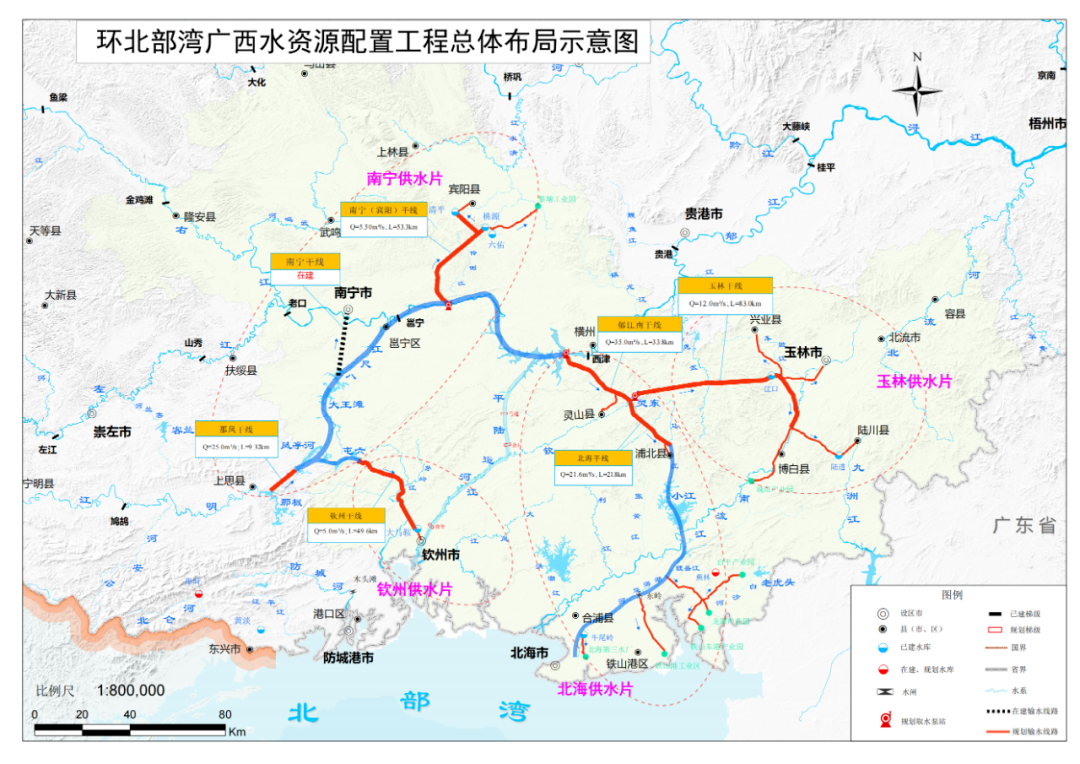
Schematic Diagram of the Guangxi Water Resources Allocation Project in the Beibu Gulf Region
Core Challenges
First, after the project switched to granite-based manufactured sand, influenced by its own material characteristics, the construction process for shotcrete in tunnels has become obviously unstable, causing problems such as poor fluidity, large slump loss, and high rebound rate, which directly affected the construction progress.
Second, compared with natural sand, granite-based manufactured sand has more angularities, and a rough and porous surface. This not only increases the friction between particles inside the concrete but also causes a significant increase in the water demand of the concrete and poor water retention.
Third, the continuous gradation of granite is relatively poor and the void ratio is on the high side, which further exacerbates the problem of a high rebound rate of the concrete. Moreover, the strong adsorption capacity of granite-based manufactured sand for water reducers, combined with the higher temperature of the construction environment inside the tunnel, makes the concrete slump loss problem more prominent. If the dosage of water reducer and concrete water consumption are blindly increased to ensure concrete construction performance, the rebound risk of shotcrete will be further amplified, creating a construction dilemma.
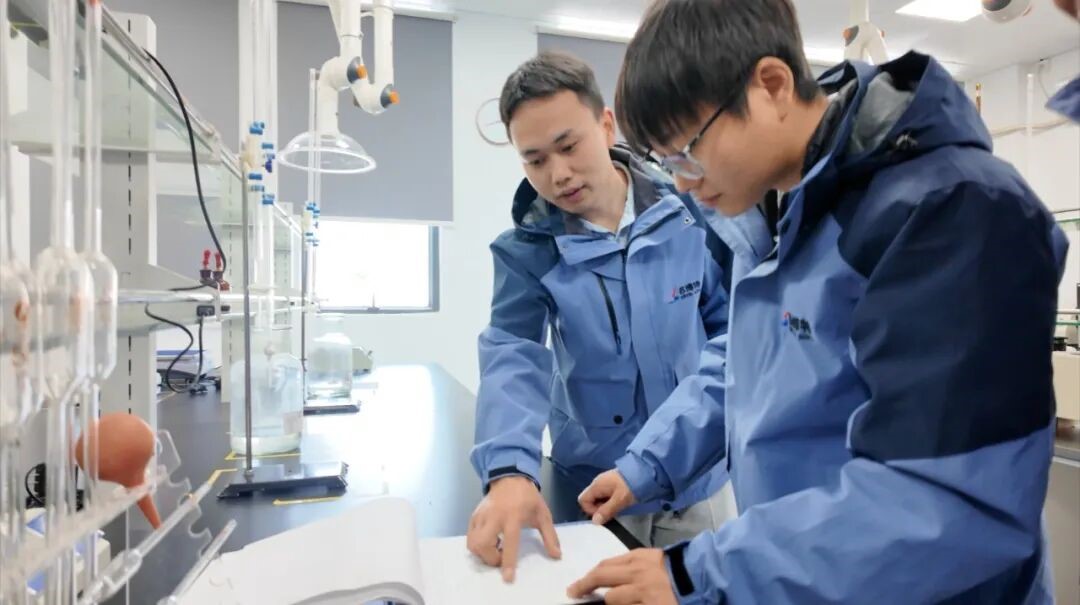
Discussing Technical Challenges
Solutions
Facing these mutually restricting technical challenges, Guangxi Subote dynamically adjusted the concrete mix proportion parameters, optimized the aggregate particle gradation, and changed the polycarboxylate superplasticizer formula. This achieved precise matching between the cementitious materials and the core characteristics of the granite-based manufactured sand, such as particle shape, stone powder content, and water absorption rate. This effectively improved the homogeneity and stability of the freshly mixed concrete slurry, ensuring that the slump upon discharge met the requirements for continuous construction. At the same time, they communicated with the on-site operators to strictly control the concrete water consumption, avoiding quality risks such as decreased cohesiveness and high shotcrete rebound rates caused by an excessively high water-binder ratio.
On-site trial mixing and actual performance tests were conducted, and the control range for the concrete’s working performance was jointly determined with the construction technical team, ensuring the orderly advancement of on-site construction throughout the entire process.
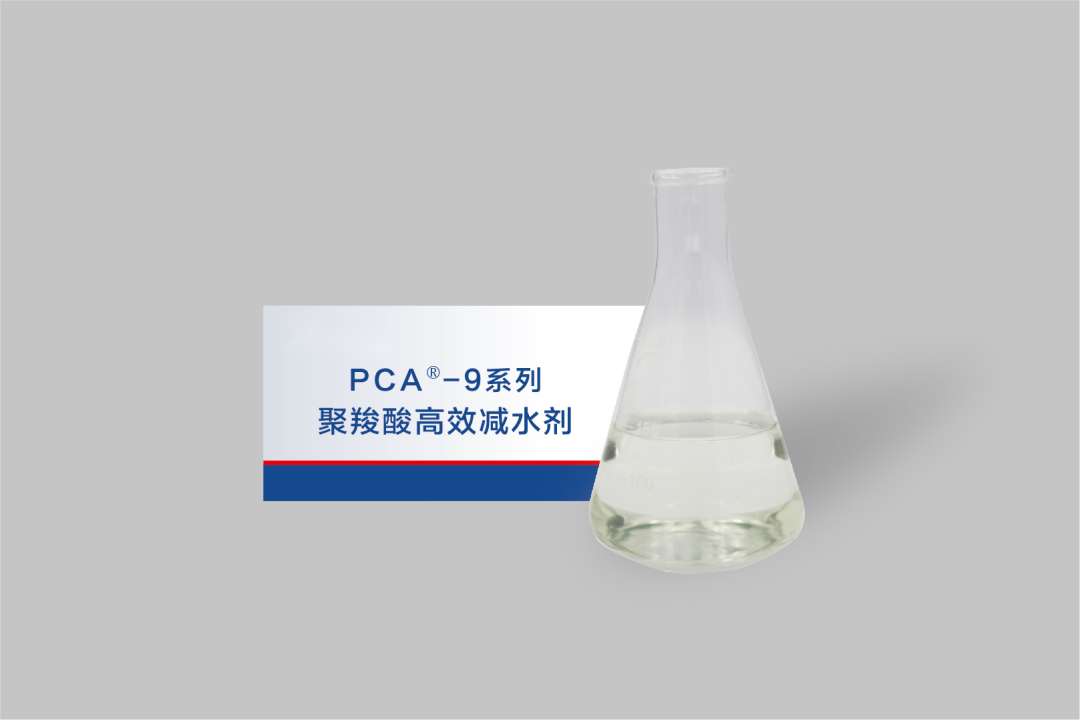
Adopting the PCA-9 Series Polycarboxylate Superplasticizer
Conclusion
Through precise regulation of the water reducer formula and communication regarding on-site construction control, the granite-based manufactured sand shotcrete was able to be used stably. This transformed the disadvantage of raw materials into a cost advantage, guaranteed the safety and progress of the project, and provided practical experience for subsequent tunnel construction.


Get the latest updates with our newsletter
Follow us
-

CCPA Wechat
-

CCPA EXPO Wechat
