




Beijing’s First Concrete Modular Affordable Housing Project Completes First Hoisting
On May 8, the affordable rental housing project at the Dinghuisi North plot in Haidian District, Beijing, completed the hoisting of its first concrete module, marking the projects official entry into the main modular construction phase.
On May 8, the affordable rental housing project at the Dinghuisi North plot in Haidian District, Beijing, completed the hoisting of its first concrete module, marking the projects official entry into the main modular construction phase. This project is the first concrete modular affordable housing project in Beijing, and also the first concrete modular project in Haidian District.
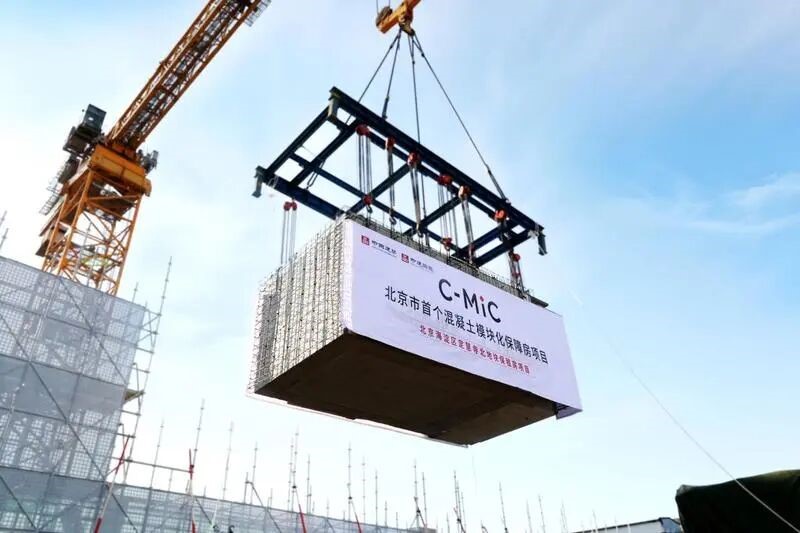
Hoisting of the project’s first concrete module
The project is a five-story affordable rental housing building with a total floor area of 9,842.79 m2. It plans for 5 types of residential layouts, with the synchronized construction of public service facilities and equipment rooms. Once completed, it will provide 241 affordable rental housing units. The units are mainly targeted at the region’s new citizens and the youth group, which will further supplement the supply of affordable rental housing in Haidian District and serve the housing needs of regional talents and the jobs-housing balance.
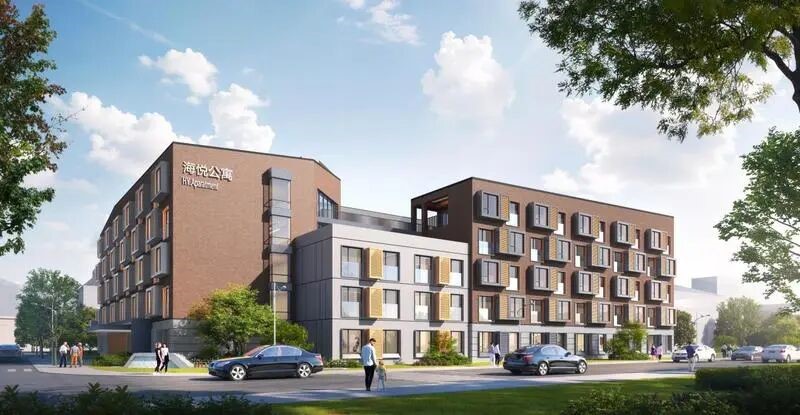
Project rendering
As a key project in Haidian District to serve talent development and improve livelihood security facilities, the project is jointly implemented by China State Construction International Investments (North China) Co., Ltd. and China State Construction Hailong Technology Co., Ltd. (hereinafter referred to Hailong Technology). The project’s construction introduces smart construction-MiC technology, shifting a large amount of construction processes traditionally completed on-site to a smart factory. Through “factory prefabrication and on-site assembly,” it enhances construction efficiency and engineering quality.
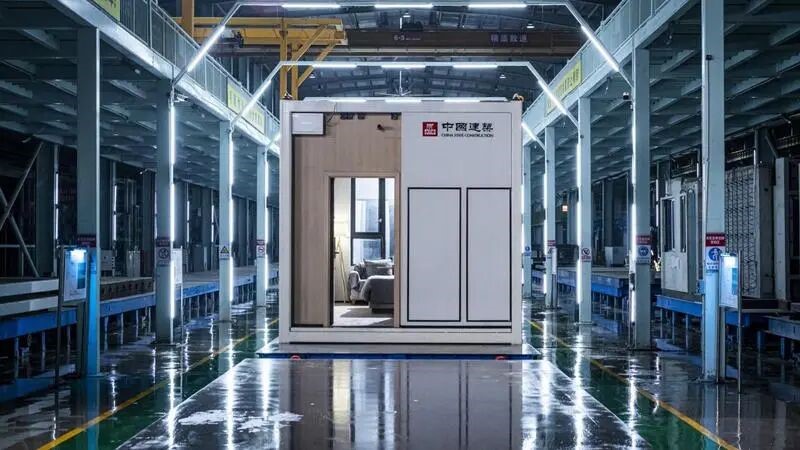
Standardized housing smart manufacturing factory
The project adopts the hollow composite shear wall + single-sided composite wall modular system independently developed by Hailong Technology. In the early stage of construction, the construction team dismantled the entire building into 203 standardized independent concrete modules. All modules undergo system integration in the smart factor, including structure, mechanical and electrical pipelines, interior decoration, and bathroom fittings, with the precision of production reaching the millimeter level. After the modules are transported to the construction site, they are quickly assembled and shaped through hoisting.
Relying on the advantages of MiC technology, the overall construction period of the project can be shortened by more than 50% compared with traditional cast-in-place construction. At the same time, the combination of factory production and on-site assembly also helps to reduce construction dust, construction waste, and on-site noise, elevating the level of green construction.
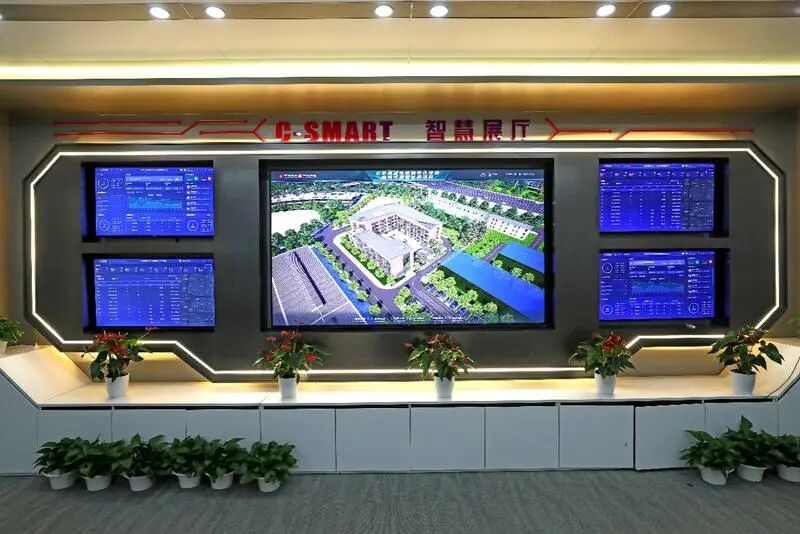
Project C-SMART intelligent management system
The project promotes a digital construction management model throughout its full life cycle, integrating forward BIM design, the Internet of Things, digital twins, and other technologies into the entire process of architectural design, module production, transportation and hoisting, and post-operation and maintenance. It is also connected to the C-SMART intelligent management system to drive digital collaboration across design, production, transportation, hoisting, operation, and maintenance. The project implements a “one apartment, one code” management mechanism, allowing process tracking and quality traceability for every building module from raw material entry and factory production to on-site hoisting and positioning.
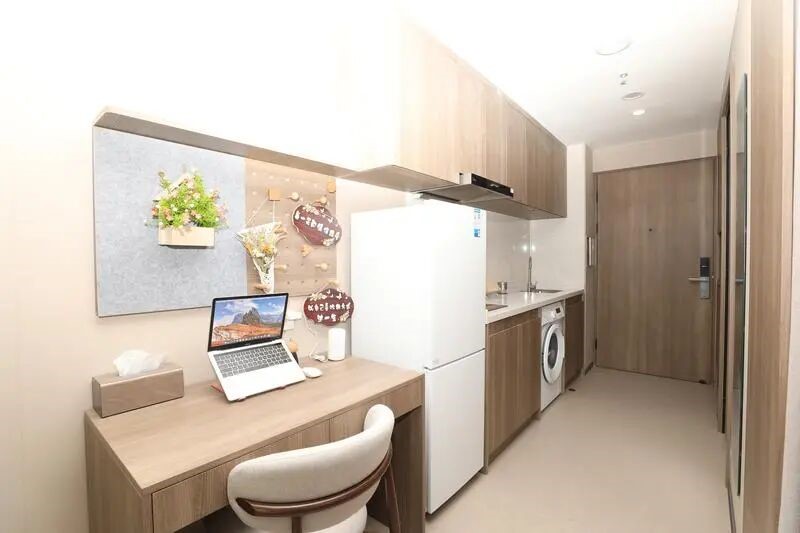
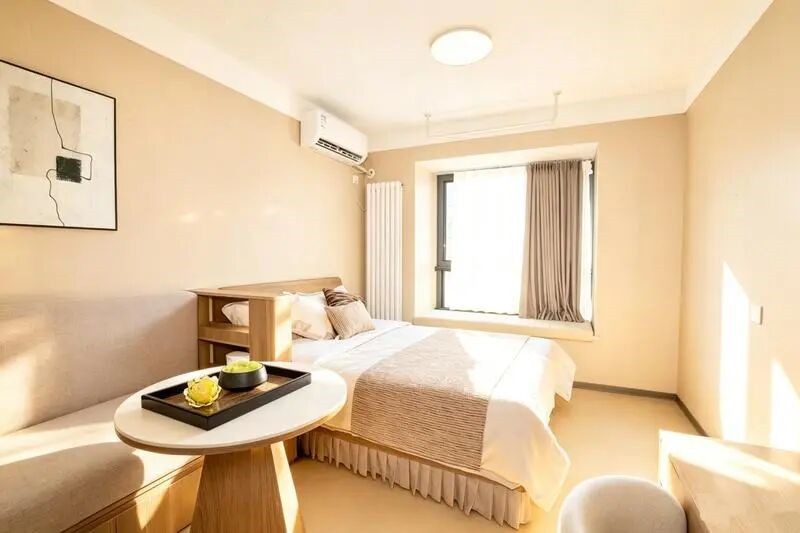
Actual photo of the project’s model room
A relevant person in charge of Bejing Haidian District Affordable Housing Development Co., Ltd. stated that the project is a typical practice of Haidian District using new construction technologies to empower the construction of livelihood housing. In the future, the project will continue to promote the practical application of smart construction technologies to create a safe, livable, well-equipped, smart, and green residential community, providing support for regional talent housing and high-quality industrial development.


Get the latest updates with our newsletter
Follow us
-

CCPA Wechat
-

CCPA EXPO Wechat
