




Unveiling China’s First “Box in Box” System
Six floors, 101 ward modules, all installed in place in just 12 days. Why can the infection building of this hospital in Shenzhen “grow” so fast?
The Bao’an Hospital project of Shenzhen People’s Hospital has a completely different construction method. Modules are pushed into the building skeleton like drawers, and one floor can be completed in two days. How is this achieved? The answer lies in the “All-Steel Structure Embedded Modular (Box in Box) System” adopted by the project.

△ Rendering of the Infection Building at the Bao’an Hospital of Shenzhen People’s Hospital
Constructed by China Construction Science and Industry Co., Ltd. (CSCEC Science and Industry), the Bao’an Hospital (Infectious Disease Prevention and Control Center) has a total of 7 floors and plans for 200 beds, including 101 ME-House ward modules and 168 MiMEP mechanical and electrical modules. It has been selected as one of the first batches of high-grade prefabricated building pilot projects under the “Shenzhen Building Industrialization Evaluation Standard.”
China’s First
Ushering in a New Iterative Hospital Model
Once a traditional building is completed, its layout and functions are often solidified, and its service life is relatively fixed. However, the “Box in Box” system adopted by the infection building of Bao’an Hospital breaks this limitation from the source.
The project adopts a combined solution of “GS-Building prefabricated steel structure main body + ME-House steel structure modules + MiMEP mechanical and electrical modules.” This means flexibly embedding individual “functional modules” (Inner Box) inside a permanently fixed “architectural shelf” (Outer Box).
As a result, the ME-House modules are no longer traditional boxes poured or stacked on site, but embedded functional units that are “lighter, stronger, and more flexible”. On site, they only need to be translated into place like “pushing in a drawer.” They are convenient to install, removable, and replaceable, providing infinite possibilities for the iterative updates of the hospital throughout its life cycle.
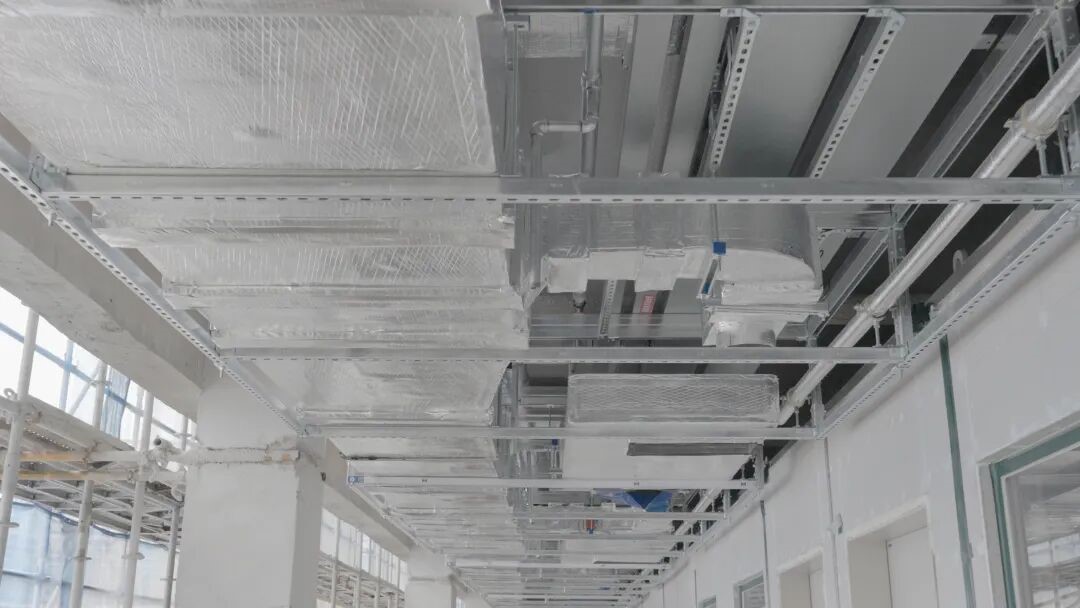
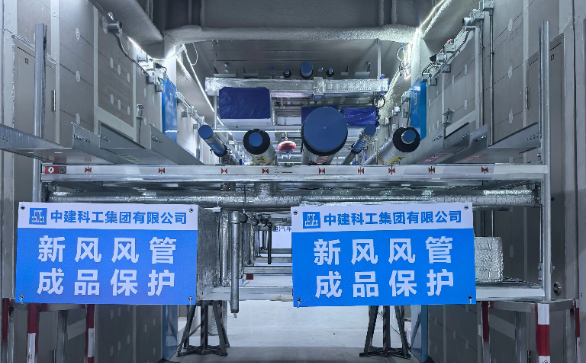
△ Actual photo of the MiMEP mechanical and electrical module
Subverting Tradition
The Smart Manufacturing Revolution of “Medical-Grade” Modules
In addition to the “Box in Box” system that can be flexibly embedded and combined, the project also adopts various smart construction technologies to provide a highly efficient solution of “micro-transformation, reuse, and strong resilience” for urban renewal.
1. Intelligent Manufacturing Production Line for Modular Products
Laser blanking equipment precisely cuts steel, intelligent welding robots skillfully weld corrugated plates, and 3D laser scanning equipment accurately collects module dimensions within one minute—this is an intelligent manufacturing workshop for “medical-grade” modules.
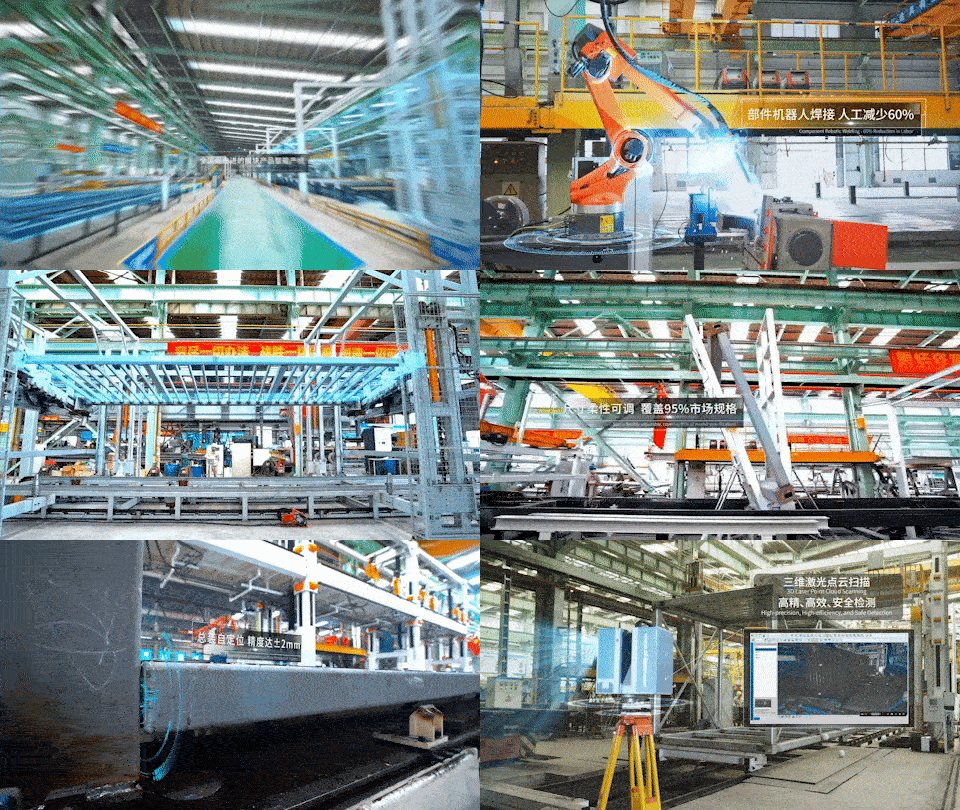
△ CSCEC Science and Industry intelligent manufacturing production line for modular products
Relying on the industry-leading intelligent manufacturing production line for modular products, CSCEC Science and Industry “smartly manufactures” wards with automotive-industry-level precision and processes. The manufacturing precision is controlled within 2 mm, ensuring that all components are assembled seamlessly. More than 95% of the construction work of the ward modules can be completed in the factory. From structure and electromechanical systems to interior integration, from large overall wall panels and independent bathrooms to small smart control panels, everything is prefabricated in the workshop, truly realizing “building houses like building cars.”
2. Life-Cycle Digital Management Platform
The large screen displays the component production status, on-site installation conditions, and various environmental monitoring data in real-time. Relying on the digital management platform for the full life cycle of modular products, the latest progress of the project can be grasped on a single screen. Each module also has a unique “QR code ID card.” By scanning the code, its production time, specifications, transportation trajectory, and installation location can be viewed, achieving full quality traceability from the factory to the ward.
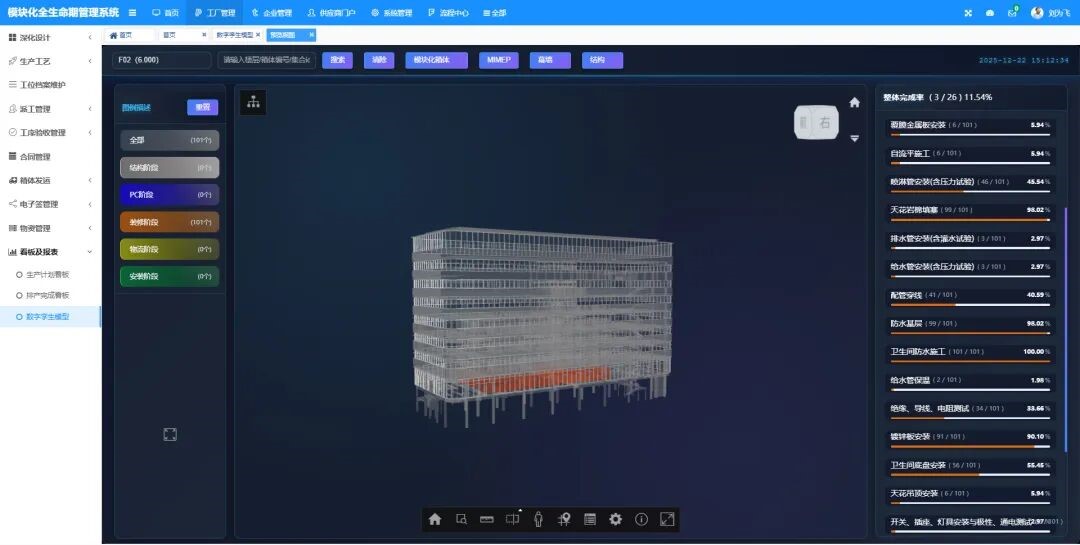
△ Digital Management Platform
3. The Application of Drone
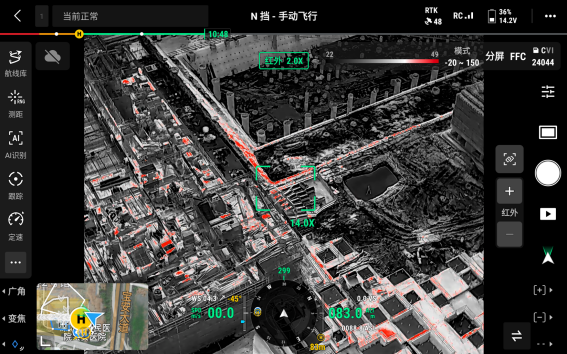
The Matrice 4T drone features built-in AI models for detecting human and vehicle targets. Using the drone’s AI recognition function, it can check the daily number of workers, the safe operation of vehicles on the construction site, etc.; it can directly measure data such as the length and area of the operating area and compare them with the annotated values on the drawings to promptly discover discrepancies between on-site construction and the design, ensuring that the construction is executed accurately according to the drawings in an efficient and intuitive manner; the infrared night vision function conducts nighttime construction safety hazard detection, construction progress monitoring, and emergency rescue assistance.
4. VR Experience Center
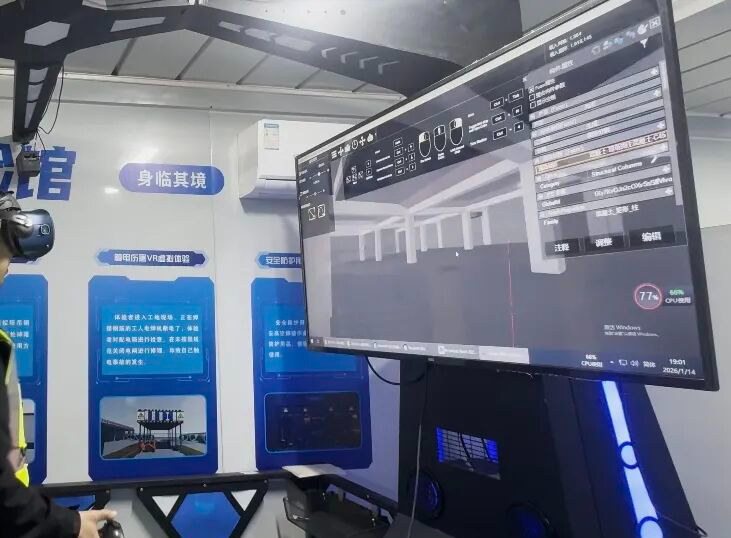
Through immersive, interactive safety training—such as navigating a simulated fire scene where participants must locate fire extinguishers and evacuate while crouching low—managers and workers can experience firsthand the effectiveness of the project once it is completed.
5. Application of Intelligent Equipment
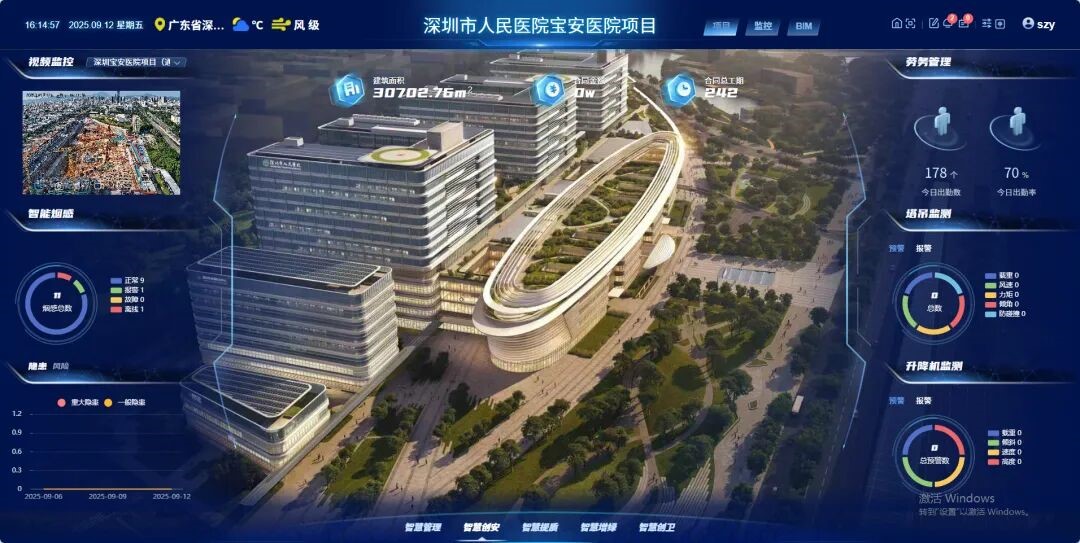
By connecting systems such as on-site smart construction site video surveillance, vehicle recognition, tower crane monitoring sensors, elevator monitoring sensors, real-name turnstiles, electricity monitoring equipment, environmental monitoring equipment, and panoramic views, the smart construction cloud platform can intuitively monitor and manage various systems on site.
6. Intelligent Devices
Green construction is achieved through the use of intelligent and green products independently innovated and developed by CSCEC Science and Industry. Among them, intelligent robots include steel structure welding robots, laser rust removal robots, concrete smoothing robots, and indoor spraying robots; the multi-functional smart pole has functions such as controlling lighting at the construction site, environmental monitoring, surveillance monitoring, and information release.
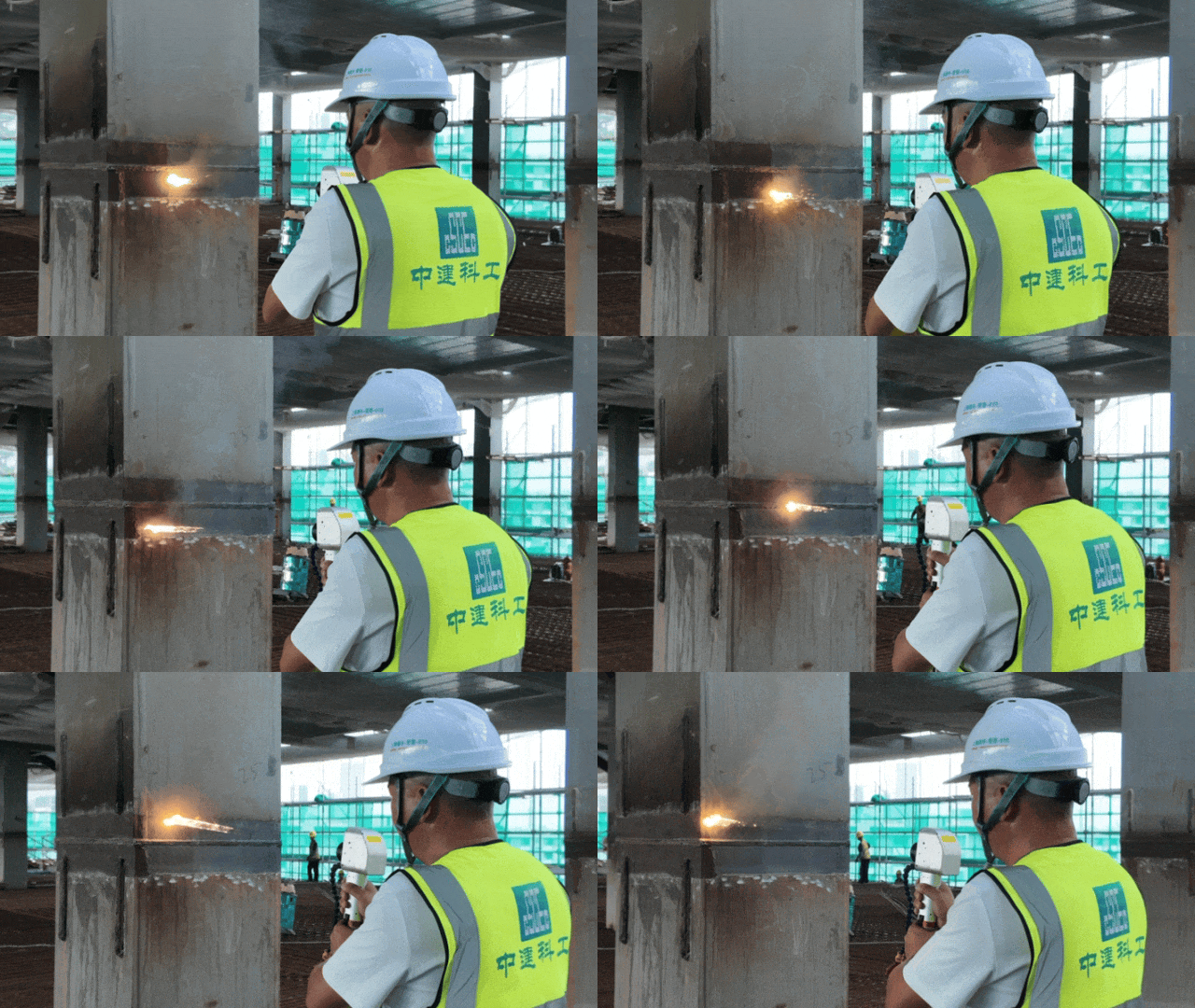
△ Application scenario of the laser rust removal robot
On the new journey of high-quality development, “Chinese Construction” is upgrading from “higher and faster” to “smarter, greener, and more people-oriented.” The exploration of the infection building at the Bao’an Hospital of Shenzhen People’s Hospital, a model that reshapes the construction process with Industry 4.0 concepts, is globally driving medical architecture to transition towards a future paradigm of “rapid response, flexible adaptability, smart and green features, and warm quality.”


Get the latest updates with our newsletter
Follow us
-

CCPA Wechat
-

CCPA EXPO Wechat
